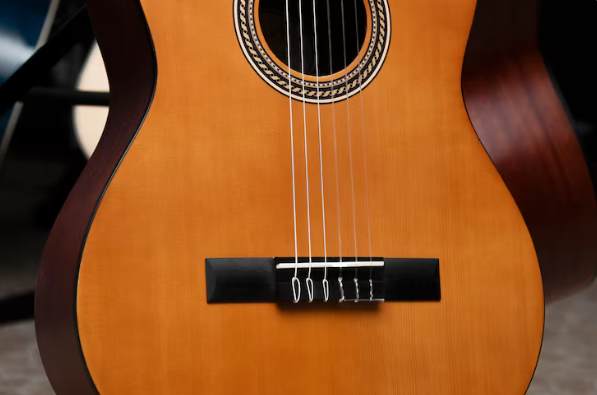

The world of acoustic instruments is filled with rich traditions and innovative designs, but few instruments capture imagination quite like the 12 string Acoustic harp guitar. This unique instrument blends the familiar structure of a guitar with the resonant power of additional harp-style strings, creating a sound that is both expansive and deeply expressive. Musicians drawn to layered tones, atmospheric depth, and creative freedom often find the harp guitar to be an inspiring choice.
At its core, the 12 string Acoustic harp guitar is designed to produce a fuller and more orchestral sound than a standard acoustic guitar. The main fretboard carries twelve strings arranged in paired courses, similar to a traditional 12-string guitar. These doubled strings create a shimmering effect, adding richness and sustain to every chord and melody. Beyond this, the harp section includes additional unstopped bass strings that resonate sympathetically, enhancing the instrument’s tonal complexity.
The Musical Character of a 12 String Acoustic Harp Guitar
One of the most defining qualities of the 12 string Acoustic harp guitar is its harmonic depth. When a chord is played on the fretted strings, the harp strings vibrate naturally, producing subtle overtones that fill the surrounding space with sound. This makes the instrument particularly appealing for solo performances, fingerstyle arrangements, and ambient compositions.
The doubled strings provide brightness and volume, while the harp strings add warmth and resonance. This combination allows musicians to explore dynamic contrasts, moving effortlessly between delicate passages and powerful, resonant sections. Many players describe the experience as playing multiple instruments at once, as the sound feels layered and immersive.
Another advantage is the instrument’s ability to support alternate tunings. The extra strings can be tuned to complement the key of a piece, opening new creative possibilities. This flexibility encourages experimentation and personal expression, which is one reason the harp guitar continues to captivate musicians across genres.
Understanding the 12 String Acoustic Parlor Harp Guitar
While full-sized harp guitars are impressive, some musicians prefer a more compact and intimate option. This is where the 12 string Acoustic Parlor harp guitar truly shines. Designed with a smaller body, this instrument offers the same multi-string richness but in a more manageable and comfortable form.
The parlor-sized body emphasizes clarity and articulation, making it ideal for fingerstyle playing and detailed arrangements. Despite its smaller size, the 12 string Acoustic Parlor harp guitar delivers remarkable tonal balance. The harp strings still provide depth and resonance, while the parlor body enhances midrange presence, ensuring that every note is clearly defined.
This version is especially appealing for musicians who value portability and comfort without sacrificing sound quality. Whether played in a quiet studio setting or an intimate performance space, the parlor harp guitar creates an engaging and expressive musical experience.
Craftsmanship and Design Considerations
The construction of a harp guitar requires exceptional craftsmanship. Both the 12 string Acoustic harp guitar and the 12 string Acoustic Parlor harp guitar are carefully designed to handle the tension of multiple strings while maintaining structural integrity. The neck, body, and internal bracing must work together to support the added string load without compromising tone or playability.
Attention to detail is crucial. The spacing of the harp strings, the angle of the neck, and the shape of the body all influence how the instrument responds. When crafted well, the result is an instrument that feels balanced in the hands and responds beautifully to subtle changes in touch.
The visual appeal of these instruments is also worth noting. Harp guitars often feature elegant curves and extended bodies that set them apart from traditional guitars. This distinctive appearance reflects the instrument’s unique voice and artistic spirit.
Playing Styles and Musical Applications
The versatility of the 12 string Acoustic harp guitar makes it suitable for a wide range of musical styles. Fingerstyle players often gravitate toward this instrument because it allows independent bass lines, melodic phrases, and harmonic textures to coexist seamlessly. The harp strings can be used to create droning bass notes or subtle harmonic accents that enhance the overall composition.
The 12 string Acoustic Parlor harp guitar is particularly well-suited for intricate arrangements and intimate performances. Its focused sound makes it ideal for recording, where clarity and nuance are essential. Musicians can explore folk, classical-inspired pieces, ambient soundscapes, and even experimental compositions using this compact yet powerful instrument.
Strumming on a harp guitar creates a lush and enveloping sound, while fingerpicking reveals delicate details and expressive dynamics. This adaptability allows players to develop a unique musical voice that stands out from conventional guitar styles.
Inspiration and Creative Expression
Playing a harp guitar often inspires musicians to approach music differently. The presence of additional strings encourages exploration beyond standard chord shapes and patterns. Many players find themselves composing new material specifically for the instrument, drawn by its ability to convey emotion and atmosphere.
The 12 string Acoustic harp guitar invites a more contemplative and expressive style of playing. Each note resonates with depth, encouraging slower, more intentional performances. Meanwhile, the 12 string Acoustic Parlor harp guitar offers the same creative inspiration in a more personal and intimate format, making it ideal for songwriting and reflective practice sessions.
Choosing the Right Instrument
Selecting between a full-sized harp guitar and a parlor version depends largely on personal preference and playing context. Musicians who enjoy expansive sound and visual presence may gravitate toward the 12 string Acoustic harp guitar. Those who prioritize comfort, portability, and focused tone may find the 12 string Acoustic Parlor harp guitar to be a perfect fit.
Both instruments offer unique advantages, and each can serve as a powerful tool for musical expression. What matters most is how the instrument resonates with the player, both physically and emotionally.
Conclusion
The 12 string Acoustic harp guitar and the 12 string Acoustic Parlor harp guitar represent a beautiful fusion of tradition and innovation. Their layered sound, expressive potential, and striking design set them apart from standard acoustic instruments. Whether used for solo performances, composition, or personal exploration, these instruments offer a deeply rewarding musical experience.
By combining rich harmonic textures with creative flexibility, the harp guitar continues to inspire musicians to explore new sonic landscapes. For those seeking an instrument that goes beyond the ordinary, the world of harp guitars offers endless possibilities for discovery and artistic growth.