
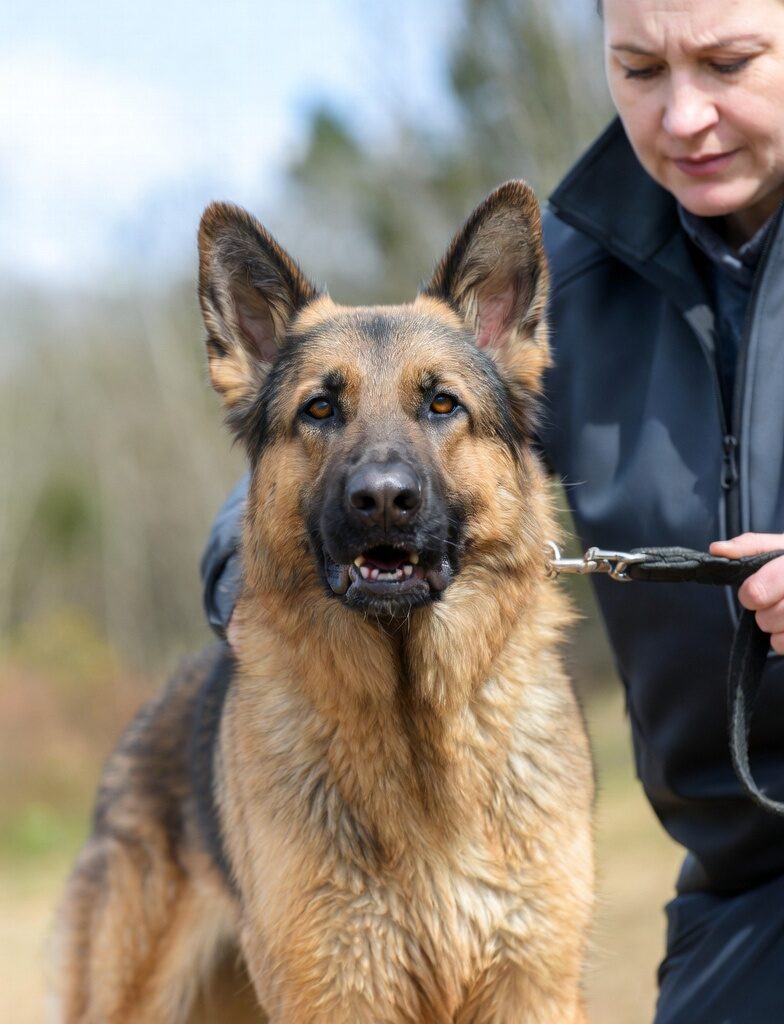

Personal protection dog training is often misunderstood, frequently romanticized, and sometimes pursued for the wrong reasons. Movies, social media, and exaggerated claims can create unrealistic expectations about what a personal protection dog truly is. In reality, protection work is a serious discipline rooted in control, stability, and responsibility. Without the right foundation, both dog and handler can face significant challenges.
A personal protection dog is not simply an aggressive animal trained to react on command. The role requires emotional balance, advanced obedience, and precise communication between dog and handler. Understanding these principles is essential before considering whether protection work is appropriate. Education should always come before ambition.
What Defines a Personal Protection Dog
A personal protection dog is defined more by control than by force. The dog must remain calm, neutral, and responsive in unpredictable environments. Protection behavior is situational, not constant. This distinction separates trained protection dogs from unstable or reactive animals.
Temperament plays a critical role in suitability. Confidence, nerve strength, and social stability are non-negotiable traits. Without them, protection behaviors can become dangerous rather than controlled. True protection dogs demonstrate restraint as much as response.
Understanding the Purpose of Personal Protection Dog Training
Personal protection dog training is designed to teach controlled defensive responses under strict command structure. The goal is deterrence and safety, not aggression. Training emphasizes decision-making, impulse control, and handler awareness. These elements reduce unnecessary reactions.
The process requires systematic development over time. Dogs are taught when to engage and, more importantly, when not to. This level of clarity prevents misinterpretation of everyday situations. Purpose-driven training prioritizes reliability above intensity.
Temperament Assessment Before Training Begins
Not every dog is suitable for protection work, regardless of breed. Temperament assessments evaluate confidence, stress tolerance, and recovery time. Dogs that show fear-based reactions are excluded. Stability is essential for safety.
Assessments also consider social behavior. A personal protection dog must remain neutral around strangers unless a legitimate threat is present. Overreaction is a disqualifying trait. Careful selection protects everyone involved.
The Importance of Advanced Obedience Foundations
Advanced obedience is the backbone of personal protection dog training. Commands must be executed under distraction, pressure, and stress. Without reliable obedience, protection behaviors cannot be controlled. Structure ensures safety.
Obedience builds communication and trust. Dogs learn to defer decision-making to the handler. This relationship is critical during high-stress scenarios. Control always precedes protection.
Handler Responsibility and Skill Level
The handler’s role is as important as the dog’s ability. Inconsistent handling leads to confusion and risk. Protection dogs rely on precise cues and timing. Handler education is mandatory.
Responsibility extends beyond training sessions. Daily management, environmental exposure, and routine reinforcement shape behavior. A personal protection dog reflects the handler’s discipline. Accountability is non-negotiable.
Common Misconceptions About Protection Dogs
One common misconception is that protection dogs are inherently aggressive. In reality, well-trained dogs are typically calm and socially neutral. Aggression without control is a failure of training. Stability defines success.
Another misconception is that protection training replaces other forms of training. In truth, it builds upon them. Without strong fundamentals, advanced work collapses. Protection training is additive, not standalone.
Legal and Ethical Considerations
Ownership of a personal protection dog carries legal implications. Handlers are responsible for the dog’s actions at all times. Misuse or negligence can result in serious consequences. Awareness of local laws is essential.
Ethically, protection training must prioritize welfare. Training methods should avoid fear-based techniques. Ethical practice focuses on clarity and confidence. Responsible ownership protects the reputation of working dogs.
Environmental Exposure and Social Neutrality
A personal protection dog must function in real-world environments. Exposure to crowds, noise, and unfamiliar settings builds resilience. Social neutrality prevents inappropriate responses. Exposure is gradual and controlled.
Without environmental stability, protection behaviors become unreliable. Dogs must differentiate between normal activity and genuine threat. Training reinforces discernment. Context awareness is critical.
Stress Management and Emotional Regulation
Protection work introduces controlled stress during training. Dogs learn to operate under pressure without panic. Emotional regulation ensures reliability. Calm recovery after engagement is essential.
Stress tolerance varies among individuals. Training progresses at the dog’s pace. Rushing increases risk. Proper management supports long-term stability.
The Difference Between Sport and Personal Protection
Sport protection and personal protection dog training differ in intent. Sport focuses on predictable scenarios and competition rules. Personal protection emphasizes real-world unpredictability. Confusing the two can lead to improper expectations.
Personal protection dogs require broader environmental adaptability. They must generalize skills beyond training fields. Practical reliability matters more than performance. Context defines training goals.
Long-Term Commitment to Maintenance Training
Protection skills require ongoing maintenance. Skills degrade without reinforcement. Regular training ensures consistency and control. Commitment extends throughout the dog’s life.
Maintenance training also adapts to changes in environment or handler capability. Life transitions can affect performance. Ongoing evaluation supports safety. Training is continuous, not finite.
Risks of Inadequate or Improper Training
Improper training increases liability and danger. Dogs may respond inappropriately or fail to disengage. These outcomes are preventable with proper structure. Shortcuts lead to instability.
Inadequate training also affects public perception. One poorly managed dog can damage trust in working breeds. Responsibility protects the broader community. Quality training safeguards reputation.
Evaluating Whether Protection Training Is Appropriate
Not every household benefits from a personal protection dog. Lifestyle, experience, and environment matter. Training should match real needs rather than fear-based motivation. Honest evaluation prevents regret.
Professional guidance helps determine suitability. Objective assessment reduces bias. Choosing not to pursue protection training is sometimes the most responsible decision. Awareness supports better outcomes.
Conclusion
Personal protection dog training is a specialized discipline requiring stability, structure, and long-term responsibility. A personal protection dog is defined by control, discernment, and trust rather than aggression. Understanding temperament, handler commitment, and ethical boundaries is essential before pursuing this path. When approached responsibly, protection training prioritizes safety, clarity, and balance above all else.


