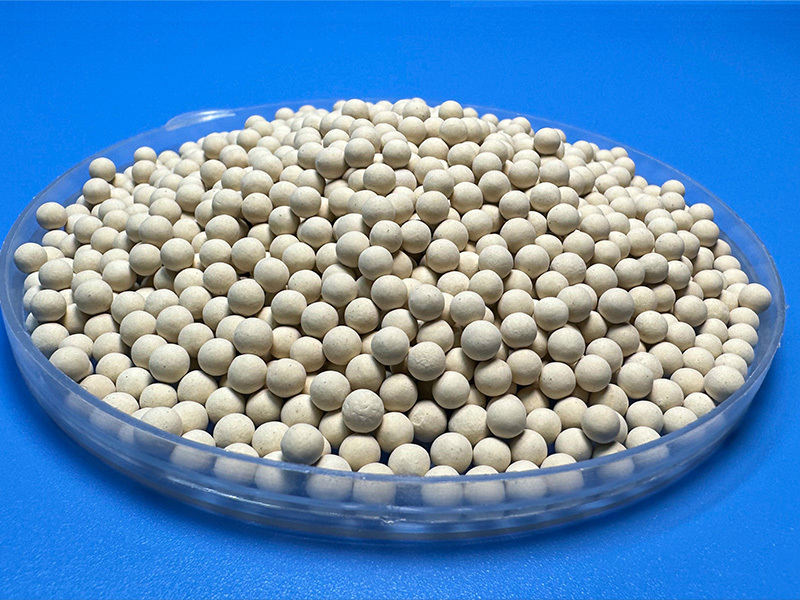

Industrial gases play a critical role across manufacturing, energy, healthcare, and chemical processing. Whether it is oxygen for medical use, hydrogen for refineries, or nitrogen for inert environments, purity levels directly affect performance, safety, and cost efficiency. Even small impurities can reduce product quality, damage equipment, or disrupt downstream processes.
This is where 5A Molecular Sieves or 5A zeolite become essential. These engineered adsorbents offer precise separation at the molecular level. Because of their controlled pore size and stable structure, they allow manufacturers to achieve consistently high gas purity in demanding industrial environments.
This article explains how Zeolite 5A works, why it is effective, where industries use it, and how operators can maximize their performance.
What Makes 5A Molecular Sieves Unique?
5A molecular sieves belong to the zeolite family and feature a uniform pore opening of approximately 5 angstroms. This pore size allows them to selectively adsorb molecules based on size and polarity. As a result, they separate gases that otherwise appear similar under conventional filtration methods.
Their crystalline aluminosilicate framework creates a strong attraction between the sieve surface and certain gas molecules. Calcium ions within the structure enhance this selectivity, especially for molecules such as carbon dioxide, water vapor, and certain hydrocarbons.
Because of this predictable structure, 5A molecular sieves deliver repeatable performance. Industries rely on them because they maintain adsorption efficiency even under pressure and temperature fluctuations.
The Science Behind Gas Purification Efficiency
Gas purification using zeolite 5A relies on adsorption rather than absorption. Adsorption occurs when gas molecules attach to the internal surface of the sieve pores. Since the internal surface area is extremely high, even small quantities of sieve material capture large volumes of impurities.
In gas separation systems, molecules with a stronger affinity or suitable size enter the pores first. Larger or weaker-attraction molecules pass through. This controlled behavior enables the selective removal of unwanted components while preserving the target gas.
For example, in nitrogen generation systems, oxygen molecules enter the pores more readily than nitrogen. As oxygen adsorbs, nitrogen exits the system at higher purity. This process repeats continuously, ensuring stable output.
Role in Pressure Swing Adsorption Systems
One of the most common applications of 5A molecular sieves appears in pressure swing adsorption systems. These systems alternate between high-pressure adsorption and low-pressure regeneration. During the high-pressure phase, impurities bind to the sieve. During the low-pressure phase, the sieve releases them.
Zeolite 5A sieves handle this cycling efficiently because of their mechanical strength and thermal stability. They resist degradation even after thousands of cycles. This durability keeps operational costs predictable and reduces downtime.
Additionally, their fast adsorption kinetics support shorter cycle times. Shorter cycles increase throughput while maintaining purity. As a result, manufacturers achieve higher productivity without increasing system size.
Industrial Applications That Depend on High Purity
Many industries depend on 5A molecular sieves to maintain gas quality. In oil and gas processing, they remove moisture and carbon dioxide from natural gas streams. This purification prevents corrosion and improves pipeline safety.
In hydrogen purification, Zeolite 5A separates hydrogen from methane, nitrogen, and carbon monoxide. High-purity hydrogen supports refinery operations and emerging energy technologies. Consistent purity ensures catalyst protection and process stability.
Medical oxygen generation also relies on molecular sieve technology. Hospitals and clinics require oxygen that meets strict purity standards. Zeolite 5A helps achieve these standards reliably, especially in on-site generation systems.
Chemical manufacturing benefits as well. Many reactions require controlled atmospheres. Removing trace impurities prevents side reactions and improves product consistency. Therefore, gas purity directly influences yield and quality.
How 5A Molecular Sieves Improve Operational Reliability?
Beyond purity, reliability matters just as much. Gas separation systems must operate continuously under industrial conditions. Zeolite sieves contribute to this reliability in several ways.
First, they maintain structural integrity under repeated thermal and pressure stress. This stability prevents dust formation, which could otherwise contaminate systems. Second, their uniform particle size supports consistent gas flow, reducing pressure drop across beds.
Moreover, their resistance to chemical attack extends service life. Operators experience fewer replacements and lower maintenance costs. Over time, this reliability translates into predictable operating budgets and improved process control.
Practical Tips for Maximizing Performance
To get the best results from 5A zeolite, proper handling and system design matter. First, operators should ensure correct activation before use. Activation removes residual moisture and opens adsorption sites. Without proper activation, capacity decreases.
Second, system design should match the gas composition and flow rate. Oversized beds waste material, while undersized beds reduce purity. Engineers should calculate adsorption capacity based on operating conditions rather than relying on generic estimates.
Third, protecting sieves from liquid water exposure remains critical. Liquid water blocks pores and reduces efficiency. Using pre-dryers or filters helps maintain long-term performance.
Finally, monitoring outlet gas composition provides early detection of breakthrough. When impurities increase, regeneration or replacement can occur before quality drops significantly.
Economic and Energy Efficiency Benefits
Using 5A molecular sieves improves not only purity but also efficiency. High selectivity reduces energy consumption because systems require fewer compression stages or lower regeneration temperatures. This efficiency lowers operational costs over time.
Additionally, on-site gas generation using molecular sieves reduces dependence on bulk gas delivery. Companies avoid transportation costs, storage risks, and supply interruptions. As energy prices fluctuate, this independence becomes even more valuable.
Lower energy use also supports sustainability goals. Efficient separation reduces carbon footprint and aligns with modern environmental standards. As industries face stricter regulations, such advantages matter increasingly.
Future Outlook for Industrial Gas Purification
The demand for high-purity gases continues to grow as industries adopt advanced technologies. Semiconductor manufacturing, clean energy systems, and specialty chemicals all require precise gas control. It will remain central to meeting these requirements.
Future developments focus on improving adsorption kinetics and resistance to contaminants. Researchers explore optimized crystal structures and surface modifications to enhance selectivity further. These improvements aim to support higher throughput without sacrificing purity.
As automation and smart monitoring expand, molecular sieve systems will integrate with digital controls. Real-time data will allow adaptive cycling and predictive maintenance. This evolution will increase efficiency while reducing operational risk.
A Reliable Solution for Gas Purity Challenges
Maintaining high gas purity defines success in many industrial processes. 5A molecular sieves provide a proven, efficient, and reliable solution to this challenge. Their precise pore structure, durability, and compatibility with modern systems make them indispensable across industries.
From energy and healthcare to chemical manufacturing, they support consistent performance while reducing costs and energy use. With growing demand for cleaner and more controlled processes, zeolite A continues to play a vital role in industrial gas purification today and into the future.