
Living on a dirt road comes with its own set of challenges. Dust in the summer, mud in the winter, and ruts that seem to appear overnight after every storm. The good news is that choosing the right materials when building or repairing your road can cut down on how often you need to do maintenance work.
Not all gravel and stone are created equal. The material you put down affects how well your road drains, how it holds up to traffic, and how long it stays smooth between gradings. Here’s what works best for property owners who want a dirt road that doesn’t need constant attention.
Crush & Run
Crush and run, sometimes called crusher run or ABC stone, is the go-to material for dirt road construction in Georgia and across the Southeast. It’s made from crushed stone mixed with stone dust and fine particles. The mix of sizes is what makes it work so well.
When compacted, the larger stones lock together while the fines fill in the gaps. This creates a surface that sheds water, resists rutting, and packs down harder over time. Roads built with crush and run need less frequent grading than those topped with round gravel or plain dirt.
Why It Works for Low Maintenance
The angular shape of crushed stone is the key. Round river gravel rolls and shifts under tires. Crushed stone locks in place. Add in the binding effect of the stone dust, and you get a surface that stays put even on sloped sections of road.
Crush and run also drains well when properly crowned. Water runs off to the sides instead of pooling on the surface and softening the road base.
57 Stone
Number 57 stone is a clean, washed gravel with pieces roughly three-quarters of an inch to one inch in size. It doesn’t have the fines that crush and run does, which makes it better for certain applications.
Best Uses for 57 Stone
This material works well for drainage layers underneath the road surface or for topping roads that have persistent mud problems. The open structure of 57 stone lets water pass through quickly, keeping the driving surface drier.
Some property owners use 57 stone as a top layer on low-traffic roads or driveways. It provides good traction and doesn’t turn to mud. The tradeoff is that it can be looser underfoot and may shift more than crush and run until it settles in.
Contractors like Dirt Road Repairs often use 57 stone in combination with other materials, laying it as a base layer and then topping with crush and run for the best of both worlds.
Granite Screenings
Granite screenings are the fine material left over when a larger stone is crushed. They look almost like coarse sand and pack down to form a hard surface.
Pros & Cons
Screenings work well for finishing the top layer of a road or filling in low spots. They bind together when wet and compacted, creating a smooth surface. Some property owners like the appearance better than rougher gravel.
The downside is that screenings can wash away on slopes if not properly stabilized. They also tend to get dusty in dry weather. For low-maintenance roads, screenings work best as a thin top dressing over a base of crush and run rather than as the primary road material.
Recycled Asphalt
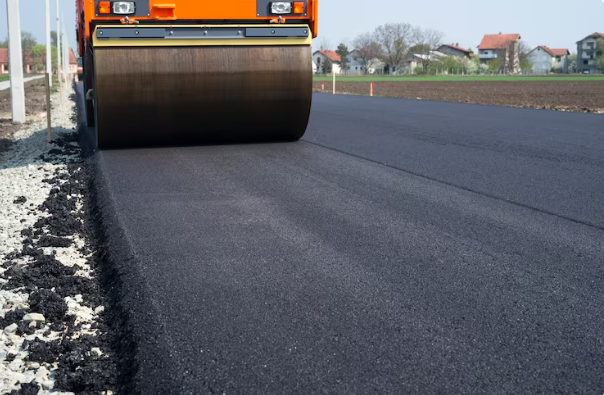
Millings from old asphalt roads can be spread and compacted to create a durable driving surface. The residual tar in the material helps it bind together, especially in warm weather.
Performance Over Time
Recycled asphalt starts out loose but firms up as it’s driven on and exposed to heat. After a season, it can feel almost like a paved surface. It resists erosion better than most gravel and doesn’t get as muddy.
The catch is that quality varies. Millings with a lot of old tar content bind better than those that have been sitting in a pile for years. A reputable supplier can tell you what you’re getting.
What to Avoid
Round river gravel looks nice but makes a poor road surface. The smooth stones don’t lock together and tend to scatter to the edges of the road over time. You end up with bare spots in the wheel tracks and berms of loose gravel along the sides.
Plain topsoil or fill dirt might seem like an affordable option, but it turns to mud at the first sign of rain and wears into ruts almost immediately.
The Role of Proper Installation
Even the best materials won’t perform if the road isn’t built right. Proper road maintenance starts with a crowned surface that directs water to the ditches, adequate drainage to carry water away, and enough base material to support traffic loads.
Companies that specialize in dirt and gravel roads understand how all these elements work together. Dirt Road Repairs, based in Dahlonega, Georgia, focuses specifically on rural road construction and maintenance, from initial grading to material selection and drainage solutions.
Keeping Maintenance Low
The right material gets you most of the way there, but a few simple practices help your road last even longer. Grading before the ruts get too deep prevents the road from losing its crown. Keeping ditches clear ensures water drains away instead of saturating the road base. And adding fresh material every few years replaces what gets lost to traffic and erosion.
A well-built dirt road with the right materials can go years between major repairs. That’s time and money you can spend on something other than fighting mud and filling potholes.