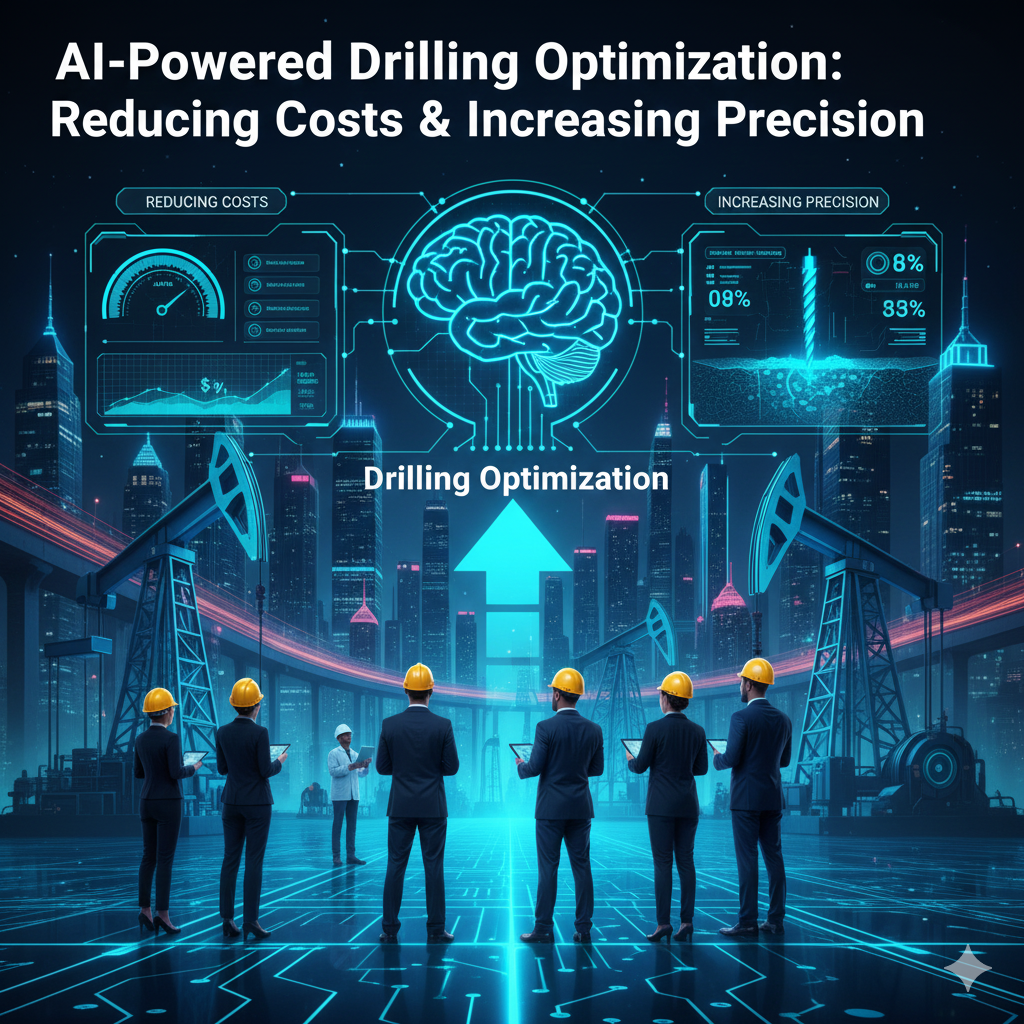

The oil and gas sector is undergoing one of the most transformative phases in its history. As global demand pressures rise, drilling operations face stringent expectations around cost efficiency, accuracy, safety, and sustainability. In this context, artificial intelligence—specifically AI-powered drilling optimization—has become a critical catalyst for operational excellence.
Today, E&P companies are increasingly partnering with an expert oil and gas software development company to build intelligent solutions capable of predicting drilling performance, assessing geological conditions, preventing equipment failures, and significantly reducing non-productive time (NPT). As these systems mature, AI is not just enhancing operational visibility—it is actively reshaping the economics of drilling.
This blog explores how AI-powered drilling optimization works, the technologies behind it, real-world benefits, and why oil & gas enterprises are adopting AI-driven tools at scale.
1. The Need for AI in Drilling Operations
Traditional drilling relies on a combination of human expertise, historical records, onsite measurements, and reactive adjustments. While this method works, it is often:
- Time-consuming
- Resource-heavy
- Prone to human error
- Dependent on outdated or incomplete datasets
- Lacking real-time insights
Additionally, challenges such as well instability, stuck pipes, unexpected geological formations, and drilling inefficiencies contribute to massive financial losses. The industry spends billions annually due to operational delays and NPT.
This is where AI makes a game-changing impact.
By integrating advanced analytics, machine learning, real-time monitoring, and predictive modeling, AI transforms drilling operations from reactive to proactive. It optimizes every stage of the drilling lifecycle—from planning to execution to post-operation analysis.
2. What is AI-Powered Drilling Optimization?
AI-powered drilling optimization refers to the use of machine learning algorithms, digital twins, real-time data analytics, and automated control systems to:
- Predict drilling complications before they occur
- Maximize rate of penetration (ROP)
- Reduce downtime and drilling risks
- Improve wellbore placement accuracy
- Automatically adjust drilling parameters
- Minimize operational costs
These systems continuously ingest real-time data from surface equipment, downhole sensors, geological models, and historical drilling logs. They analyze patterns, detect anomalies, and provide insights that human operators could miss.
Companies that leverage AI typically partner with a professional oil and gas software development company to integrate AI algorithms directly into their drilling machinery, SCADA systems, and rig operations.
3. Key Technologies Behind AI-Powered Drilling Optimization
AI drilling optimization is a hybrid of several advanced technologies. Here are the most impactful ones:
3.1 Machine Learning Models
ML algorithms predict drilling outcomes based on past & real-time data.
Capabilities include:
- Optimal ROP prediction
- Drill bit wear analysis
- Vibration detection
- Torque and drag forecasting
These predictions help operators adjust parameters in real-time while preventing issues.
3.2 Digital Twins
Digital twin technology builds a virtual replica of the drilling environment, including:
- Rig machinery
- Drilling strings
- Reservoirs
- Geological layers
This allows simulation of drilling operations before actual execution. Digital twins powered by Generative AI Services can create highly accurate scenarios, helping engineers test drilling strategies without physical risks.
3.3 Predictive Maintenance
AI identifies early signs of equipment failure, reducing downtime.
Examples:
- Detecting drill bit damage
- Predicting mud pump failures
- Identifying drill string fatigue
- Monitoring BHA (Bottom Hole Assembly) health
Predictive maintenance saves millions in repair and replacement costs.
3.4 Real-Time Data Analytics
AI uses high-frequency surface and downhole data to provide instant insights on:
- Pressure changes
- Flow rate deviations
- Temperature fluctuations
- Friction and vibration levels
When integrated with automated control systems, AI can directly adjust drilling parameters such as RPM, WOB, and mud flow.
3.5 Generative AI for Geological Modeling
Generative AI Services can create hyper-accurate geological predictions by analyzing:
- Historical well data
- Seismic imaging
- Mud logging reports
- Reservoir simulation outputs
This helps operators plan drilling trajectories more accurately.
4. Benefits of AI-Powered Drilling Optimization
4.1 Significant Cost Reduction
AI reduces:
- Non-productive time
- Equipment damage
- Fuel consumption
- Over-drilling
- Human errors
Improved planning and execution lower drilling costs by 15–25% on average.
4.2 Increased Drilling Precision
AI ensures accurate well placement by:
- Predicting rock properties
- Understanding formation behavior
- Preventing deviation from the planned trajectory
Precise drilling leads to better reservoir output and reduced complications.
4.3 Improved Safety
AI minimizes safety risks by detecting:
- High-pressure zones
- Blowout precursors
- Abnormal vibration patterns
- Stuck pipe indicators
Fewer onsite incidents ensure better compliance and worker protection.
4.4 Higher Rate of Penetration (ROP)
AI continuously adjusts drilling parameters to achieve optimum ROP without compromising safety. This shortens project timelines and boosts revenue.
4.5 Better Decision-Making
AI provides unified dashboards that integrate:
- Real-time performance
- Historical insights
- Predictive analytics
Teams make faster, more informed drilling decisions backed by data.
5. Real-World Applications of AI in Drilling
5.1 Autonomous Drilling Systems
AI-driven automation adjusts parameters such as:
- Weight on bit
- Mud flow
- Bit rotation
- Pressure controls
Autonomous systems reduce human dependence and ensure consistency.
5.2 Geological Boundary Detection
AI identifies formation boundaries in real time, enabling better geosteering and minimizing drilling risks.
5.3 Drill Bit Optimization
ML predicts optimal bit type, lifespan, and replacement time, reducing operational delays.
5.4 Automated Mud Mixing
AI optimizes mud weight, viscosity, and chemical composition to minimize drilling complications.
5.5 BHA and Rig Performance Monitoring
AI prevents failures by monitoring:
- Vibrations
- Mechanical loads
- Drill string dynamics
6. Why Oil & Gas Companies Partner with AI Development Experts
AI drilling systems require:
- Advanced data engineering
- Domain-specific ML models
- Secure cloud infrastructure
- Integration with rig hardware and sensors
A professional oil and gas software development company provides end-to-end support including solution architecture, real-time monitoring tools, hardware integration, and drilling analytics platforms.
Additionally, companies leveraging Generative AI Services gain access to custom predictive models, digital twins, and advanced geological simulations.
7. The Future of Drilling: Autonomous, Intelligent & Sustainable
The next decade of drilling technology will be shaped significantly by AI advancements. Here’s what the future looks like:
- Fully autonomous drilling rigs minimizing human intervention
- AI-powered carbon footprint tracking for sustainable drilling
- Robotics integration to reduce personnel exposure to hazardous conditions
- Generative AI-driven drilling design systems
- Real-time cross-rig collaboration powered by cloud dashboards
AI will not only optimize performance but also support long-term sustainability goals across the oil and gas lifecycle.
Conclusion
AI-powered drilling optimization is transforming how the oil and gas industry handles resource exploration, drilling accuracy, and operational efficiency. Through real-time analytics, predictive modeling, and intelligent automation, AI reduces costs, minimizes risks, and enhances drilling precision.
As global competition intensifies, oil and gas enterprises are increasingly adopting AI-driven drilling tools developed in partnership with a reliable oil and gas software development company. Moreover, the use of Generative AI Services elevates drilling optimization through advanced simulations, predictive models, and real-time decision support.
The companies that adapt early will lead the future of efficient, autonomous, and sustainable drilling operations worldwide.