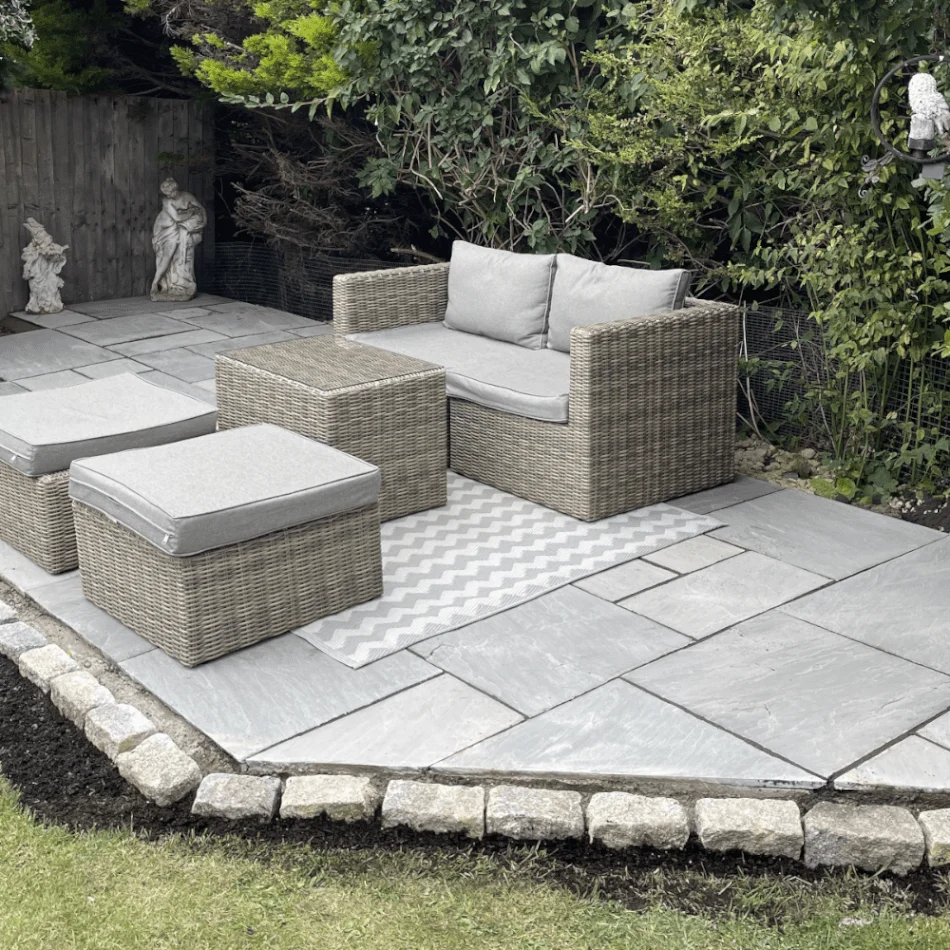

Rust marks can quickly spoil the appearance of a well-finished patio. On grey stone in particular, even a small orange mark stands out against cooler tones. When rust develops on Garden Paving Slabs, acting early helps protect the surface and preserve the original finish.
Understanding Why Rust Stains Appear on Garden Paving Slabs
Rust forms when iron reacts with moisture and oxygen. Outdoor paving often sits in damp conditions, which makes it vulnerable to staining from a range of sources.
Natural Iron Content in Stone
Some natural stones contain trace elements of iron. When exposed to consistent rainfall, these particles oxidise and create faint brown or orange marks on the surface. The issue tends to appear gradually rather than overnight.
Metal Furniture and Planters
Metal chair legs, steel planters, fire pits, and decorative features often leave circular or drip-shaped stains. Water collects beneath the metal, oxidation begins, rust transfers directly onto the slab.
Fertiliser and Irrigation Run-Off
Certain lawn treatments contain iron sulphate. When rain washes residue across the patio, it can leave streaking across lighter paving.
Water and Drainage Issues
Poor drainage allows standing water to sit on the surface. Over time, that moisture reacts with any iron present, increasing the risk of staining.
Why Grey Paving Shows Rust So Easily
Grey paving remains popular for its modern finish, clean lines, and versatility. Its cooler tone, however, makes rust marks more noticeable than on buff or brown stone.
Surface Texture and Porosity
Natural stone contains small pores. These pores absorb moisture, which allows rust particles to settle below the surface. Textured finishes tend to hold more residue than smoother sawn paving.
The Impact on Grey Indian Sandstone
Grey Indian Sandstone offers durability and character, yet like all natural materials it benefits from proper care. If rust penetrates deeply into the surface, removal becomes more complex.
When Stains Become Permanent
If oxidation continues unchecked for months, the pigment can bind to the minerals within the slab. At that stage, surface cleaning alone may not resolve the issue.
Identifying the Type and Severity of Rust Staining
Before choosing a cleaning method, it helps to assess the depth of the mark.
Surface Stains vs Deep Penetration
Surface stains usually appear bright orange and sit visibly on top of the stone. Deeper staining looks darker, often with a faint halo.
Fresh Stains Compared to Older Marks
Fresh rust responds more easily to gentle cleaning solutions. Older stains often require a targeted treatment designed specifically for stone.
Checking for Structural Damage
Rust rarely damages the structural integrity of paving, yet aggressive cleaning methods can. Selecting the right approach protects the slab’s finish.
Safe Methods to Remove Rust from Grey Paving
Cleaning rust from Garden Paving Slabs requires patience rather than force. Gradual treatment reduces the risk of surface damage.
Warm Soapy Water for Light Surface Marks
Start with warm water mixed with mild washing-up liquid. Use a soft brush to loosen residue. This method suits very light or fresh marks.
White Vinegar for Mild Staining
White vinegar offers a gentle acidic reaction that can break down oxidation. Dilute it with water, apply to the stain, leave for a short period, then rinse thoroughly. Always test a small, hidden area first to check compatibility.
Baking Soda Paste Application
Mix baking soda with a small amount of water to create a thick paste. Apply directly to the rust mark, leave for several hours, then scrub gently with a soft brush. Rinse well after treatment.
Specialist Rust Removers for Stone
For more stubborn staining, specialist stone-safe rust removers provide a controlled solution. These products target iron deposits without damaging natural stone when used correctly. Always follow the manufacturer’s instructions carefully and avoid over-application.
What to Avoid When Treating Rust Stains
Incorrect cleaning methods often cause more harm than the stain itself.
Harsh Acids and Brick Cleaners
Strong acids can bleach or etch natural stone, leaving permanent discolouration. Products designed for brickwork rarely suit natural paving.
Wire Brushes and Abrasive Pads
Abrasive tools scratch the surface, creating a lighter patch that stands out against surrounding slabs.
Pressure Washing at High Intensity
High-pressure jets can strip the surface layer from natural stone. This leaves it more porous, increasing the risk of future staining.
Preventing Rust Stains from Returning
Once the surface is restored, preventative care keeps paving looking consistent year-round.
- Apply a breathable stone sealer to reduce moisture absorption
- Use plastic or rubber feet beneath metal furniture
- Move planters regularly to prevent moisture build-up
- Rinse fertiliser residue away from paved areas
- Maintain effective drainage to prevent standing water
A quality sealant creates a barrier that slows moisture penetration while preserving the stone’s natural appearance.
When to Consider Replacing Affected Slabs
Occasionally, staining penetrates too deeply for effective removal. In those cases, replacing a small number of slabs restores visual consistency. Sourcing a close colour match remains important, particularly with natural stone where tonal variation occurs between batches.
High-quality paving, careful installation, and routine maintenance reduce the likelihood of severe staining. Ammaari Stones supply a wide range of natural and porcelain options, supported by reliable nationwide delivery and product guidance. Following correct cleaning methods ensures grey paving retains its clean, contemporary finish for years to come.
Dealing with rust on paving often comes down to timing, product choice, and understanding the material beneath the stain. Natural stone reacts differently from manufactured surfaces, which is why a measured approach protects the long-term finish.
The Role of Sealing in Long-Term Protection
Sealing does not make stone stain-proof, yet it significantly reduces absorption. A breathable impregnating sealer works below the surface rather than forming a visible film. This allows moisture vapour to escape while limiting water ingress.
When applied correctly, sealant slows the oxidisation process. Rust particles remain closer to the surface, which makes future cleaning easier. Many installers recommend sealing after the paving has fully dried following installation, then reapplying periodically depending on wear.
Regular maintenance alongside sealing keeps grey patios looking sharp throughout the year.
Seasonal Maintenance and Rust Prevention
Different seasons introduce different risks. Autumn brings fallen leaves and moisture build-up. Winter introduces prolonged damp conditions. Spring often means fertiliser application nearby.
Simple seasonal checks help prevent long-term staining:
- Remove leaves and organic debris before they trap moisture
- Lift metal furniture during prolonged wet periods
- Rinse paved areas after lawn treatments
- Inspect joints and drainage channels for blockages
Routine attention prevents small marks from becoming permanent blemishes.
Addressing Rust Around Joints and Edges
Rust often collects along joints where water pools slightly. Jointing compound can trap moisture if it sits unevenly, which increases oxidation around slab edges.
Brushing away debris from joints allows water to drain correctly. If staining appears along edges, apply treatment carefully using a small brush to avoid affecting surrounding stone.
Edge detailing plays a significant role in keeping the overall surface consistent in tone.
Professional Cleaning for Severe Cases
When household methods fail, professional stone cleaning services offer targeted solutions. Specialists use controlled chemical treatments formulated for natural paving. These products react with iron deposits and draw them out without etching the surface.
Professional treatment suits larger patios where staining spreads across multiple slabs. It also helps protect high-value installations where maintaining a uniform finish matters.
In some cases, light re-honing of the surface restores colour consistency. This process removes a thin layer from the top of the stone, though it requires specialist equipment.
Protecting the Appearance of Grey Paving Long Term
Grey paving remains a strong choice for modern garden design. It pairs well with timber, brickwork, rendered walls, and planting schemes. Keeping that clean tone intact requires consistent care rather than aggressive intervention.
Early treatment of rust prevents deeper penetration. Gentle cleaning methods preserve surface texture. Preventative steps reduce repeated staining.
When replacement becomes necessary, selecting slabs from a reputable supplier ensures colour continuity and quality control. Ammaari Stones maintains strict product standards, supports customers with guidance, offers free UK delivery, and supplies materials suited to both domestic projects and trade installations. Grey patios reward proper maintenance with years of reliable performance. Rust staining does not need to become a permanent issue when treated correctly and prevented thoughtfully.