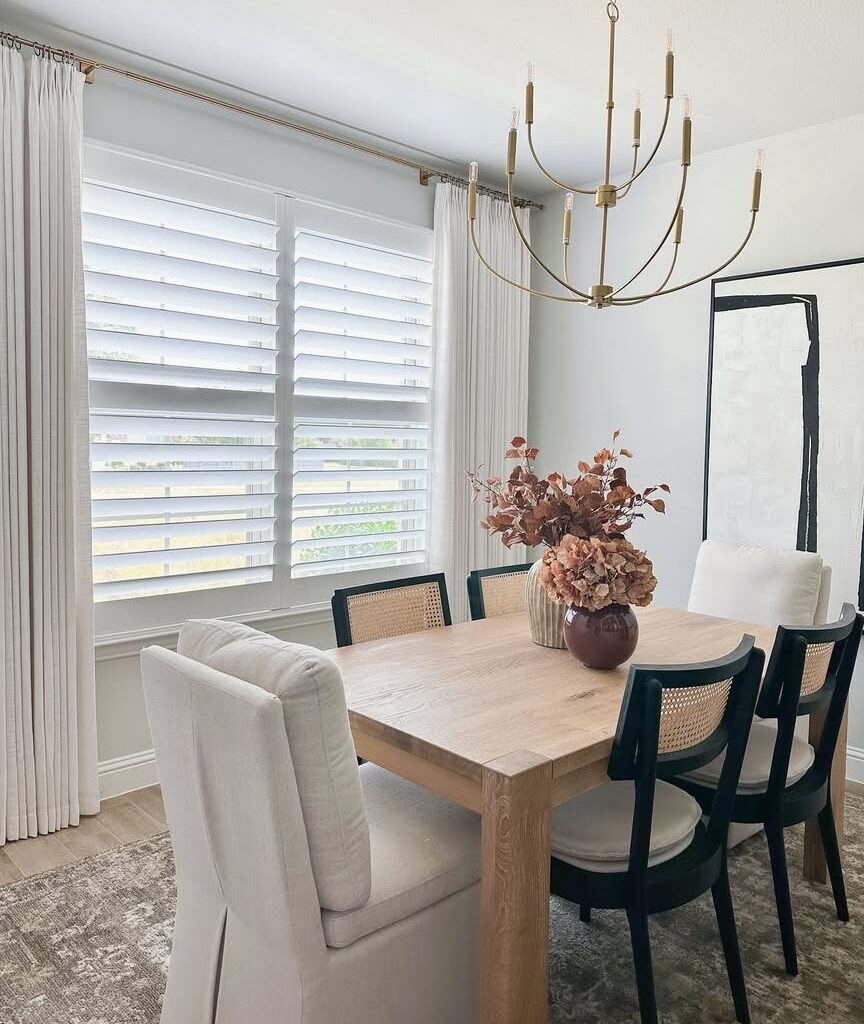

Introduction:
Many homeowners and designers today are combining Roman shades with curtains to achieve a window treatment that is both stylish and highly functional. If you’ve ever wondered How to Hang Curtains With Roman Shades without making the space feel cluttered or unbalanced, the secret lies in proper layering, correct measurements, and selecting the right hardware.
Roman shades provide a clean, tailored look that lies close to the window, while curtains add softness, dimension, and drama. When done correctly, these two treatments elevate a room far beyond what either can accomplish alone. This approach works beautifully in living rooms, dining areas, offices, and especially as elegant bedroom curtains, where homeowners need privacy, light control, and a designer-level finish.
Pairing Roman shades and curtain panels enhances insulation, improves noise reduction, adds visual depth, and gives you total control over natural light—from bright, filtered mornings to private and restful evenings. Whether you love coastal minimalism, traditional interiors, modern farmhouse, or European luxury, this layered window treatment approach blends perfectly into any decorating style.
Why Combine Roman Shades with Curtains?
Before learning how to hang curtains with roman shades, it helps to understand why this combination works so well. Together, they offer:
✔ Elegant Layering
Roman shades provide structure while curtains add softness and movement—creating a designer “magazine finish.”
✔ Improved Light Control
You can:
- Raise shades for daylight
- Close curtains for glare control
- Lower both for total privacy
This layered system is especially effective for bedroom curtains where daytime brightness and nighttime darkness both matter.
✔ Enhanced Energy Efficiency
The double layers create a thermal barrier that:
- Reduces heat loss in winter
- Blocks heat in summer
✔ Acoustic Improvement
Heavy fabrics and dual layers help absorb sound—ideal for city homes or large echoing rooms.
✔ Design Flexibility
Mix textures, patterns, and colors for stunning visual contrast.
Step 1: Choose Your Roman Shade Style
Before installation, select the type of Roman shade that suits your space. Popular options include:
Flat Roman Shades
Sleek and modern with clean lines—perfect for minimalist rooms.
Relaxed Roman Shades
These have a soft swoop at the bottom and pair beautifully with flowing curtains.
Hobbled (Looped) Shades
Textural folds add depth and dimension.
Blackout Roman Shades
Essential for restful bedroom curtains where light control matters.
The look of the shade determines how structured or relaxed your final design appears.
Step 2: Decide Inside or Outside Mount
Roman shades may be mounted:
Inside the window frame
Offers:
- A tailored, clean look
- Space for curtains to frame the window beautifully
- Minimal projection into the room
This is the most popular approach when layering.
Outside mount
Useful when:
- Windows are shallow
- You want to make small windows look larger
- You need better light control
Both approaches work, but the hardware needs to coordinate with the curtain rod placement.
Step 3: Select Curtain Style
When choosing curtains to pair with Roman shades, consider:
Width
Curtains should be wide enough to cover the window even when closed.
Length
For maximum elegance:
- Curtains should “kiss the floor”
- Or puddle slightly for a luxurious finish
Header Style
Popular for layered designs:
- Pinch pleat for formal rooms
- Grommet top for contemporary spaces
- Ripple fold for smooth, designer waves
Step 4: Measuring for the Curtain Rod
One of the most important parts of how to hang curtains with roman shades is correct rod placement. Follow these guidelines:
Height
Mount the curtain rod:
- 4–10 inches above the window frame
- Or closer to the ceiling for dramatic height
Width
Extend the rod:
- 6–12 inches beyond the window on each side
This makes windows look larger and allows curtains to open without blocking natural light.
Step 5: Installing Hardware
Curtain Rod
Use high-quality metal or wood rods that can support the weight of lined drapes. Decorative finials add visual completion.
Shade Brackets
Install Roman shade hardware first, ensuring it does not obstruct the curtain rod placement.
Test Movement
Before adding fabric:
- Raise and lower the shade
- Slide the curtain panels
Smooth motion is essential.
Step 6: Layering the Fabrics
Now comes the creative part—design layering. Here’s how the placement should look:
- Roman shade closest to the glass
- Curtains mounted higher and wider outside the casing
This creates a dimensional, framed effect that instantly looks high-end.
Best Fabric Pairings
The magic of layered window treatments lies in fabric contrast. Some stunning combinations include:
Linen Roman Shades + Velvet Curtains
Natural meets luxurious—ideal for moody dining rooms and high-end bedroom curtains.
Woven Wood Shades + Linen Drapes
Organic, coastal, and relaxed.
Blackout Shades + Light Sheer Curtains
Privacy and softness in harmony.
Patterned Shades + Solid Drapery
For a stylish yet balanced look.
Color & Pattern Coordination
To achieve a designer finish:
Tone-on-Tone
Shades and curtains in closely related colors create:
- Calm unity
- Subtle elegance
- Hotel-level styling
High Contrast
Dark curtains with light shades add drama and structure.
Pattern Play
If using patterns:
- Let one element be patterned
- Keep the other solid
This prevents visual overload.
Special Considerations for Bedrooms
When installing Bedroom Curtains, prioritize comfort and function:
- Choose blackout-lined curtains or shades for better sleep
- Opt for thicker fabrics for noise reduction
- Select soothing colors like slate gray, fog blue, stone, taupe, or ivory
Bedrooms benefit greatly from the warmth and softness of layered window treatments.
Avoid These Common Mistakes
Even skilled decorators sometimes make preventable errors. Avoid:
Rod Installed Too Low
This can make windows appear smaller.
Curtains Too Short
Panels should never float awkwardly above the floor.
Unbalanced Proportions
Thin drapery with heavy shades—or vice versa—feels visually off.
Patterns That Clash
Choose textiles that complement rather than compete.
Final Styling Touches
Tiebacks & Holdbacks
Keep curtains open during the day with elegant metal, rope, or fabric holdbacks.
Decorative Rods
Finials, brackets, and rod finish dramatically affect the final look.
Matching or Coordinated Trim
Some designers add:
- Embroidery
- Grosgrain ribbon
- Contrasting hems
for a custom, bespoke appearance.
Conclusion
Learning how to hang curtains with roman shades is one of the best ways to elevate window décor to a truly refined, designer standard. The combination offers unmatched flexibility in light control, privacy, energy efficiency, and style.
Roman shades provide structure and tailored geometry, while curtains offer softness, height, and dramatic visual framing. Together, they create a layered, luxurious finish suitable for living rooms, dining rooms, offices, and especially as beautifully finished bedroom curtains, where comfort and light control matter most.
By choosing the right mount style, rod height, fabric combinations, and proportions, any homeowner can transform their windows from simple coverings to showstopping architectural elements. With thoughtful placement and creativity, this layered approach brings warmth, contrast, elegance, and exceptional performance to any space.