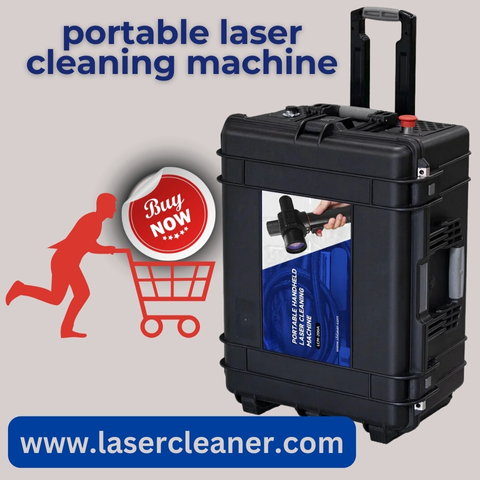

The portable laser cleaning machine has emerged as a groundbreaking solution for industrial and maintenance tasks, providing an innovative way to clean surfaces efficiently without the use of chemicals or abrasive materials. This compact, mobile device allows operators to perform cleaning tasks in diverse environments, ranging from manufacturing facilities to outdoor repair sites, with ease and precision. Unlike traditional methods that rely on sandblasting, chemical agents, or mechanical scrubbing, the portable laser cleaning machine uses laser technology to remove rust, paint, oil, and other contaminants from surfaces. Its adaptability makes it suitable for metals, plastics, and even delicate components that require careful treatment.
One of the most significant aspects of the portable laser cleaning machine is its mobility. Traditional cleaning solutions often require large equipment or setups that are not feasible in tight or remote locations. The portability of this machine enables technicians to transport it easily and address cleaning requirements wherever needed. Industries such as automotive, aerospace, shipbuilding, and construction have recognized the value of portable laser cleaning machines, especially when precise, non-contact cleaning is essential. For example, in aerospace maintenance, cleaning sensitive components without causing damage is critical. The portability factor allows teams to bring the equipment directly to the workpiece, reducing downtime and improving workflow efficiency.
Laser cleaning operates by directing a high-energy laser beam onto a surface, where the laser’s intensity interacts with the contaminant material. This interaction causes the contaminant to either vaporize or detach from the underlying surface. The process is controlled and focused, ensuring that only the unwanted material is affected while the substrate remains intact. Portable laser cleaning machines often come equipped with adjustable parameters, allowing operators to fine-tune the laser’s power, frequency, and scanning speed according to the surface material and type of contamination. This flexibility ensures consistent cleaning quality across different tasks and materials.
In addition to mobility, the safety and environmental impact of portable laser cleaning machines have made them a preferred choice in modern industrial settings. Unlike chemical-based cleaning, lasers do not introduce harmful substances into the environment, and operators can avoid exposure to toxic solvents or powders. The machine’s precise control also minimizes waste and reduces the need for secondary cleaning processes. Furthermore, the laser process generates minimal heat and vibration, making it suitable for delicate surfaces and components where conventional methods could cause deformation or wear.
The operational scope of portable laser cleaning machines is vast. They are frequently employed to remove rust from metal structures, clean welding seams, and restore tools or machinery to their original state. In the automotive industry, they assist in preparing surfaces for painting or coating by eliminating rust, grease, and old paint layers efficiently. Shipyards use portable laser cleaners to remove barnacles, algae, and rust from ship hulls during maintenance, ensuring that cleaning is thorough without damaging the metal surface. Art restoration and historical preservation projects also benefit from this technology, as delicate materials like stone, bronze, and wood can be cleaned without abrasion or chemical reactions.
Maintenance and usability are important considerations for portable laser cleaning machines. Typically, these devices are designed with user-friendly interfaces, allowing operators to quickly set cleaning parameters and monitor the process in real-time. The machine’s lightweight design ensures that it can be maneuvered in tight spaces or elevated positions without difficulty. Additionally, modern portable laser cleaners include safety features such as protective shields, emergency stop buttons, and automated shutdown in case of overheating, contributing to a safer working environment.
The efficiency of portable laser cleaning machines has been demonstrated across multiple industries. By reducing the time required for surface preparation, they enhance overall productivity and operational efficiency. For example, in industrial manufacturing, pre-treatment of metal surfaces before welding or coating can be completed in a fraction of the time compared to sandblasting or chemical cleaning. Similarly, in maintenance and repair operations, technicians can quickly clean machinery, tools, or structural components without disassembling large assemblies, saving both labor costs and downtime.
Investments in portable laser cleaning machines are also influenced by their adaptability to evolving industrial standards. Many industries now demand environmentally friendly cleaning methods that comply with regulatory requirements on emissions, chemical handling, and workplace safety. Portable laser cleaners fulfill these criteria by eliminating chemical waste, minimizing airborne particulates, and reducing the need for protective handling of hazardous substances. This eco-conscious approach aligns with the growing global emphasis on sustainable industrial practices.
Training and skill development are essential for maximizing the potential of portable laser cleaning machines. Operators must understand the principles of laser-material interaction, identify appropriate cleaning parameters for different surfaces, and implement safety protocols to avoid accidents. Many manufacturers provide training programs and guidelines to ensure that technicians can operate the machines efficiently and safely. A well-trained operator can leverage the machine’s precision to achieve consistent, high-quality results across various cleaning tasks.
The versatility and precision of portable laser cleaning machines continue to expand their applications. Beyond industrial maintenance, sectors such as electronics, medical device manufacturing, and cultural heritage preservation increasingly rely on this technology. For electronics, the machine can clean circuit boards and components without causing mechanical stress. In medical manufacturing, it ensures that tools and surfaces are free from contaminants, maintaining hygiene standards. Museums and restoration specialists use laser cleaning to safely remove corrosion and deposits from artifacts, preserving their historical value without altering the material’s integrity.
Final Thoughts
The portable laser cleaning machine is not just a technological innovation; it is a transformative tool that streamlines cleaning tasks, enhances operational efficiency, and aligns with modern industrial standards. Its combination of portability, precision, and eco-friendliness makes it a compelling choice for any professional looking to maintain surfaces with minimal impact and maximum effectiveness.