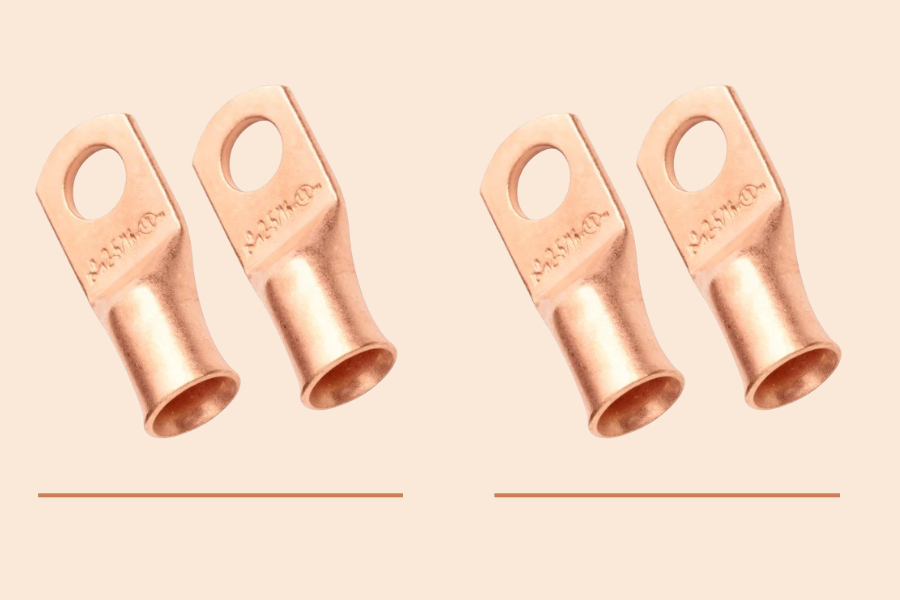

Electrical wiring requires secure and efficient connections to ensure proper current flow and long term reliability. Components like 2 gauge wire lugs, also referred to as 2 gauge copper lugs, are widely used to terminate cables and connect them to electrical devices or power sources. These connectors are designed specifically for 2 gauge cables and play a key role in maintaining stable and safe electrical systems.
Understanding how these lugs work, where they are used, and how to install them correctly is essential for anyone involved in wiring projects. This guide explains the basics in a clear and practical manner.
What Are 2 Gauge Wire Lugs?
2 gauge wire lugs are connectors used to attach the end of a 2 gauge cable to a terminal or stud. They typically consist of a cylindrical barrel where the wire is inserted and a flat ring with a hole for securing the connection using a bolt or screw.
These lugs are commonly made from copper due to its excellent electrical conductivity. The use of copper ensures minimal resistance and efficient transmission of current. In many cases, 2 gauge copper lugs may also be coated with tin to improve resistance to corrosion and environmental factors.
The purpose of these lugs is to create a strong mechanical and electrical connection that remains stable even under load or vibration.
Common Uses in Wiring Projects
2 gauge wire lugs are suitable for applications that involve higher current compared to smaller gauge wires. Their size and capacity make them ideal for a range of electrical setups.
They are often used in battery connections, where cables need to be securely attached to battery terminals. In automotive systems, they are used in starter motors, grounding points, and power distribution connections.
In solar power installations, 2 gauge copper lugs help connect batteries, inverters, and charge controllers. They are also used in industrial equipment and electrical panels where reliable connections are required for consistent performance.
Because of their versatility, these lugs are commonly found in both residential and commercial wiring environments.
Importance of Material and Build Quality
The performance of 2 gauge wire lugs depends heavily on the material used and the overall build quality. Copper is preferred because it provides excellent conductivity and reduces energy loss.
Tinned copper lugs offer additional protection against corrosion, which is especially useful in outdoor or humid environments. This coating helps extend the lifespan of the connection and maintains consistent electrical performance.
The thickness of the barrel and the quality of the ring also play an important role. A well-constructed lug ensures a tighter crimp and better contact with the terminal.
How to Choose the Right Lug
Selecting the appropriate 2 gauge copper lugs involves considering a few important factors. The hole size of the lug must match the terminal or stud where it will be connected. Using the wrong size can result in a loose or unstable connection.
The barrel length should be suitable for the cable insulation and conductor size. A longer barrel may provide a stronger crimp and better grip on the wire.
It is also important to consider the environment in which the lug will be used. For outdoor or high moisture conditions, corrosion resistant lugs are more suitable.
Making the right choice helps ensure safety and improves the efficiency of the wiring system.
Proper Installation Techniques
Correct installation is essential for getting the best performance from 2 gauge wire lugs. The cable should be stripped carefully to expose the conductor without damaging the strands.
The wire is then inserted fully into the lug barrel. A proper crimping tool is used to compress the barrel tightly around the conductor. This creates a solid bond that supports both mechanical strength and electrical conductivity.
Poor crimping can lead to loose connections, increased resistance, and heat buildup. Using the correct tools and techniques helps avoid these issues and ensures a reliable connection.
Safety Considerations
Working with electrical components requires attention to safety. Before installing 2 gauge copper lugs, it is important to disconnect the power source to prevent accidents.
Ensure that the wire size matches the lug specification. Using mismatched components can result in poor connections and potential hazards. After installation, connections should be checked for tightness and proper alignment.
Regular inspection of lugs in active systems can help identify wear, corrosion, or loosening over time. Maintaining these connections is essential for long term safety and performance.
Advantages in Electrical Systems
Using 2 gauge wire lugs provides several benefits in wiring projects. They offer a secure way to terminate cables, which reduces the risk of loose connections and electrical faults.
They also help organize wiring systems by providing a clear and structured method for connecting cables to terminals. This is especially useful in complex setups such as control panels and battery banks.
Additionally, 2 gauge copper lugs support efficient current flow due to their conductive material, which improves overall system performance.
Conclusion
Reliable connections are a fundamental part of any electrical system. 2 gauge copper lugs are essential components that help create secure and efficient terminations for 2 gauge cables.
By understanding their structure, applications, and installation methods, beginners can approach wiring projects with greater confidence. Proper selection and installation ensure that these lugs perform effectively, contributing to safe and stable electrical connections in a wide range of applications.