
In the rapidly evolving world of logistics and supply chain management, warehouse management workflows play a pivotal role in ensuring efficiency, accuracy, and speed in operations. As warehouses become more complex and the demand for quicker turnarounds increases, automating warehouse management workflows has emerged as a key strategy for businesses looking to streamline their operations.
This article delves into the best practices for automating warehouse management workflows, shedding light on the tools, strategies, and key considerations that can help optimize warehouse efficiency.
What are Warehouse Management Workflows?
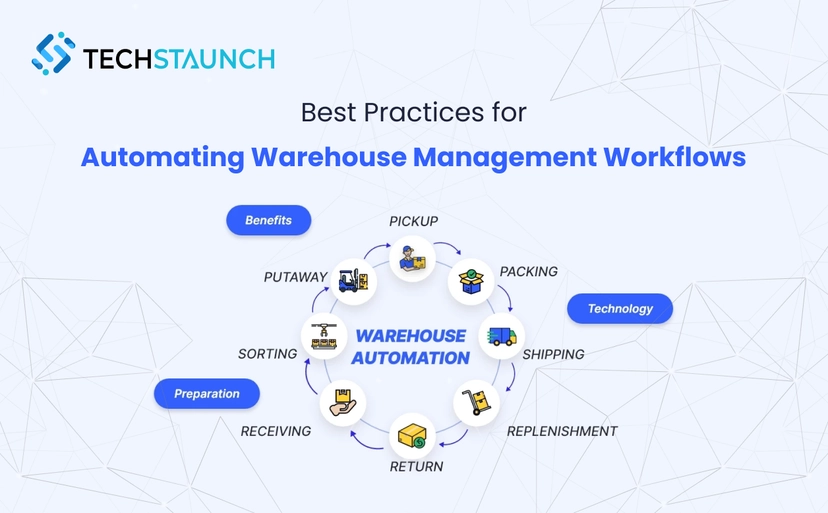
Warehouse management workflows encompass all the tasks and processes involved in running a warehouse. From receiving and storing goods to picking, packing, and shipping, these workflows ensure that inventory moves smoothly through the warehouse, minimizing delays and errors.
The traditional manual approach to warehouse management can be slow, prone to human error, and inefficient. As businesses scale up, the need for automation becomes even more critical. Automating warehouse management workflows can help reduce operational costs, increase productivity, and enhance customer satisfaction by ensuring faster and more accurate order fulfillment.
Key Benefits of Automating Warehouse Management Workflows
Before diving into the best practices, let’s first explore the main benefits of automating warehouse management workflows:
- Increased Efficiency: Automation eliminates repetitive tasks, allowing employees to focus on more strategic activities.
- Improved Accuracy: Automated systems reduce the risk of human error, improving the accuracy of inventory management and order fulfillment.
- Real-Time Data: Automation provides real-time insights into stock levels, order statuses, and workflow progress, facilitating better decision-making.
- Cost Reduction: By optimizing processes and reducing errors, automation helps reduce operational costs.
- Scalability: As businesses grow, automated warehouse management workflows can easily scale to handle increased volumes without a proportional increase in workforce or complexity.
Best Practices for Automating Warehouse Management Workflows
1. Invest in Warehouse Management Software (WMS)
The foundation of automating warehouse management workflows is a robust Warehouse Management System (WMS). A WMS is a software solution that provides real-time visibility into inventory, tracks orders, and optimizes warehouse operations. It is essential for streamlining the flow of goods from the receiving dock to the shipping area.
When selecting a WMS, ensure that it integrates well with other systems such as enterprise resource planning (ERP), transportation management systems (TMS), and order management systems (OMS). The integration will allow seamless data flow across the entire supply chain, improving overall operational visibility and efficiency.
2. Implement Automated Data Capture Solutions
Automated data capture tools like barcode scanners, RFID systems, and vision-based technologies can greatly enhance the accuracy and speed of warehouse management workflows. By scanning barcodes or RFID tags, employees can instantly update inventory levels, track shipments, and monitor product movement in real-time.
This technology minimizes manual data entry errors and ensures that warehouse staff have up-to-date information at their fingertips. Integrating automated data capture with your WMS enhances inventory accuracy and streamlines the order fulfillment process.
3. Optimize Inventory Management
Automation can significantly improve inventory management within warehouse workflows. Key strategies include:
- Cycle Counting: Instead of conducting a full inventory audit, use automated systems to perform periodic cycle counts, ensuring that stock levels are consistently accurate without interrupting daily operations.
- Just-in-Time (JIT) Inventory: By using automated forecasting and replenishment tools, businesses can maintain optimal inventory levels, reducing the risk of overstocking or stockouts.
- Automated Stock Replenishment: Automating the stock replenishment process ensures that your warehouse is always stocked with the right products at the right time, improving operational efficiency and customer satisfaction.
4. Automate Picking and Packing Processes
One of the most labor-intensive activities in warehouse management workflows is picking and packing orders. Automating these processes not only speeds up operations but also reduces the risk of errors. There are several ways to automate picking and packing, including:
- Pick-to-Light Systems: These systems use lights and displays to guide workers to the correct location, reducing the time spent searching for items.
- Voice Picking: This hands-free, speech-based system gives warehouse workers verbal instructions on which items to pick, improving accuracy and efficiency.
- Automated Guided Vehicles (AGVs): AGVs can transport items across the warehouse, further optimizing the picking and packing process by reducing manual labor.
5. Utilize Automated Material Handling Systems
Automated material handling systems (AMHS) can play a crucial role in enhancing the efficiency of warehouse management workflows. These systems, which include conveyors, robotic arms, and sorting systems, automate the movement of goods within the warehouse.
By reducing the need for manual labor to move products, AMHS speeds up processes such as sorting, packaging, and shipping. They also minimize the risk of injuries associated with manual handling, improving warehouse safety.
6. Leverage Machine Learning and AI for Predictive Analytics
Advanced technologies like machine learning (ML) and artificial intelligence (AI) can be used to predict trends in warehouse management workflows. By analyzing historical data, AI can forecast demand, optimize storage, and even predict which items are likely to be in high demand, allowing the warehouse to prepare in advance.
Incorporating AI-driven tools into your warehouse management system enables better decision-making and reduces the likelihood of stockouts or overstocking. Predictive analytics also help with workforce planning, ensuring that you have the right number of employees during peak periods.
7. Focus on Employee Training and Change Management
While automation tools significantly enhance warehouse management workflows, it is crucial to remember that people still play an essential role. Proper training and change management are key to successful automation adoption.
Warehouse staff should be trained to operate new automated systems effectively and efficiently. Regular training sessions will ensure that employees remain proficient in the use of automated tools, leading to a smoother workflow and better productivity.
Additionally, businesses should communicate the benefits of automation to employees to alleviate concerns about job security and ensure a smooth transition.
8. Monitor and Optimize Continuously
After implementing automation, it’s vital to continuously monitor the performance of warehouse management workflows. Key performance indicators (KPIs) such as order fulfillment time, inventory accuracy, and labor productivity should be tracked regularly.
Automation systems should be adjusted as needed based on performance data to ensure they continue to meet operational goals. Whether it’s adjusting inventory management strategies or upgrading automation technology, continuous improvement is essential to keep workflows optimized.
9. Focus on Security and Compliance
As warehouses become more automated, security and regulatory compliance should remain top priorities. Ensure that automated systems comply with relevant industry standards and regulations, particularly in industries like pharmaceuticals or food logistics where safety standards are stringent.
Automated systems should also include robust security features, such as encrypted data transmission and secure access controls, to protect sensitive business information.
Conclusion
Automating warehouse management workflows is no longer just a luxury; it’s a necessity in today’s competitive logistics and supply chain environment. By implementing the best practices outlined in this article—investing in WMS, automating data capture, optimizing inventory management, automating picking and packing processes, and leveraging advanced technologies—businesses can achieve significant improvements in efficiency, accuracy, and scalability.
As the pace of e-commerce and global trade continues to accelerate, the warehouses of tomorrow will need to be faster, smarter, and more adaptable. Embracing automation is the key to achieving these goals and maintaining a competitive edge in the market.
By incorporating automation into your warehouse management workflows, you can future-proof your operations and deliver better outcomes for both your business and your customers.