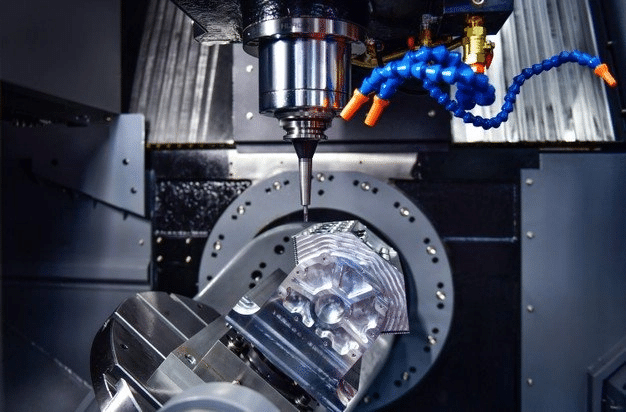

Maintaining consistent quality in CNC production is one of the greatest challenges for modern manufacturers. Variations in part positioning, tool paths, or machine setup can quickly lead to scrap, rework, and lost efficiency. Jig and fixture design provides the solution by establishing precise control over workpiece location, orientation, and support during every machining operation. Properly engineered fixtures allow operators to repeat setups accurately and produce uniform results batch after batch, reducing errors and increasing productivity.
As CNC shops face tighter tolerances and higher production volumes, relying on generic clamps or vises is no longer sufficient. Purpose-built jigs and fixtures ensure that every component is positioned the same way for each cycle, improving both accuracy and efficiency. They become a foundation for consistent quality and predictable manufacturing performance.
How Jig and Fixture Design Improves CNC Accuracy
Controlling Part Position and Orientation
A key role of jig and fixture design devices is to precisely define where and how a part sits during machining. Locating pins, reference surfaces, and clamps prevent any unintended movement, ensuring that every cut, hole, or contour aligns with design specifications. Controlled positioning reduces dimensional errors and guarantees that features maintain the correct spatial relationships, which is critical for assembly and functional performance.
Enhancing Repeatability Across Production Runs
Consistency comes from repeatability, and fixtures make it achievable. When a fixture holds a component in the same position each time, every cycle produces identical results. This repeatability minimizes variation caused by operator handling or machine setup differences. As a result, inspection failures drop, and finished parts meet quality standards reliably.
Key Engineering Principles in Effective Fixture Design
Balanced Constraint Without Deformation
Effective jigs and fixtures must fully restrain a part without causing stress or distortion. Designers select locating points and clamping methods to stabilize the component while maintaining its shape. Over-constraining can lead to part deformation, while under-constraining allows movement that compromises tolerances. Balanced support is essential for maintaining accuracy, especially for thin or delicate components.
Tool Accessibility and Process Flow
Fixtures must not obstruct the machining process. Thoughtful jig and fixture design ensures tool access to all required features, while allowing chip removal and avoiding collisions. Accessible workholding simplifies loading and unloading, reduces machine downtime, and allows operators to work safely and efficiently.
Enhancing CNC Production Efficiency
Reducing Setup Time and Errors
Jigs and fixtures tooling significantly reduce setup time by removing the need for manual alignment and repeated measurements. Operators place parts in predefined locations, clamp them securely, and start machining immediately. This speed reduces downtime and allows CNC machines to operate at maximum capacity.
Supporting Consistent Process Control
Once a fixture is validated, its consistent use ensures that machining parameters can be optimized confidently. Process control becomes predictable, enabling engineers to refine cutting speeds, feeds, and tool paths without worrying about part misalignment. Reliable workholding is crucial for stable and repeatable production outcomes.
Solutions for Complex and High-Precision Parts
Handling Irregular Geometries
Not all components fit neatly into standard vises or clamps. Custom jigs and fixtures provide tailored support for irregular or fragile parts. Contoured supports and adaptive clamping systems secure components without causing damage. These solutions allow complex parts to be machined accurately with fewer setups, reducing handling errors.
Multi-Operation Fixture Strategies
Many precision components require machining on multiple faces or features. Fixtures designed for multi-operation machining enable several steps to be completed in a single setup, reducing cumulative errors and improving overall accuracy.
Benefits include:
- Maintained feature-to-feature alignment
- Reduced handling and repositioning
- Faster overall production cycles
Consolidating operations increases efficiency while preserving quality.
Cost and Quality Benefits of Well-Engineered Fixtures
Minimizing Scrap and Rework
Unstable or poorly designed fixtures often lead to part movement during cutting, causing scrap or rework. Proper jig and fixture design devices prevent such issues by maintaining stable positioning throughout each operation. Reduced scrap directly improves profitability and allows CNC machines to operate without unnecessary interruptions.
Long-Term Operational Savings
Although custom fixtures involve upfront costs, their long-term benefits outweigh the initial investment. Reduced setup times, improved tool life, and consistent part quality contribute to significant cost savings over multiple production runs. Durable and well-built fixtures also reduce maintenance requirements, supporting long-term manufacturing reliability.
Aligning Fixtures with Modern CNC Practices
Supporting Automation and Robotics
As CNC shops adopt automation, fixtures must be designed for robotic loading and unloading. Precise locating features allow robots to handle parts reliably, even at high speeds, while minimizing errors. Automation-ready fixtures enable unattended machining, increasing overall shop productivity.
Integration with Digital Planning and Simulation
Modern fixture design often begins in digital simulation. Engineers can test clamping positions, accessibility, and force distribution virtually before creating physical fixtures. Digital planning improves first-pass success, reduces trial-and-error on the shop floor, and ensures that fixtures meet both geometric and process requirements.
Strategic Advantages of Investing in Fixture Design
Building Consistency and Confidence
Fixtures create a repeatable and predictable environment for machining. Operators gain confidence that parts are positioned correctly, while engineers can trust that processes will deliver accurate results. This consistency improves workflow, reduces errors, and simplifies operator training.
Enhancing Long-Term Manufacturing Capability
Investing in jig and fixture design strengthens a shop’s ability to handle complex projects, maintain high tolerances, and scale production efficiently. Custom fixtures tailored to part geometry and machining strategy provide a competitive edge by ensuring quality remains consistent as production demands increase.
Conclusion
Consistency is the cornerstone of successful CNC production, and thoughtful jig and fixture design is the key to achieving it. By controlling part location, supporting complex geometries, reducing setup time, and enabling repeatable processes, well-engineered fixtures ensure reliable machining results. Manufacturers who prioritize fixture design gain efficiency, improve quality, and build the capability to meet increasingly demanding production requirements.