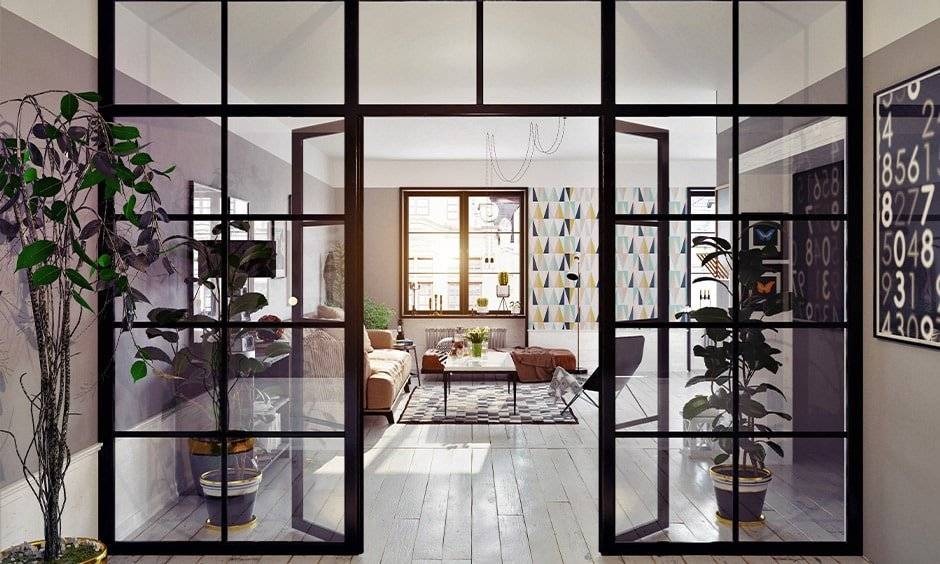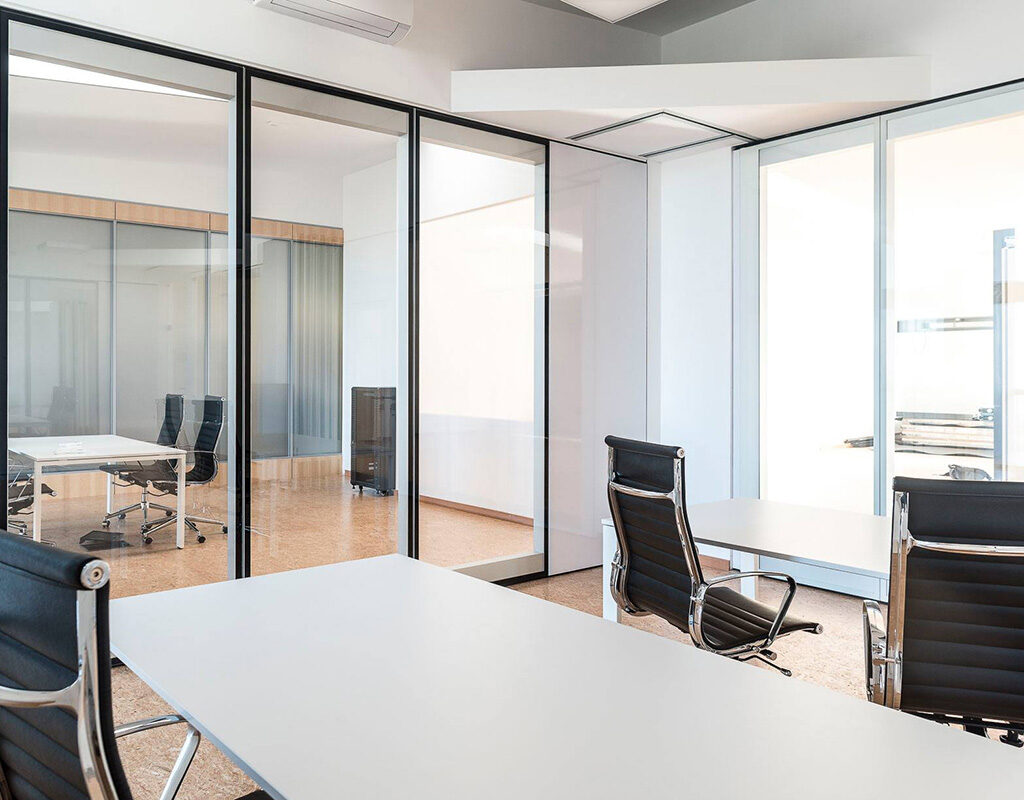

A Glass Partition Wall is a clean, modern way to divide a space without killing daylight. Instead of building solid walls that make rooms feel smaller, clear panels keep areas bright, open, and easy to navigate.
In 2026, designers lean on transparent dividers because layouts change fast—new teams, new product lines, new customer routes. A Glass Partition Wall supports that flexibility while still looking premium.
Glass Partition Wall Benefits
When businesses choose a glass partition system, they usually want one (or more) of these wins:
- More natural light that reaches deeper into the floor
- Modern aesthetics that match minimalist, industrial, and luxury interiors
- Space division with less disruption, compared to heavy masonry work
- Better visibility for teams, supervisors, and security
- Easy cleaning and fewer “touch-up” costs over time
Types of Glass Partition Walls (with best uses)
Different systems fit different spaces. This guide covers the most requested options in offices, malls, showrooms, and back-of-house work areas.
Frameless glass partitions (premium look)
A frameless glass divider with minimal metal lines looks high-end and keeps sightlines clean. It’s common in executive suites, meeting rooms, and boutique retail.
Framed aluminum glass partitions (strong + affordable)
An aluminum glass partition adds durability and helps control movement in high-traffic zones. It’s a practical choice for shopping malls and busy commercial floors.
Sliding glass partition walls (space-saving)
A sliding glass partition is ideal where swing doors would clash with foot traffic—think narrow corridors, café counters, and compact office aisles.
Folding glass partitions (flexible spaces)
Folding panels work well in training rooms, event spaces, and pop-up retail areas that need fast reconfiguration.
Fixed glass panels (simple + budget-friendly)
A fixed system is the “set it and forget it” option—great for reception lines, product display zones, and standard office cabins.
Switchable privacy solutions are appearing more in meeting rooms and clinics where privacy must be instant. Smart films and switchable panels are repeatedly mentioned in modern partition trends.
Glass block partition (decor + privacy)
Glass blocks diffuse light and add texture. They’re popular in salons, wash areas, and feature walls that need privacy without a dark corner.
Glass Options & Finishes (privacy + style)
The finish changes both privacy and vibe:
- Clear glass for maximum light and visibility
- Frosted glass partition finishes for privacy in cabins and fitting rooms
- Tinted/smoked glass for glare control and a premium look
- Fluted (reeded) glass to blur shapes while staying bright—a design trend seen in many partition roundups
- Laminated vs tempered: tempered glass is heat-treated and breaks into small pieces; laminated glass uses an interlayer that helps hold fragments together and can improve acoustics
For projects where speech privacy matters, an acoustic glass partition often uses laminated builds plus proper seals. Acoustic performance is commonly discussed in the STC 35–50 range for commercial needs, depending on the full system (doors and seals included).
Best Places to Use Glass Partition Walls
A Glass Partition Wall fits almost any commercial layout:
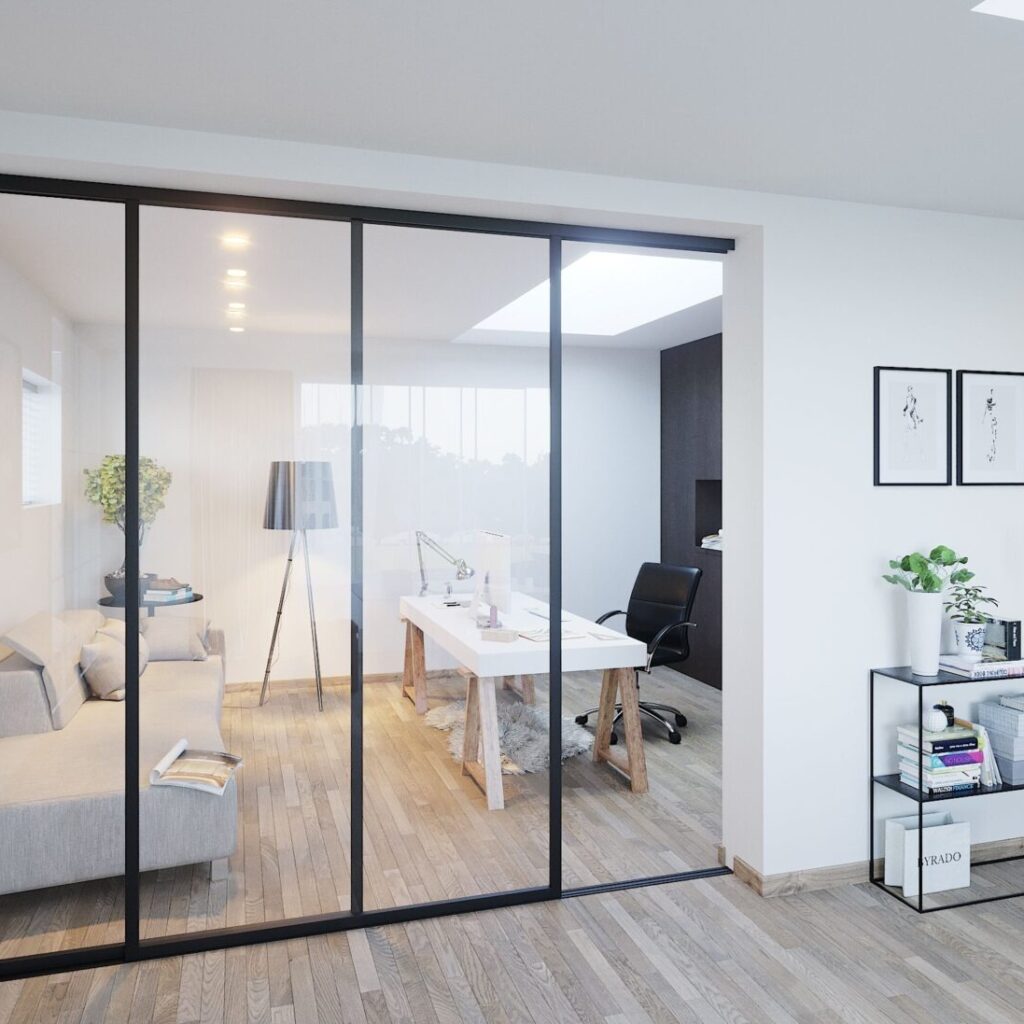
- Office cabins, meeting rooms, and manager offices
- Reception areas and waiting lounges
- Retail shops, showrooms, and shop-in-shop sections inside malls
- Viewing kitchens or prep zones (visibility + separation)
- Bathrooms and changing areas (with frosted or patterned glass)
- Warehouse offices inside ecommerce operations
Glass Partition Wall Design Ideas (17 stunning ideas)
Below are 17 ideas that work well for business settings and brand-led spaces:
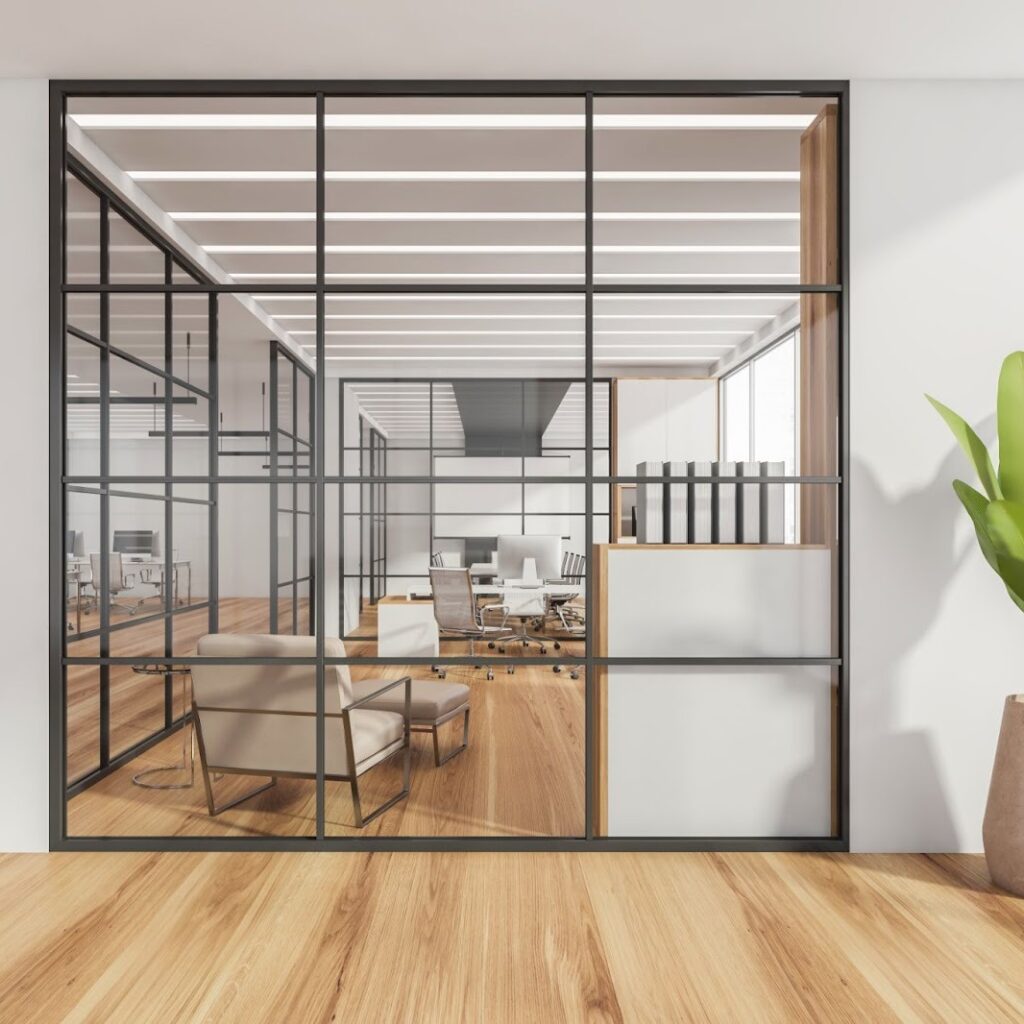
- Black-frame industrial grid panels
- Ultra-minimal frameless panels
- Fluted glass for “soft privacy”
- Half-glass with a solid lower panel (extra protection)
- Sliding barn-style glass doors
- Curved glass corners for smoother traffic flow
- Branding film or logo frosting (subtle wayfinding)
- Gradient frosting (private at eye level, clear at the top)
- Double-glazed meeting pods for quieter calls
- Glass plus vertical wood slats (warm + modern)
- Corner “fishbowl” meeting room (visibility without clutter)
- Switchable privacy wall for boardrooms and clinics
- Integrated blinds inside glass (clean privacy control)
- Partition + product display shelving on the side
- Matte-black hardware upgrade (handles, hinges, tracks)
- Storefront-style internal partition for boutique sections
- Backlit patterned glass for a signature brand moment
Glass Partition Wall Cost (the section people search most)
Search intent is clear: people want glass partition wall cost and glass partition wall price, and they want it fast.
Many buyers also compare glass partition wall price across vendors, then validate the final glass partition wall cost after hardware and finishing are added.
A Glass Partition Wall budget is usually driven by:
- Glass type (tempered, laminated, decorative, switchable)
- Thickness (8mm, 10mm, 12mm and beyond)
- Frameless vs framed aluminum systems
- Hardware (tracks, hinges, handles, locks, closers)
- Size, cut-outs, curves, and finish level
- Site conditions (level floors, access, working hours)
Quick comparison (relative budget guide)
System type | Typical budget level | Best for
Basic framed fixed partition | $ | Standard offices and stores
Frameless fixed partition | ∣PremiuminteriorsandshowroomsSlidingsystem∣| Premium interiors and showrooms Sliding system |∣PremiuminteriorsandshowroomsSlidingsystem∣–$$$ | Space-saving layouts
Switchable privacy system | $$$$ | Boardrooms and clinics
A smart buying tip: compare full scope (glass + hardware + sealing + warranty). The lowest glass partition wall price can jump after “extras” appear later.
What Thickness is Best? (quick answers)
Most commercial buyers decide thickness based on traffic and panel size:
- Light-duty fixed panels: 8–10mm is common
- Offices with larger panels/doors: 10–12mm is often selected for a sturdier feel
- Busy public areas: laminated builds can add safety and better noise control, especially near doors
Installation Process (step-by-step)
A Glass Partition Wall looks clean once installed, but good results come from careful steps:
- Measurement & layout (door swings, walk paths, power points)
- Frame/track installation (laser level matters)
- Glass fitting (gaskets, clamps, hinge alignment)
- Sealing & finishing (reduces rattles and improves acoustics)
- Final safety checks (edges, corners, door closing speed)
Safety & Building Considerations
A Glass Partition Wall should use safety glazing where impact is likely—especially near doors and public walkways. Guidance notes commonly treat both tempered and laminated assemblies as safety glazing when they meet performance requirements.
Practical safety checklist:
- Polished edges and protected corners
- Hardware that won’t snag clothing or bags
- Door seals and closers set for controlled movement
- Acoustic planning early (doors and seals matter as much as glass)
Maintenance & Cleaning Tips
To keep glass looking premium:
- Use non-abrasive cleaner and a microfiber cloth
- Avoid gritty powders that can scratch finishes
- Check track wheels and hinges on a schedule
- Replace branding films when edges lift
FAQs (snippet-ready)
- Is a Glass Partition Wall soundproof?
It can reduce noise, but results depend on the system: glass type, seals, doors, and installation quality. - Frameless or framed—what’s better?
Frameless looks sleek; framed aluminum systems can feel sturdier and may be easier on budgets. - Can partitions be installed on tile, marble, or gypsum?
Yes, with the right channels and anchors. A site check helps avoid cracking and misalignment. - How long does installation take?
Fixed systems are often faster; sliding and switchable systems can take longer due to hardware and wiring needs. - Does frosted glass give full privacy?
Frosted glass usually blocks clear views, but silhouettes may still appear at close distance. Fluted patterns can add more privacy.