
Introduction
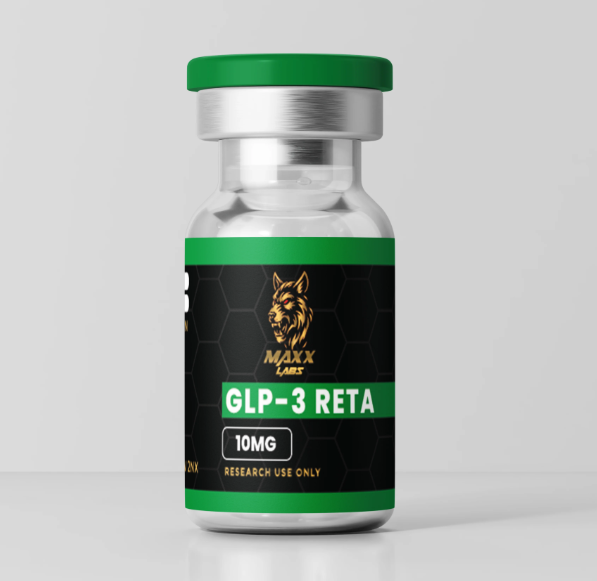
In recent years, peptides have surged to the forefront of metabolic and obesity research, offering scientists powerful tools to investigate the complex biology of energy regulation, appetite control, and metabolic health. Among these compounds, GLP-3 RETA— also known scientifically as Retatrutide (LY3437943) — is one of the most exciting and advanced peptide candidates emerging from research laboratories. Credited with multi-pathway receptor activity and powerful metabolic effects in early clinical studies, GLP-3 RETA represents a next-generation approach to understanding how the body manages weight and glucose metabolism.
In this complete guide, we’ll break down what GLP-3 RETA is, how it works, the scientific evidence surrounding its effects, and what researchers are learning about its benefits — all based on information from the Maxx Labs product page and established literature coverage.
What Is GLP-3 RETA?
GLP-3 RETA is a synthetic peptide research compound developed for advanced scientific investigation. Its scientific name is Retatrutide (LY3437943), and it is a triple receptor agonist peptide designed to interact with three key metabolic hormone receptors:
- GLP-1 (Glucagon-like peptide-1) receptor
- GIP (Glucose-dependent insulinotropic polypeptide) receptor
- Glucagon receptor
These receptors each play distinct roles in metabolic regulation, glucose homeostasis, and energy balance. Unlike earlier peptide compounds that targeted just one or two pathways, Retatrutide’s triple-agonist profile enables researchers to explore a broader set of biological effects and interactions than previously possible.
Maxx Labs offers this compound as a high-purity peptide research product. The vial contains lyophilized peptide powder with a guaranteed ≥99% peptide-grade purity, verified through HPLC testing and accompanied by a Certificate of Analysis (COA) if requested.
It’s important to stress that GLP-3 RETA from Maxx Labs is strictly supplied for research use only — not for human consumption, therapeutic use, or veterinary application. All handling should be done by trained professionals in controlled environments.
How GLP-3 RETA Works: Mechanism of Action
The defining characteristic of GLP-3 RETA is its triple-receptor agonist mechanism. Here’s how it works at a high level:
1. GLP-1 Receptor Activation
GLP-1 is a naturally occurring hormone that enhances insulin secretion in response to glucose, slows gastric emptying, and promotes satiety (fullness). By activating GLP-1 receptors, Retatrutide helps researchers study mechanisms of appetite control, glucose regulation, and satiety signaling.
2. GIP Receptor Activation
GIP also stimulates insulin secretion but does so in a glucose-dependent manner. Its activation may contribute to improved insulin sensitivity and nutrient partitioning. By engaging the GIP receptor, Retatrutide extends the metabolic effects beyond what single-target molecules achieve.
3. Glucagon Receptor Activation
Although glucagon traditionally increases blood glucose, when carefully balanced with GLP-1 and GIP activity, glucagon receptor engagement can increase energy expenditure and fat oxidation, making it especially interesting in metabolic research.
Together, this triple pathway activation allows Retatrutide to influence multiple aspects of metabolism — including appetite regulation, energy balance, insulin action, and fat metabolism — in ways that may be more comprehensive than earlier peptide drugs.
Scientific Insights & Research Findings
GLP-3 RETA’s biological potential has generated significant interest in the research community. While the product page is clear that it’s intended for scientific investigation only, it also highlights key findings from scientific literature — particularly early clinical results published in prestigious research journals.
1. Impressive Weight Reduction
In a large Phase 2 clinical study published in the New England Journal of Medicine, subjects given Retatrutide experienced up to 24.2% body weight reduction over 48 weeks, a magnitude of change that was greater and faster than semaglutide (Ozempic), which showed ~15% reduction over 68 weeks in comparable studies. This stark contrast emphasizes the compound’s potential for fat loss and metabolic modulation.
2. Enhanced Satiety and Reduced Calorie Intake
Because it activates both GLP-1 and GIP receptors, the peptide is believed to enhance satiety signals more robustly than single-pathway agents. This may help reduce overall caloric intake, a key component of sustained weight management.
3. Improved Insulin Sensitivity
Activation of GLP-1 and GIP pathways has been associated with improved insulin sensitivity and glucose control in research models, offering potential insights into diabetes-related metabolic processes.
4. Potential Metabolic Benefits
Research also suggests that Retatrutide may increase basal metabolic rate, contribute to fat mass reduction, and could support liver health improvements — including impacts on conditions like non-alcoholic fatty liver disease (NAFLD) in experimental models.
Why Researchers Are Interested in GLP-3 RETA
Compared to previous peptide analogues, such as semaglutide and tirzepatide, Retatrutide’s unique receptor profile opens new doors for understanding complex metabolic physiology:
Integrated Metabolic Effects
Single or dual receptor drugs provide limited insights into combined metabolic pathways. Retatrutide allows scientists to study how GLP-1, GIP, and glucagon receptor activation interact and influence each other at the systemic level.
Energy Expenditure and Fat Oxidation
The compound’s influence on multiple receptor systems also enables research into how energy expenditure can be modulated — something particularly relevant for obesity and metabolic syndrome studies.
Comparative Efficacy Research
Retatrutide’s performance in clinical trials compared to other peptide therapeutics offers clues about how to design future interventions that may be more effective or tailored to specific metabolic outcomes.
Product Quality & Assurance
Maxx Labs emphasizes strict quality control for GLP-3 RETA, ensuring researchers receive consistent and reliable peptide material. Key quality aspects include:
- Ultra-Pure Peptide — ≥99% peptide-grade purity as verified by HPLC analysis.
- Certificate of Analysis (COA) — Available on request to confirm batch-specific data.
- Manufactured in a GMP-Certified Facility — Developed and dispatched in the UK under strict quality protocols.
- Third-Party Testing — Independent testing options available for additional verification.
- Cold Chain Delivery — Stable transport conditions to preserve peptide integrity.
Researchers are encouraged to handle all compounds carefully and in compliance with safety guidelines.
Important Safety and Usage Notes
GLP-3 RETA is for research use only. It is not sanctioned for human or veterinary application, and is supplied solely for laboratory and analytical purposes. Handling requires appropriate training, controlled environments, and adherence to regulatory standards.
Maxx Labs clearly states this warning: self-administration of research compounds carries unknown and unquantified risks. The company urges strict compliance with scientific use cases and denies liability for misapplication outside intended research contexts.
Conclusion
GLP-3 RETA (Retatrutide) is a cutting-edge synthetic peptide that represents a new frontier in metabolic science. With its triple-agonist mechanism targeting GLP-1, GIP, and glucagon receptors, it offers researchers unprecedented opportunities to explore weight regulation, glucose homeostasis, energy balance, and metabolic health.
While it shows significant potential in early clinical contexts — including greater weight loss and enhanced metabolic effects compared to existing peptide drugs — its use remains strictly in the research domain. Maxx Labs supplies high-quality peptide material with rigorous quality assurance for scientific investigation, making it a valuable tool for laboratories probing the biology of metabolism.
Whether you’re studying obesity, diabetes, energy expenditure, or related fields, GLP-3 RETA stands out as a powerful compound for advancing metabolic research — as long as it is used responsibly and within regulated scientific environments.