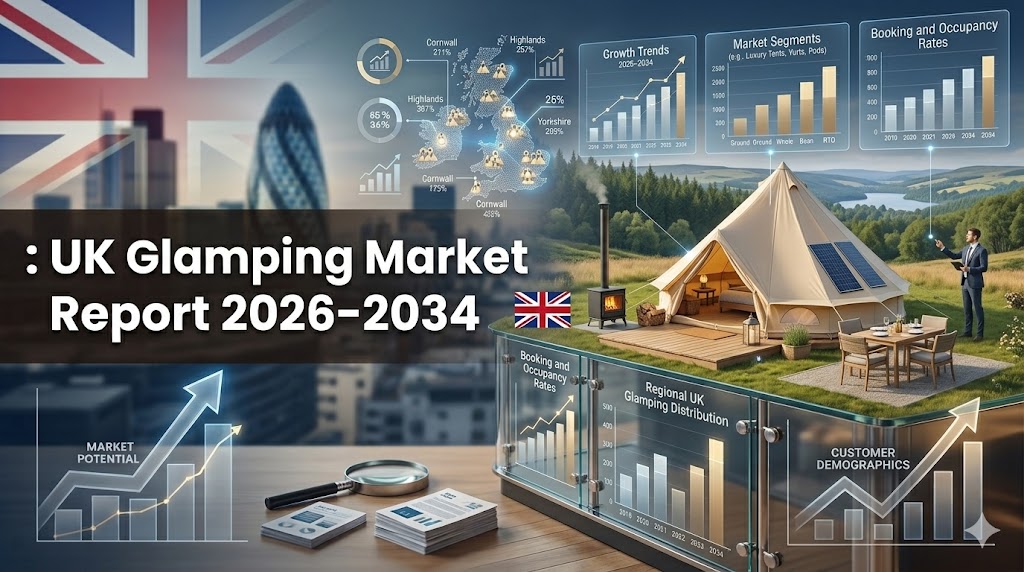

The traditional British camping trip is undergoing a luxurious transformation. No longer just about struggling with tent poles in the rain, the “staycation” has evolved into a sophisticated, multi-million-dollar industry known as glamping. By blending the raw beauty of the outdoors with the comforts of a high-end hotel, the UK glamping market has carved out a significant niche in the broader travel sector.
According to the latest industry data from IMARC Group, the market reached a valuation of USD 131.5 Million in 2025. However, this is just the beginning of a decade of rapid expansion. With a projected Compound Annual Growth Rate (CAGR) of 10.40%, the market is expected to soar to USD 335.0 Million by 2034.
What is Driving the UK Glamping Surge?
The demand for glamping – or “glamorous camping” – is fueled by a combination of economic shifts, digital innovation, and a growing desire for sustainable travel.
1. Rising Disposable Incomes and Luxury Demand
Increased spending power among the UK’s middle class is a primary engine for growth. As disposable incomes rise, more households are willing to invest in unique, high-end travel experiences. For instance, residents in cities like Aberdeen report monthly disposable incomes averaging around USD 1,575, significantly above the UK average. This financial flexibility allows travelers to choose “reachable luxury” options that provide home-like comforts in natural settings.
2. The Rise of Specialized Online Booking Platforms
The digitalization of travel has made it easier than ever for consumers to find their perfect getaway. In March 2025, the launch of GlampingPods.com – a site exclusively dedicated to pod-style accommodations – demonstrated the industry’s shift toward hyper-specialization. These platforms offer seamless payment processing, immediate confirmations, and customer reviews, drastically improving the conversion rate for site owners.
3. Eco-Tourism and Sustainable Travel
Modern British travelers are increasingly eco-conscious. Glamping sites that emphasize environmental stewardship – such as those featuring solar-powered pods, rainwater harvesting systems, and locally sourced construction materials – are seeing a spike in popularity. This alignment with “green” travel values is a major factor augmenting the UK glamping market share.
Sample Request For Your Business
Market Segmentation
The UK glamping market is a diverse ecosystem categorized by age group, accommodation type, and how travelers choose to book their stays.
Segment Analysis Table
| Category | Key Segments | Market Impact & Focus |
| Age Group | 18-32, 33-50, 51-65, Above 65 | 33-50 years often represent a core demographic seeking family-friendly luxury. |
| Accommodation Type | Cabins and Pods, Tents, Yurts, Treehouses, Others | Cabins and Pods are currently the most popular for their year-round weather resistance. |
| Booking Mode | Direct Booking, Travel Agents, Online Travel Agencies (OTAs) | OTAs and Specialized Platforms are the fastest-growing modes due to convenience. |
Accommodation Trends: From Yurts to Treehouses
The variety of glamping structures is one of the market’s greatest strengths. While traditional tents remain a staple, the focus has shifted toward solid-structure accommodations that allow for year-round operation.
- Cabins and Pods: These offer the highest level of weather protection, making them ideal for the unpredictable UK climate.
- Treehouses: These provide a “bucket list” experience, often commanding the highest price points due to their exclusivity and architectural uniqueness.
- Yurts and Safari Tents: Popular for romantic getaways and large group gatherings, offering a blend of traditional aesthetics and modern interiors.
Regional Insights: Where are People Glamping?
Glamping interest is spread across the UK, with specific regions emerging as hubs for outdoor luxury:
- South West and South East: Traditionally popular due to scenic coastlines and proximity to London.
- Scotland: A major growth area, with high interest in remote, rugged glamping experiences that offer seclusion.
- North West and West Midlands: Seeing a rise in small-scale, rural outdoor stays, such as the new sustainable sites recently opened in Worcestershire.
- Other Key Regions: London, East of England, Yorkshire and The Humber, and the East Midlands.
Recent Industry Developments
The market is characterized by a steady stream of new planning applications and site launches that emphasize sustainability:
- Small-Scale Growth: In May 2025, planning applications were submitted for new glamping pods in locations like Dunfermline, highlighting the trend of converting garden sites into high-end rental units.
- Eco-Innovation: New developments in Worcestershire are setting a forward-thinking model by integrating solar power and rainwater harvesting into the guest experience, positioning themselves as leaders in the eco-conscious luxury sector.
Conclusion:
The UK glamping market is more than just a passing fad; it is a permanent fixture of the British tourism industry. By offering an affordable alternative to standard hotel stays without sacrificing the comfort of home, glamping has successfully bridged the gap between budget camping and luxury travel.
As we move toward 2034, the focus will remain on sustainability, specialized digital booking, and diverse accommodation types. Whether it’s a solar-powered pod in Worcestershire or a treehouse in the Scottish Highlands, glamping is set to remain the preferred choice for travelers looking to reconnect with nature in style.