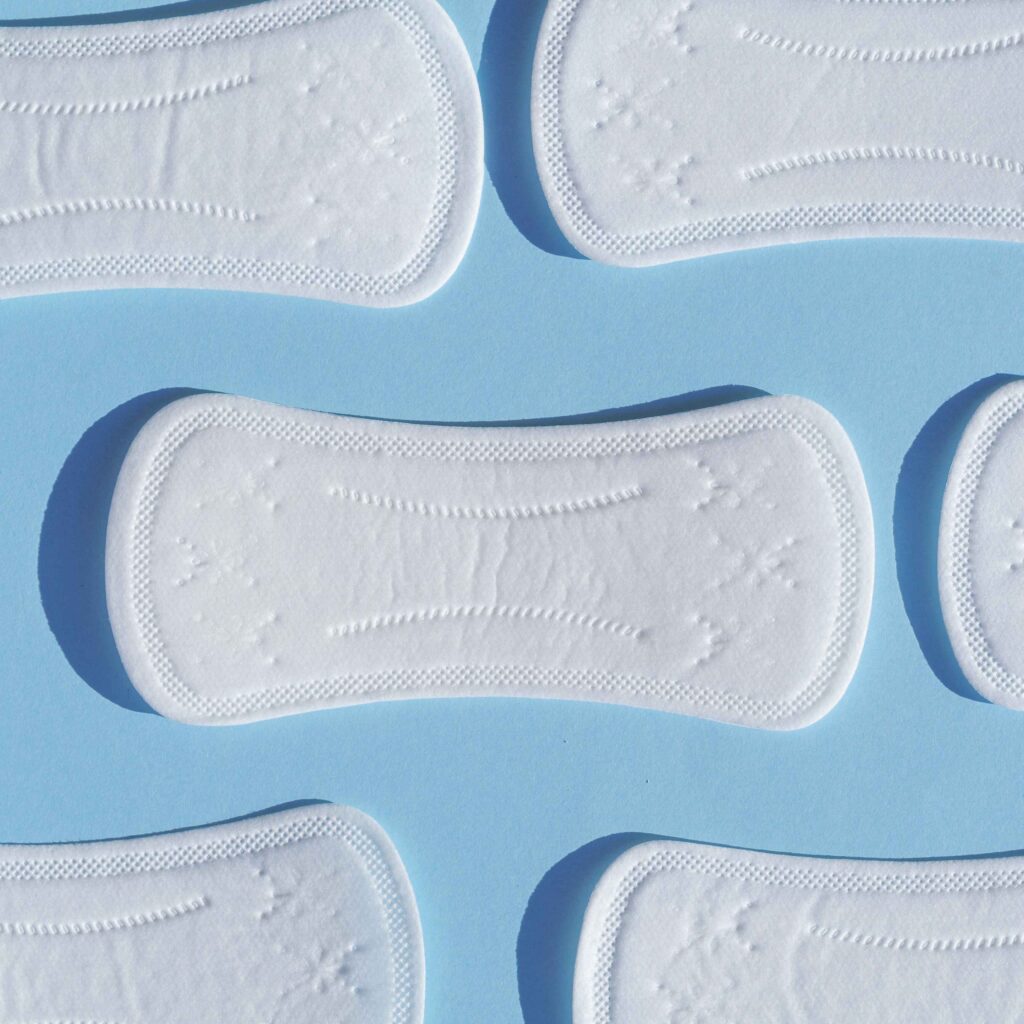

We recognize sanitary pads as essential personal care products engineered through advanced material science, precision manufacturing, and strict safety oversight. Modern sanitary pads are designed to deliver high absorbency, skin comfort, and leak protection while meeting rigorous international safety standards. From raw material sourcing to final packaging, every stage of production is optimized to ensure reliability, hygiene, and user confidence.
This comprehensive guide details how sanitary pads for women are made, the materials used, and the safety standards that govern their production.
Core Components of Sanitary Pads
Top Sheet: Skin-Contact Layer
The top sheet is the layer that directly touches the skin. It is engineered to be soft, non-irritating, and quick-drying.
- Materials Used: Nonwoven polypropylene or polyethylene fibers
- Key Properties: Breathability, smooth texture, rapid fluid transfer
- Surface Engineering: Micro-perforations enhance liquid intake while keeping the surface dry
Advanced manufacturers apply hydrophilic treatments to ensure fluid passes quickly to the absorbent core, reducing discomfort and skin exposure to moisture.
Absorbent Core: The Functional Heart
The absorbent core determines the pad’s capacity and performance. It is designed to rapidly capture and retain fluid under pressure.
- Primary Materials: Fluff pulp (derived from sustainably sourced wood) and superabsorbent polymers (SAP)
- Functionality: SAP converts liquid into gel, locking it in place
- Distribution Technology: Channels and embossing spread fluid evenly
This layer is engineered to prevent rewetting, ensuring dryness even during extended use.
Acquisition and Distribution Layer (ADL)
Positioned between the top sheet and absorbent core, the ADL accelerates fluid intake and disperses it across the core.
- Material Composition: Chemically treated nonwoven fibers
- Performance Advantage: Reduces pooling and overflow
- Design Benefit: Enhances comfort during heavy flow
Back Sheet: Leak Protection Barrier
The back sheet prevents leakage while allowing airflow.
- Materials Used: Polyethylene film or breathable laminate
- Key Features: Waterproof, flexible, noise-reduced
- Breathability: Microporous membranes allow vapor to escape
This layer balances leak security with thermal comfort, a critical factor for daily wear.
Adhesives and Release Paper
To ensure secure placement, sanitary pads use pressure-sensitive adhesives.
- Adhesive Standards: Skin-safe, latex-free formulations
- Release Paper: Silicone-coated paper protects adhesive until use
- Stability: Maintains adhesion during movement without residue
Step-by-Step Manufacturing Process
1. Raw Material Selection and Inspection
We begin with strict sourcing protocols. Every material undergoes quality inspection, including purity checks, microbial testing, and performance validation. Only materials that meet predefined specifications proceed to production.
2. Pulp Defibration and Core Formation
Wood pulp is mechanically defibrated into soft fibers. SAP is precisely blended to form the absorbent matrix. This blend is shaped into cores using high-speed forming drums, ensuring uniform thickness and density.
3. Layer Assembly and Lamination
The top sheet, ADL, absorbent core, and back sheet are assembled in sequence. Heat or ultrasonic bonding secures layers without compromising softness. This step ensures structural integrity and consistent performance.
4. Shaping, Embossing, and Cutting
Pads are shaped according to ergonomic designs. Embossing patterns enhance flexibility and fluid distribution. Precision cutting ensures uniform size and smooth edges to prevent irritation.
5. Adhesive Application and Wing Attachment
Adhesives are applied in controlled patterns. For winged pads, additional nonwoven materials are attached to improve stability and garment fit.
6. Sterilization and Hygiene Control
Although sanitary pads are not sterile medical devices, production occurs in controlled environments:
- HEPA-filtered air systems
- Automated handling to minimize human contact
- Routine microbial testing
7. Packaging and Sealing
Each pad is individually wrapped to preserve hygiene. Packaging materials are selected for moisture resistance and tamper evidence. Final cartons are batch-coded for traceability.
Safety Standards and Regulatory Compliance
International Quality Standards
Sanitary pad manufacturing adheres to globally recognized standards:
- ISO 9001: Quality management systems
- ISO 13485: Medical device quality principles (applied voluntarily by leading manufacturers)
- ISO 14001: Environmental management
Dermatological Safety Testing
Pads undergo extensive dermatological testing to ensure skin compatibility:
- Patch testing on sensitive skin
- Irritation and sensitization assessments
- pH neutrality verification
Chemical Safety and Material Transparency
Manufacturers strictly control chemical inputs:
- No elemental chlorine bleaching
- Regulated use of dyes and fragrances
- Compliance with REACH and FDA material safety guidelines
Microbiological and Contamination Control
Routine testing confirms:
- Absence of harmful bacteria and fungi
- Compliance with microbial count limits
- Cleanroom protocol effectiveness
Sustainability and Environmental Considerations
Eco-Conscious Material Choices
We observe a shift toward sustainable practices:
- FSC-certified wood pulp
- Reduced plastic content
- Bio-based back sheets
Waste Reduction and Energy Efficiency
Modern facilities implement:
- Closed-loop production systems
- Energy-efficient machinery
- Recycling of production scrap
Biodegradable and Organic Innovations
Emerging product lines feature:
- Organic cotton top sheets
- Compostable components
- Plant-based absorbent materials
These innovations align performance with environmental responsibility.
Quality Control and Continuous Improvement
In-Line Monitoring Systems
Automated sensors monitor:
- Absorbency levels
- Seal integrity
- Dimensional accuracy
Batch Testing and Traceability
Every production batch is traceable from raw material to finished product. This enables swift corrective action and reinforces consumer trust.
Conclusion:
We manufacture sanitary pads through a combination of advanced engineering, carefully selected materials, and strict safety standards. Each pad reflects a commitment to comfort, protection, and reliability. Through continuous innovation and quality assurance, sanitary pad production meets the evolving needs of women while upholding the highest benchmarks of safety and performance.