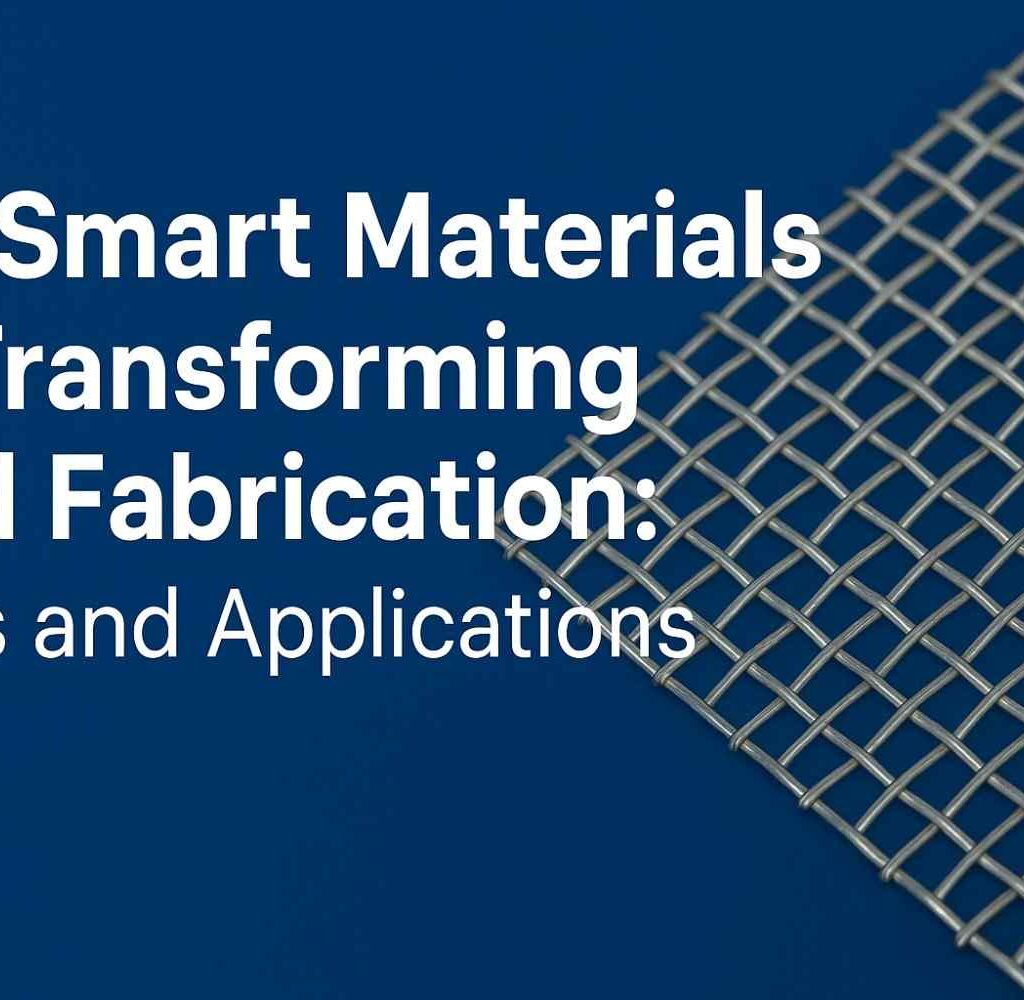

Metal fabrication has entered a new era driven by innovation, automation, and emerging material technologies. Among these advancements, smart materials are playing a revolutionary role, reshaping how industries design, engineer, and manufacture metal-based solutions. From construction and automotive manufacturing to aerospace, energy, and agriculture, the influence of smart materials is rapidly expanding. Their ability to adapt, sense, and respond to environmental changes makes them indispensable for the next generation of industrial applications.
In metal fabrication, the adoption of smart materials is not just about enhancing durability or reducing weight; it’s about enabling intelligent performance. This shift is also seen in the evolution of traditional metal products such as stainless steel wire mesh, which now integrates advanced material science for stronger, corrosion-resistant, and high-performing applications.
What Are Smart Materials?
Smart materials are engineered substances that exhibit special properties in response to external stimuli such as heat, pressure, electricity, or magnetic fields. Common types include:
- Shape Memory Alloys (SMAs)
- Self-healing metals
- Piezoelectric materials
- Magnetostrictive metals
- Conductive smart coatings
These materials enhance performance, reduce maintenance needs, and help industries achieve long-term sustainability goals.
Key Trends Shaping Smart Material Adoption in Metal Fabrication
1. Rise of Shape Memory Alloys in Industrial Design
Shape Memory Alloys (SMAs) can return to their original shape after being deformed. This makes them ideal for:
- Aerospace actuators
- Medical stents
- Safety systems
- Precision engineering
Manufacturers appreciate their longevity, flexibility, and ability to reduce component failures.
2. Self-Healing Metals for Long-Term Durability
One of the most exciting trends is the development of self-healing metals, which can repair cracks at the micro-level. These materials significantly extend the lifespan of:
- Structural frameworks
- Bridges and tunnels
- Industrial filtration systems
- High-pressure equipment
This innovation reduces downtime, lowers maintenance costs, and improves safety in critical environments.
3. Integration of Functional Coatings
Intelligent coatings such as thermal-barrier, anti-corrosion, and sensor-enabled coatings are becoming standard in modern fabrication. These coatings enable metals to:
- Resist extreme temperatures
- Prevent oxidation
- Detect environmental changes
- Improve energy efficiency
This advancement strengthens both industrial components and commonly used products like stainless steel wire mesh, which benefits from enhanced corrosion and rust protection.
4. Automation and AI-Driven Metal Fabrication
Smart materials work best when supported by smart manufacturing. AI and automation now help:
- Predict material behavior
- Control precision in welding and cutting
- Reduce human error
- Optimize material usage
- Improve fabrication timelines
Industries using AI and smart materials together experience higher efficiency and greater accuracy.
Real-World Applications of Smart Materials in Metal Fabrication
1. Smart Filtration and Industrial Screens
Industrial filtration is evolving with the combination of smart coatings and durable metals. Products such as stainless steel wire mesh now integrate corrosion-resistant coatings and optimized weaving patterns to improve:
- Chemical filtering
- Oil and gas processing
- Food-grade screening
- High-temperature operations
This makes them indispensable for industrial and commercial filtration systems.
2. Climate-Adaptive Structures
Smart materials help create structures that adjust to temperature, UV exposure, and humidity. This is especially valuable in regions with extreme climates, such as the Middle East.
Outdoor protective products like shade net structures are now supported with stronger metal frameworks and smart material integration to improve UV resistance, tensile strength, and longevity.
3. Intelligent Automotive Components
Smart materials enhance:
- Vehicle lightweighting
- Adaptive braking systems
- Engine efficiency
- Safety components
SMAs and enhanced metal alloys help manufacturers achieve superior performance and compliance with global safety standards.
4. Advanced Aerospace Engineering
Smart metals support aerodynamic performance, resistance to thermal expansion, and structural reliability, enabling engineers to design safer and more efficient aircraft.
Benefits of Smart Materials in Metal Fabrication
- Longer product lifespan
- Improved structural performance
- Enhanced environmental sustainability
- Reduced maintenance and operational costs
- Higher heat, corrosion, and impact resistance
- Better adaptability in harsh conditions
These benefits make smart materials a long-term investment across industries.
Future Outlook: The Evolution of Smart Metal Fabrication
The future of metal fabrication will focus on combining:
- Smart alloys
- Nano-engineered materials
- AI-based predictive modeling
- Automated production
- Eco-friendly metal solutions
This will empower industries to create stronger, smarter, and more efficient metal products.
As manufacturers continue to innovate, companies like SRK Metals are integrating advanced materials into products like stainless steel wire mesh and shade net support systems, ensuring high performance and durability for diverse applications.
Conclusion
Smart materials are redefining the metal fabrication landscape by enabling advanced functionality, greater efficiency, and superior durability. Whether in construction, automotive, energy, or aerospace, their impact is clear, and rapidly expanding. Businesses investing in smart material integration now will lead the next era of industrial innovation.
FAQs
1. What are smart materials in metal fabrication?
Smart materials are advanced substances that react to external conditions such as heat, pressure, or electric current, improving product performance and durability.
2. How are smart materials used in metal filtration systems?
They enhance corrosion resistance, temperature stability, and structural strength—beneficial for products like stainless steel wire mesh.
3. Are smart materials cost-effective for fabrication?
Yes. Though initial costs may be higher, they significantly reduce maintenance, increase lifespan, and improve reliability.
4. How do smart materials support outdoor structures?
They provide improved UV resistance, strength, and adaptability—especially useful for shade net installations.
For more articles, you can visit: https://techarenaworld.com/