
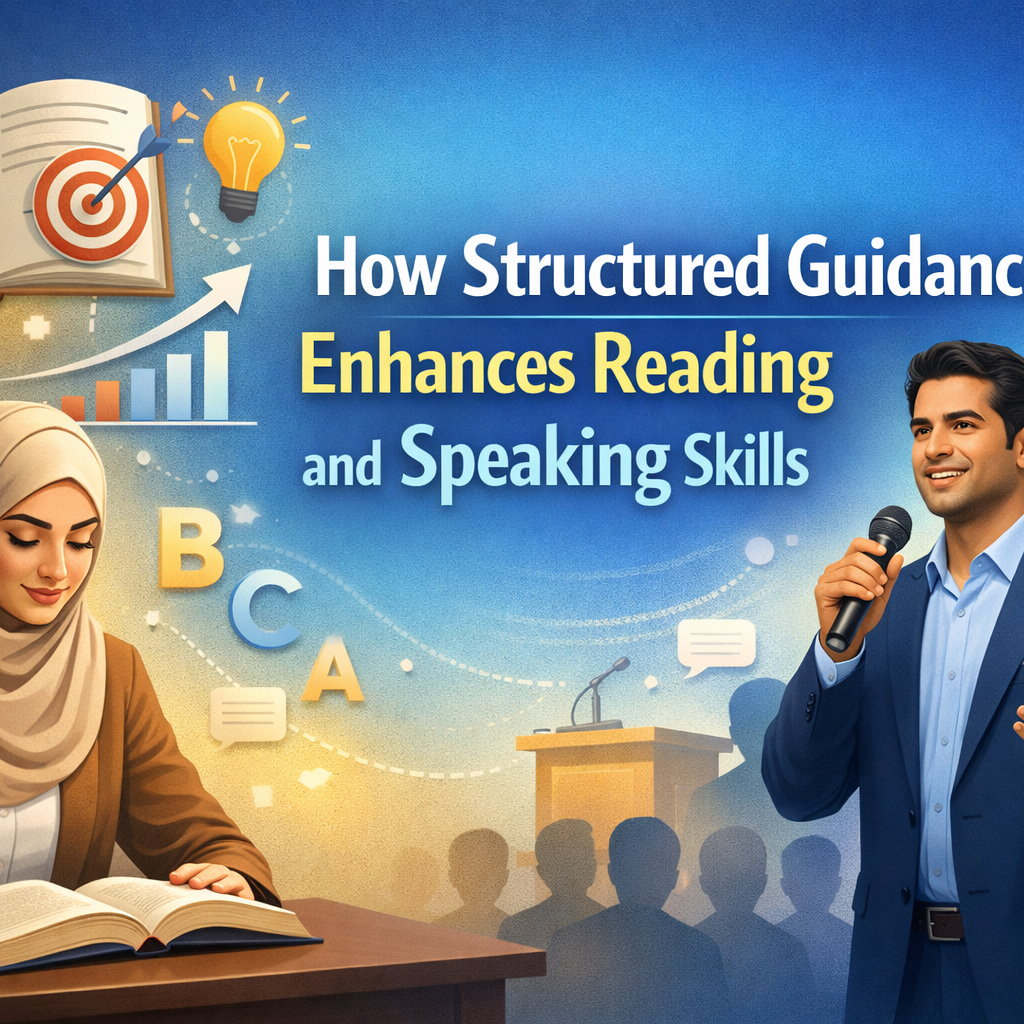

Effective communication, whether in spoken or written form, is one of the most critical skills individuals can develop. From early education to professional life, the ability to read and speak clearly impacts learning, relationships, and career opportunities. While some individuals may naturally excel in these areas, most benefit significantly from structured guidance that provides direction, feedback, and consistent practice. Structured guidance acts as a framework, allowing learners to refine their abilities systematically, build confidence, and achieve measurable progress.
Understanding Structured Guidance
Structured guidance refers to a methodical approach to learning that combines instruction, practice, and feedback in a coherent and organized manner. Unlike informal learning, where individuals may attempt skills on their own, structured guidance ensures that learning objectives are clear, teaching methods are effective, and progress can be tracked. This approach is particularly beneficial for complex skills, such as reading fluency, comprehension, and public speaking, where incremental improvements lead to long-term success.
In the context of reading, structured guidance helps learners focus on essential components like pronunciation, intonation, and comprehension. Similarly, for speaking skills, it provides strategies for articulation, pacing, and expression. By integrating practice sessions, evaluations, and expert feedback, learners gain clarity about their strengths and areas needing improvement.
The Role of Structured Practice in Reading
Reading is not just about recognizing words on a page; it involves understanding meaning, context, and expression. Without guidance, learners may develop habits that hinder comprehension, such as mispronouncing words or skipping key details. Structured guidance ensures that learners follow a step-by-step approach:
- Foundational Skills: Beginners start with basic vocabulary and sentence structures. This stage focuses on pronunciation, recognizing letters or words, and forming coherent phrases.
- Fluency Development: Learners gradually progress to reading longer passages with proper intonation, rhythm, and speed. Structured exercises, such as guided reading sessions, ensure consistent improvement.
- Comprehension Enhancement: Structured guidance often includes comprehension checks, discussions, and summarization exercises to reinforce understanding.
For instance, enrolling in a Quran recitation class allows learners to not only read the text accurately but also understand the nuances of pronunciation, rhythm, and meaning. The structured approach in such classes emphasizes repetition, correction, and gradual mastery, which significantly improves reading skills over time.
Improving Speaking Skills Through Structure
Speaking is an interactive skill that requires clarity, confidence, and the ability to express ideas effectively. Many learners struggle with public speaking or daily communication due to lack of practice or guidance. Structured learning addresses this by:
- Providing Clear Goals: Structured programs set achievable milestones, such as delivering a short speech, participating in a discussion, or reading aloud with proper intonation.
- Offering Regular Feedback: Immediate correction from experienced instructors helps learners identify and fix mistakes before they become habits.
- Encouraging Consistent Practice: Scheduled speaking exercises ensure that learners continuously refine their skills, leading to natural fluency.
For learners seeking specialized improvement, programs like a Quran Memorization Course combine both reading and speaking guidance. These courses offer a structured approach to mastering recitation while enhancing articulation and confidence, showing how targeted guidance can strengthen multiple language skills simultaneously.
Benefits of Structured Guidance
Structured guidance offers several key advantages that significantly enhance reading and speaking abilities:
- Accelerated Learning: Clear instructions and guided practice reduce confusion, allowing learners to progress faster than self-directed learning.
- Consistency: Regular sessions with defined objectives ensure steady improvement, preventing skill gaps or regression.
- Motivation and Confidence: Seeing measurable progress encourages learners to continue practicing, boosting confidence in both reading and speaking.
- Expert Insight: Experienced instructors provide feedback based on years of knowledge, helping learners correct mistakes efficiently.
- Customized Learning: Structured programs often adapt to individual strengths and weaknesses, offering personalized exercises for optimal growth.
Real-World Applications
The benefits of structured guidance extend beyond academic settings. For example, students who participate in structured reading programs often demonstrate improved comprehension in exams, enhanced vocabulary, and better critical thinking. Similarly, adults who engage in structured speaking exercises experience increased confidence in professional presentations, interpersonal communication, and social interactions.
In religious education, structured guidance plays a vital role. For instance, a Quran class in Bahrain offers learners a disciplined environment where reading and speaking skills are cultivated alongside memorization. The combination of systematic instruction, repetition, and expert feedback allows students to develop both spiritual and linguistic competence. Such programs highlight how structured guidance is applicable to various contexts, ensuring holistic development.
Integrating Technology and Structured Learning
Modern educational tools further enhance the effectiveness of structured guidance. Online platforms, apps, and virtual classrooms provide learners with access to structured lessons, interactive exercises, and instant feedback. For example, an online Quran recitation course allows students to practice recitation remotely while receiving corrections from qualified instructors. The structured nature of these courses ensures that learners follow a consistent path toward improvement, making skill acquisition more efficient and accessible.
Tips for Maximizing Learning Through Structured Guidance
To fully benefit from structured guidance, learners can adopt the following strategies:
- Set Clear Goals: Define what you want to achieve in reading or speaking and communicate these objectives with your instructor.
- Practice Regularly: Consistency is key. Short, frequent practice sessions are more effective than infrequent, long sessions.
- Seek Feedback: Constructive criticism is invaluable. Use it to identify weaknesses and implement corrective strategies.
- Engage Actively: Participate in discussions, read aloud, and practice speaking in real-life scenarios to reinforce skills.
- Monitor Progress: Keep track of improvements, milestones, and challenges to adjust your learning strategy accordingly.
Conclusion
Structured guidance is a transformative approach that enhances reading and speaking skills by providing clarity, consistent practice, and expert feedback. Whether through formal educational programs, religious classes, or online courses, the systematic methodology ensures measurable progress, increased confidence, and long-term mastery.
Programs such as a Quran recitation class, a Quran Memorization Course, or a Quran class in Bahrain exemplify how structured learning can blend technical skill development with meaningful content. By following structured guidance, learners not only acquire fluency in reading and speaking but also develop discipline, comprehension, and confidence that extend far beyond the classroom.
Ultimately, structured guidance is more than a teaching method—it is a roadmap to achieving effective communication, personal growth, and lifelong learning.

