
Why Is a Paver Patio a Smart Investment for Your Property?
A well designed outdoor living area can completely transform the look and functionality of your home, and learning how to install a paver patio is often the first step homeowners consider when upgrading their yard. At Promaster Maintenance Corp Paving and Masonry, we understand that a patio is more than just a surface for outdoor furniture. It is a gathering place for family, a space for entertaining guests, and an extension of your indoor living area. Compared to a do it yourself concrete patio, pavers offer better durability, flexibility, and visual appeal. They resist cracking because individual units can move slightly with ground shifts, and if damage occurs, a single paver can be replaced without disturbing the entire surface. This makes paver patios a practical and attractive choice for homeowners who want long term value.
What Planning Is Required Before You Begin Installation?
Before starting any project, proper planning is essential to ensure success. Understanding how to install a paver patio begins with selecting the right location and determining the size and shape of your patio. Consider how you plan to use the space, whether for dining, lounging, or hosting gatherings. Check local building codes and utility lines before excavation. The soil condition also plays a major role in stability, so it is important to assess drainage and slope. Unlike a do it yourself concrete patio, which involves pouring and curing a single slab, paver patios require layered preparation. Accurate measurements, material calculations, and a clear layout plan will help avoid costly mistakes and ensure your patio remains level and secure for years.
How Do You Prepare the Ground for a Strong Foundation?
Ground preparation is the most critical phase when learning how to install a paver patio properly. The area must be excavated to a depth that allows for a compacted gravel base, a layer of sand, and the pavers themselves. Typically, excavation ranges from six to eight inches depending on soil type and climate. After removing soil, the ground should be compacted thoroughly to create a stable subgrade. A geotextile fabric may be installed to prevent weed growth and improve stability. The next step involves adding crushed stone or gravel, which is compacted in layers to create a solid foundation. This step is similar in principle to How to Install a Gravel Driveway, where base preparation determines long term performance. Without a strong base, even the most attractive pavers can shift or settle unevenly.
Why Is Proper Base Installation So Important?
A stable base ensures your patio can handle foot traffic, furniture weight, and seasonal weather changes. Many homeowners underestimate this stage, especially when comparing pavers to a do it yourself concrete patio. Concrete relies on reinforcement and thickness for strength, while paver systems depend on interlocking units supported by a compacted aggregate base. The gravel layer must be evenly distributed and compacted using a plate compactor to eliminate air pockets. After the gravel, a layer of bedding sand is spread and leveled carefully. This sand layer allows pavers to be set evenly and adjusted for precise alignment. Proper base installation prevents issues such as sinking, pooling water, and uneven surfaces that could require repairs later.
How Are Pavers Laid and Aligned Correctly?
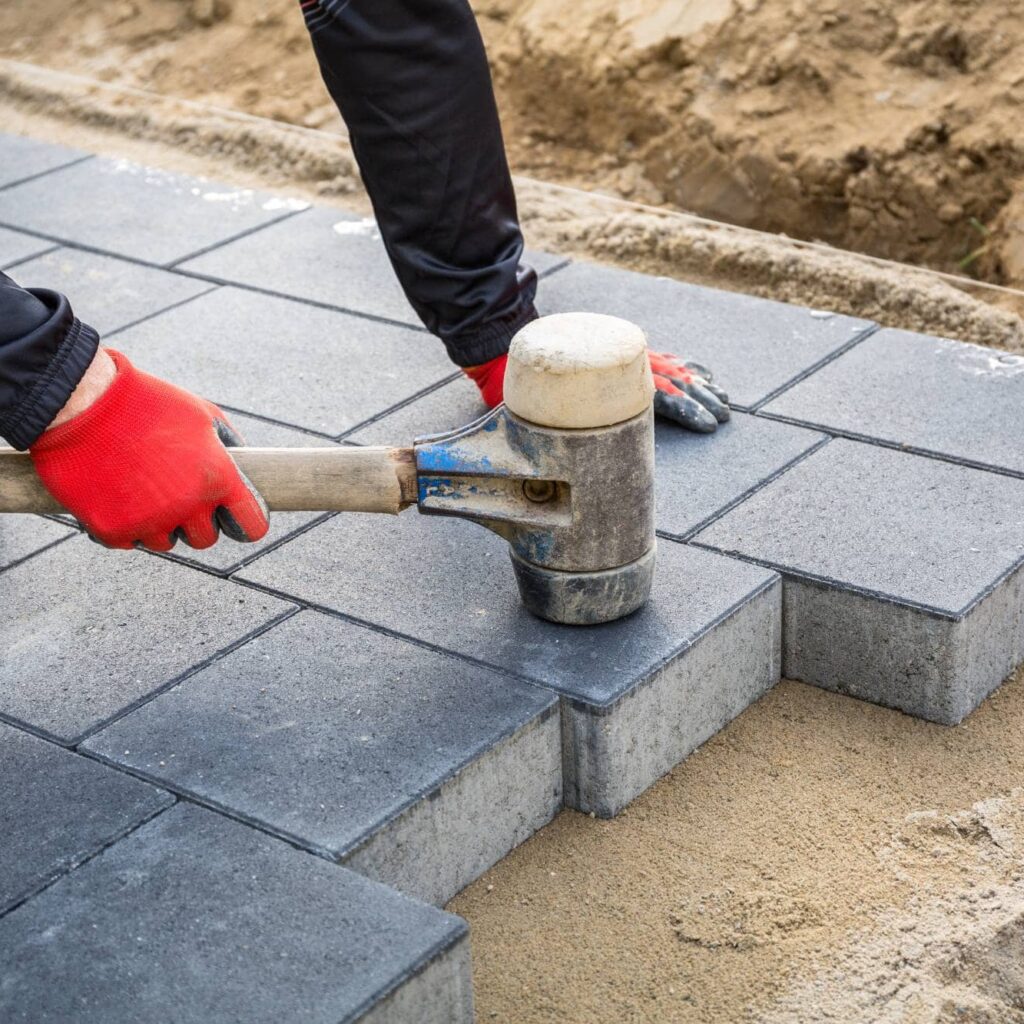
Once the base and sand layers are ready, the next step in how to install a paver patio involves placing the pavers in the desired pattern. Common patterns include running bond, herringbone, and basket weave. The choice of pattern affects both appearance and structural strength. Pavers should be laid starting from a straight edge or corner, working outward while maintaining consistent spacing. After placement, a plate compactor is used again to settle the pavers into the sand. Joint sand is then swept into the gaps to lock the pavers together. This interlocking system provides flexibility and strength, reducing the likelihood of cracks. In comparison, learning How to Fix Driveway Cracks is often necessary for concrete or asphalt surfaces that lack this modular flexibility.
How Do You Finish and Seal a Paver Patio?
Finishing touches are essential to protect your investment and enhance its appearance. Edging restraints are installed around the perimeter to prevent pavers from shifting outward over time. After sweeping polymeric sand into the joints, water is applied to activate the binding agents, creating a firm and stable surface. Some homeowners choose to apply a sealer to protect against stains and fading. Sealers can also enhance color and provide resistance against moisture penetration. While sealing is optional, it can extend the life of the patio and maintain its aesthetic appeal. Regular maintenance, including cleaning and re sanding joints when needed, will keep your patio looking new.
How Does a Paver Patio Compare to Other Outdoor Surfaces?
When deciding between materials, many homeowners compare pavers with concrete, gravel, or asphalt surfaces. A do it yourself concrete patio may seem cost effective initially, but it can develop cracks over time due to temperature changes and soil movement. Understanding what are asphalt surfaces also helps in making informed decisions. Asphalt is commonly used for driveways because it provides a smooth and durable finish, but it may not offer the same decorative appeal as pavers. Similarly, exploring How to Install a Gravel Driveway reveals that gravel is affordable and easy to install, yet it requires ongoing maintenance to control displacement and weeds. Paver patios offer a balance of beauty, strength, and low maintenance, making them ideal for residential outdoor living areas.
How Is Masonry Connected to Patio Installation?
To fully understand patio construction, it is helpful to know what is masonry and how it applies to your project. Masonry refers to building structures using materials such as brick, stone, and concrete blocks bound together with mortar. Paver installation falls within the broader category of masonry work because it involves stone or concrete units arranged to create a stable surface. At Promaster Maintenance Corp Paving and Masonry, our expertise in masonry ensures precise craftsmanship, proper drainage planning, and structural integrity. Skilled masonry techniques not only improve durability but also enhance the overall visual harmony of your outdoor space.
What Maintenance Is Required After Installation?
Once you understand how to install a paver patio, ongoing care becomes the next priority. Routine maintenance includes sweeping debris, washing the surface periodically, and inspecting joints for sand loss. If weeds appear, they can be removed easily without damaging the entire structure. Unlike surfaces that require learning How to Fix Driveway Cracks due to expansion and contraction, paver patios rarely suffer from large scale cracking. Individual pavers can be lifted and replaced if needed, making repairs simple and cost effective. Regular inspection of drainage patterns also ensures water flows away from the patio and prevents erosion beneath the base.
Why Choose Professional Installation for Best Results?
Although many homeowners research how to install a paver patio for a do it yourself project, professional installation provides peace of mind and long lasting performance. Experts understand soil conditions, drainage requirements, and proper compaction techniques that prevent structural issues. At Promaster Maintenance Corp Paving and Masonry, we combine experience with high quality materials to deliver patios that enhance property value and curb appeal. Our team ensures precise leveling, clean edges, and durable finishing for a flawless result. Investing in professional services often saves money in the long run by reducing the need for repairs and maintenance.
How Can the Right Patio Improve Your Entire Landscape?
A beautifully installed patio does more than provide a place to sit. It becomes a central design feature that ties together landscaping, walkways, and driveways. Coordinating materials with features such as retaining walls or pathways creates a cohesive look throughout your property. Whether you are upgrading from gravel, asphalt, or an aging concrete slab, choosing pavers offers flexibility in design and color. By understanding how to install a paver patio and trusting skilled professionals, you can achieve an outdoor space that combines elegance with strength. Promaster Maintenance Corp Paving and Masonry is committed to helping homeowners create durable and visually stunning patios that stand the test of time.