

A retail chain I spoke with last year had a simple problem. Their SMS campaigns were being ignored, emails were piling up unread, and their call center agents spent hours dialing numbers just to remind customers about order pickups.
Then they tried something different.
Instead of agents calling one by one, they recorded a short message and sent it to thousands of customers at once using a voice blast. Within an hour, their pickup traffic doubled. No complicated campaign. No new hires. Just a smarter way to reach people.
That moment says a lot about how businesses are communicating with customers in 2026.
Why companies are turning to voice again
Customers today are surrounded by notifications. Email, WhatsApp, app alerts, ads—everything competes for attention.
Voice cuts through that noise.
When a phone rings and a clear message plays, people listen. Even if they hang up after a few seconds, the message lands faster than most digital channels.
That’s why industries that depend on quick customer contact—banks, logistics companies, healthcare providers, and retail brands—have quietly started using voice broadcasting again.
Only now it’s far more practical than it used to be.
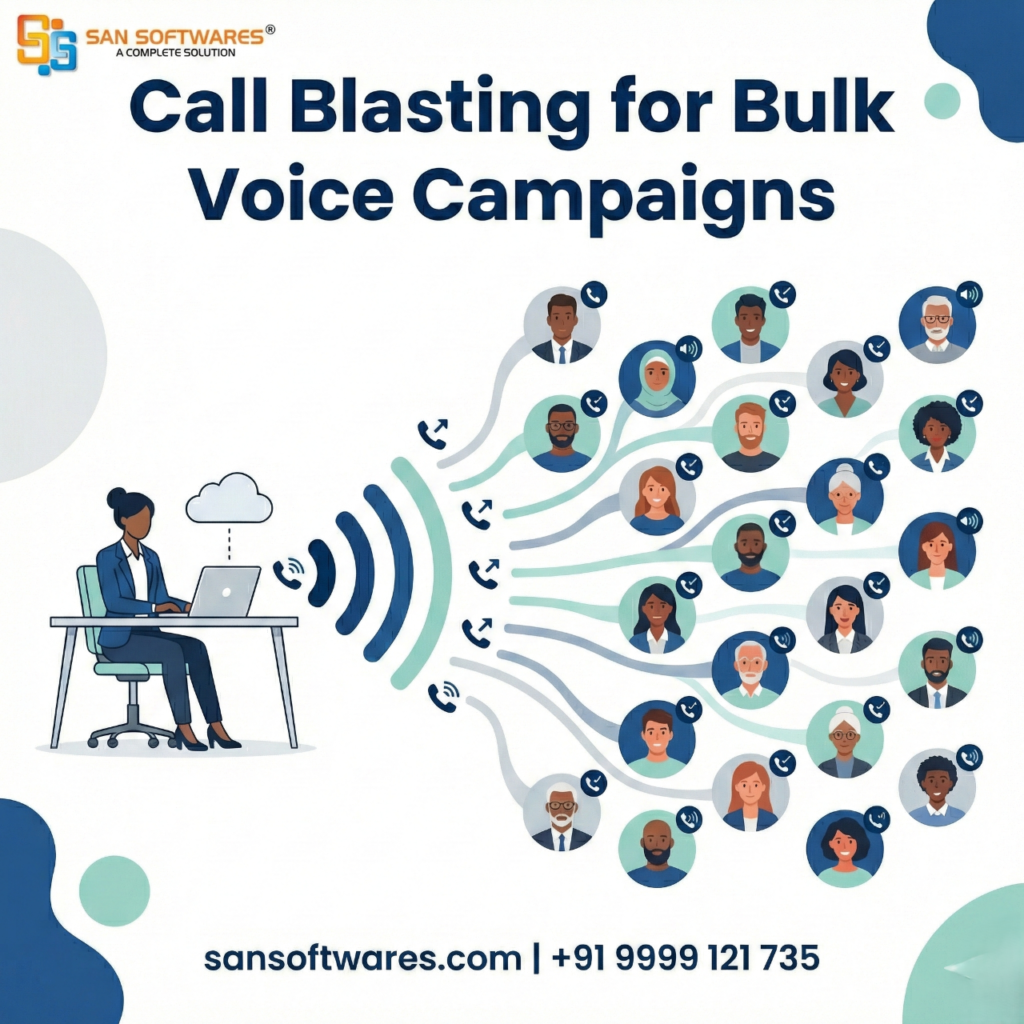
Instead of agents dialing manually, businesses run campaigns through systems connected to an automatic dialer. A recorded message goes out to thousands of numbers in minutes.
No waiting, no repeated manual calls.
Just fast communication.
Real situations where voice broadcasting works
You’ll notice something interesting when you look at companies using voice broadcasting. Most of them aren’t trying to sell aggressively. They’re trying to deliver information quickly.
A hospital group in Delhi sends appointment reminders this way. Patients receive a short call a day before their visit. If they press a number on their keypad, the system connects them to reception. Missed appointments dropped noticeably.
A logistics company I worked with uses voice messages during delivery surges. When packages reach a local hub, customers get a quick recorded update. Drivers spend less time answering “Where is my order?” calls.
Political campaigns and event organizers also rely on this approach. When a rally date changes or a registration deadline approaches, a voice message spreads the word instantly.
Different industries. Same idea: reach people faster.
Why speed matters more than ever
Customer patience has changed.
If a business needs to share an update—payment reminders, service outages, delivery notifications—waiting hours or days to connect can create frustration.
Voice broadcasting shortens that gap.
One campaign can reach thousands of customers within minutes. The message is consistent, clear, and delivered at scale. Teams don’t burn time dialing one number after another.
For call centers, that alone is a big relief.
Agents can focus on conversations that actually need a human touch.
What makes modern voice campaigns effective
Not every voice campaign works well. Some feel robotic, others sound like spam. The difference usually comes down to how the message is designed.
Short messages work best. Twenty to thirty seconds is usually enough.
The opening line matters too. If the message sounds like a telemarketing pitch, most people hang up immediately. But if it sounds like a helpful update—“Your delivery is arriving today” or “Your appointment is scheduled for tomorrow”—listeners stay longer.
Timing also changes results. A school sending alerts to parents early in the morning gets a better response than calling during dinner hours.
These small details turn a basic call into a useful communication tool.
Where the automatic dialer fits in
Behind most voice campaigns sits an automatic dialer system.
It handles the heavy lifting: dialing numbers, playing recorded messages, tracking responses, and sometimes connecting interested customers to a live agent.
That last part matters.
Some campaigns include simple keypad options. Press 1 to confirm. Press 2 to speak with support. Press 3 to hear the message again.
In a way, it turns a one-way broadcast into a light conversation.
Businesses like it because they can track engagement without running complex surveys.
A small but powerful shift in customer communication
For years, companies chased every new messaging channel. Chat apps, social media DMs, push notifications. Each one promised better reach.
The voice never disappeared during that time. It just became quieter in the marketing conversation.
Now it’s showing up again—not as a replacement for digital channels, but as a reliable backup when speed matters.
A short voice blast can notify thousands of customers faster than most teams can send a manual campaign.
Sometimes the most practical tools aren’t the newest ones.
They’re the ones that simply work.

