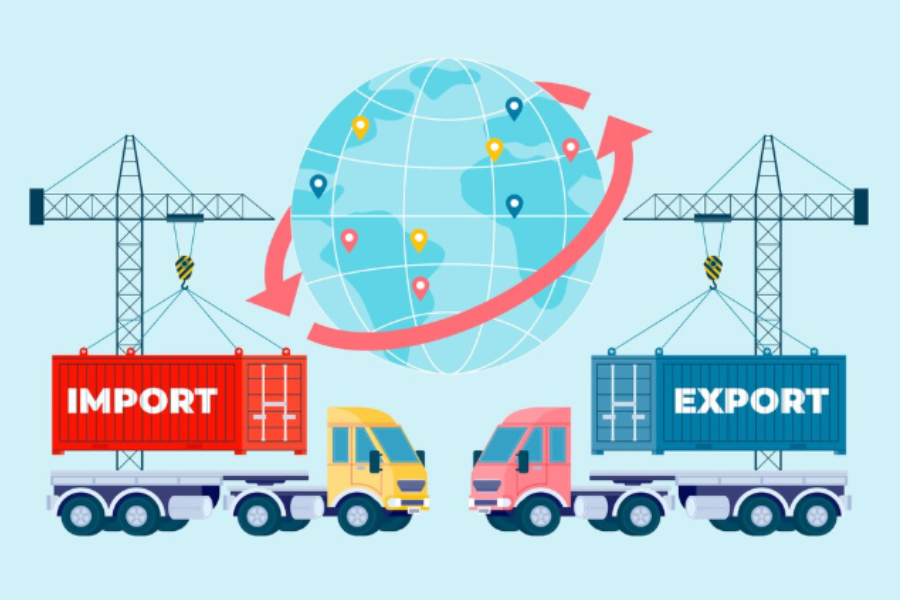

For businesses planning to enter international trade, understanding regulatory requirements is essential. One of the most important compliance requirements in India is IEC code registration. Whether you are importing raw materials, exporting finished goods, or offering services overseas, knowing when an IEC is required can help avoid delays in customs clearance and banking transactions.
The Importer Exporter Code, commonly known as IEC, is a 10 digit identification number issued by the Directorate General of Foreign Trade under the Ministry of Commerce and Industry. As per the DGFT, no person can carry out import or export activities without obtaining an IEC, except in certain exempted cases.
What Is IEC Code Registration?
IEC Code Registration refers to the process of obtaining a unique code that authorizes an individual or business entity to engage in import and export activities from India. This code is PAN based and remains valid for the lifetime of the entity, subject to annual updation requirements on the DGFT portal.
It applies to various business structures, including:
- Proprietorships
- Partnerships
- LLPs
- Private limited companies
- Trusts and societies
This code is generally required for customs clearance, shipment processing, and receiving or remitting foreign currency through banks.
Is IEC Mandatory for Importers and Exporters?
Yes, in most commercial cases, IEC code registration is mandatory for both importers and exporters in India.
According to DGFT guidelines, no business entity can legally import or export goods without an IEC. The code must be quoted at the time of customs clearance and is often required by banks for international remittances.
For importers, the IEC is necessary when goods enter India and customs documentation is processed.
For exporters, the IEC is required for shipment clearance and for receiving export proceeds in foreign currency.
Without this registration, international trade transactions may be blocked or delayed.
Is IEC Required for Service Exporters?
The requirement differs slightly for service providers.
For export or import of services, IEC may not always be mandatory unless the service provider is claiming benefits under the Foreign Trade Policy or dealing in specified services or technology categories.
For example, a software consultant receiving payment from an overseas client may need to review whether the transaction requires IEC based on the nature of services and applicable DGFT benefits.
This makes it important to verify the compliance requirement before proceeding with IEC code apply online.
Are There Any Exceptions?
Yes, certain exceptions exist.
IEC is generally not required for:
- Import or export of goods for personal use and not for commercial purposes
- Government ministries and departments
- Certain notified charitable institutions
These exemptions are limited and should be reviewed carefully before assuming that registration is not required.
For commercial import export operations, IEC code registration remains the standard legal requirement.
Why Is IEC Important?
Beyond legal compliance, IEC serves several practical purposes.
First, it enables smooth customs processing at ports and airports.
Second, it allows businesses to receive international payments through authorized banking channels.
Third, it is often required to claim export incentives and benefits under government schemes.
For growing businesses planning to enter global markets, IEC code apply online is one of the first compliance steps.
How to Apply Online
The application process is now completely digital through the DGFT portal.
To complete IEC code apply online, applicants generally need:
- PAN of the entity or individual
- Aadhaar linked mobile number
- business address proof
- cancelled cheque or bank certificate
- email and mobile verification
After logging in to the DGFT portal, the applicant can submit the online form, upload supporting documents, and pay the prescribed fee.
Once approved, the IEC is issued electronically and can be downloaded from the portal.
Conclusion
For most commercial businesses engaged in international trade, IEC code registration is mandatory in India. Importers need it for customs clearance, while exporters require it for shipment processing and foreign remittance compliance.
Although limited exemptions exist, businesses involved in regular import or export activities should complete IEC code apply online before starting operations. Understanding this requirement at the outset helps ensure smooth compliance with DGFT and customs regulations while avoiding unnecessary disruptions in trade activities.