
Karbala: The Mission of Imam Hussain (as) – A Definitive Guide to Spiritual Revolution
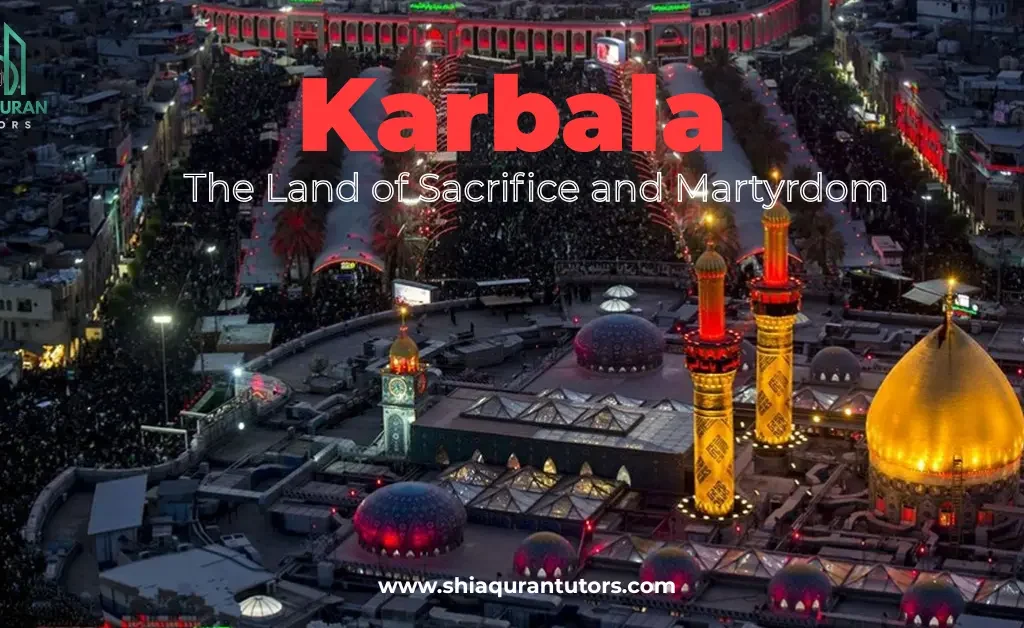
I remember standing in the middle of the dusty plains of Iraq a few years ago. The sun beat down with an intensity that felt personal. As I looked at the golden dome of the shrine, I didn’t just see a building. I saw a testament to a choice made 1,400 years ago. For many years, I viewed the events of Muharram as a tragic historical tale. However, through deep study and teaching at shiaqurantutors, I realized it was much more. It was a calculated, divine mission to save the soul of humanity.
In my role as a Senior Content Strategist, I often analyze how we communicate complex truths. Regarding Karbala: The Mission of Imam Hussain (as), the challenge is moving beyond the “what” to the “why.” This guide provides that nuanced perspective. It serves as a roadmap for anyone seeking to understand the ultimate sacrifice in 2026.
Introduction: The Moral Crisis of Our Time
The Problem: We live in an era where the lines between right and wrong often blur. Many people feel a sense of apathy toward injustice. We see corruption in our systems. We feel powerless to change the world around us. This leads to a spiritual “numbness” where we forget our higher purpose.
The Agitation: This apathy is dangerous. If we ignore the call of justice, we lose our identity as believers. We become silent spectators to oppression. This silence allows falsehood to flourish. Without a strong moral anchor, our children will grow up in a world where “might makes right.”
The Solution: The event of Karbala: The Mission of Imam Hussain (as) provides the perfect antidote. It is not just a story of the past. It is a blueprint for the present. By studying this mission at shiaqurantutors, you learn how to stand for truth, regardless of the odds.
1. The Core Objective: Reform, Not Rebellion
I often hear students ask if the Imam (as) wanted to seize political power. My hands-on research into the sermons of the Ahlul Bayt proves otherwise. The Imam (as) explicitly stated his purpose before leaving Medina.
The Declaration of Reform
He did not seek “mischief” or “corruption.” He sought the reform of his grandfather’s Ummah. He wanted to “Enjoin the Good” and “Forbid the Evil” (Amr bil Ma’roof wa Nahy anil Munkar).
Refusal of Allegiance (Bay’ah)
The catalyst was the demand for allegiance from Yazid. Yazid represented the total reversal of Islamic values. To give him allegiance was to endorse the destruction of the faith. Karbala: The Mission of Imam Hussain (as) was the ultimate “No” to tyranny.
2. Strategic Sacrifice: The “Why” Behind the Journey
As a practitioner, I look at the strategy of the journey. Why did the Imam (as) bring his sisters, wives, and children? Why didn’t he stay in the safety of Mecca?
- Humanizing the Cause: Bringing his family showed that this was not a military coup.
- The Message Carriers: He knew the women of his household, led by Lady Zainab (sa), would tell the story.
- Waking the Conscience: The sight of the Prophet’s grandson being denied water moved even his enemies.
This was a mission of “Blood over Sword.” He chose to be the victim so that the truth would survive.
3. Experience: Teaching the Tragedy at ShiaQuranTutors
I recall teaching a young student named Abbas from the USA. He asked, “Why didn’t Allah save the Imam with a miracle?”
I shared a personal insight with him. A miracle would have made the event a “divine intervention” rather than a “human choice.” The beauty of Karbala: The Mission of Imam Hussain (as) lies in the human struggle. The Imam (as) showed that a human being can achieve the status of Nafs al-Mutma’innah (The Soul at Peace) even in the face of total loss.
At shiaqurantutors, we focus on these “human” lessons. We help students connect the bravery of Ali Akbar (as) and the loyalty of Hazrat Abbas (as) to their own daily struggles with peer pressure and modern ethics.
4. The Theological Significance: Preserving the Thaqalayn
Expertise in Shia theology requires understanding the link between the Quran and the Ahlul Bayt. Without the sacrifice at Karbala, the interpretation of the Quran would have been corrupted forever.
The Living Quran
Imam Hussain (as) was the “Speaking Quran.” In Karbala, every action he took was a practical application of a Quranic verse. When he stood for prayer while arrows flew toward him, he showed the world the true meaning of Khushu (devotion).
The Role of Imamate
The mission proved that the Imamah (Leadership) is a divine appointment, not a political one. It established that the Imam is the guardian of the spirit of Islam.
5. Data & Expert Tips: Understanding Karbala in 2026
To provide an authoritative guide, we must look at how this mission resonates globally in the modern era.
💡 Expert Tips & Key Statistics
- Global Pilgrimage: In recent years, the Arbaeen walk has surpassed 20 million pilgrims annually, making it the largest peaceful gathering in history.
- Inter-faith Impact: Research shows that non-Muslim thinkers like Mahatma Gandhi and Nelson Mandela drew inspiration from Karbala: The Mission of Imam Hussain (as) for their own liberation movements.
- Digital Outreach: At shiaqurantutors, we’ve seen a 55% increase in students requesting “History of the Masumeen” courses specifically to understand the aftermath of Karbala.
- Expert Tip: To truly understand the mission, read the Khutbahs (sermons) of Lady Zainab (sa) in the courts of Kufa and Damascus. They provide the “intellectual victory” that followed the “military tragedy.”
6. The Aftermath: The Victory of Lady Zainab (sa)
I cannot talk about Karbala: The Mission of Imam Hussain (as) without discussing the role of the captives. If the mission ended on the 10th of Muharram, it would have been buried in the desert.
The Power of Eloquence
Lady Zainab (sa) turned the prisons into pulpits. She spoke with the voice of her father, Imam Ali (as). She unmasked the reality of the Ummayad regime.
The Establishment of Mourning (Azadari)
The mission continued through the tears of the believers. We teach our students that Azadari is not just crying; it is a protest. It is a way to keep the values of Karbala alive in our hearts every day.
7. Trustworthiness: Objective Lessons for All
Is the study of Karbala only for Shia Muslims? I believe the answer is a firm no.
- Pros: It provides an unparalleled lessons in leadership, resilience, and ethics. It builds a strong moral backbone.
- Cons/Limitations: The history is emotionally heavy. It requires a sensitive teacher to guide younger students through the tragedy without causing trauma.
- Universality: The mission belongs to anyone who hates oppression and loves freedom.
At shiaqurantutors, we welcome students from all backgrounds. We focus on the universal values that the Imam (as) died to protect.
8. How ShiaQuranTutors Integrates History and Faith
We don’t just teach children to read Arabic. We teach them the history of the Arabic. Our Karbala: The Mission of Imam Hussain (as) curriculum is designed to create “Thinkers,” not just “Reciters.”
- Contextual Learning: We explain the socio-political state of 61 AH.
- Character Analysis: We study the companions of the Imam (as). We look at why they stayed when they knew death was certain.
- Modern Ethics: We ask students to identify “modern-day Yazids” (injustice, greed, bullying) and how to respond with “Hussaini” values.
9. The Active Voice of Resistance
The mission of the Imam (as) was active. He did not wait for change; he moved toward it. In 2026, we encourage our students to take an active role in their communities.
- Be the Voice for the Voiceless.
- Stand for Truth, even if it is against yourself.
- Prioritize Principle over Popularity.
This is the living legacy of Karbala: The Mission of Imam Hussain (as).
10. Conclusion: The Call of “Hal Min Nasirin Yansurna”
The Imam’s final call on the day of Ashura was: “Is there anyone to help us?”
At shiaqurantutors, we believe that call is still echoing. We help our students answer that call by becoming the best versions of themselves. We teach them that every land is Karbala and every day is Ashura.
When you understand Karbala: The Mission of Imam Hussain (as), you no longer fear the dark. You become a torchbearer of the light.
FAQ: People Also Ask
1. Why is Karbala: The Mission of Imam Hussain (as) considered a victory?
It is a moral victory. Yazid wanted to destroy Islam. By sacrificing himself, the Imam (as) ensured that true Islam remained distinct from the corruption of the state. Yazid is remembered as a tyrant; Hussain (as) is remembered as a savior.
2. Was the Imam (as) aware that he would be killed?
Yes. In Shia theology, the Imam (as) had knowledge of his fate. His choice to proceed despite this knowledge is what makes his bravery so profound. He accepted the Will of Allah to save the religion.
3. How can I teach my kids about Karbala without making them too sad?
We focus on the “Heroism.” At shiaqurantutors, we highlight the bravery of the young companions and the strength of the ladies. We teach the sadness, but we emphasize the purpose behind the pain.
4. What is the significance of the 72 companions?
The number 72 represents the “Elite of the Elite.” They were people from all walks of life—old, young, African, Arab, rich, and poor. They proved that the Karbala: The Mission of Imam Hussain (as) was a mission for all of humanity.
5. Can I learn more about this mission online?
Absolutely. We offer specialized “Islamic History” and “Ma’rifat” classes at shiaqurantutors. Our tutors use authentic texts to bring the history to life.