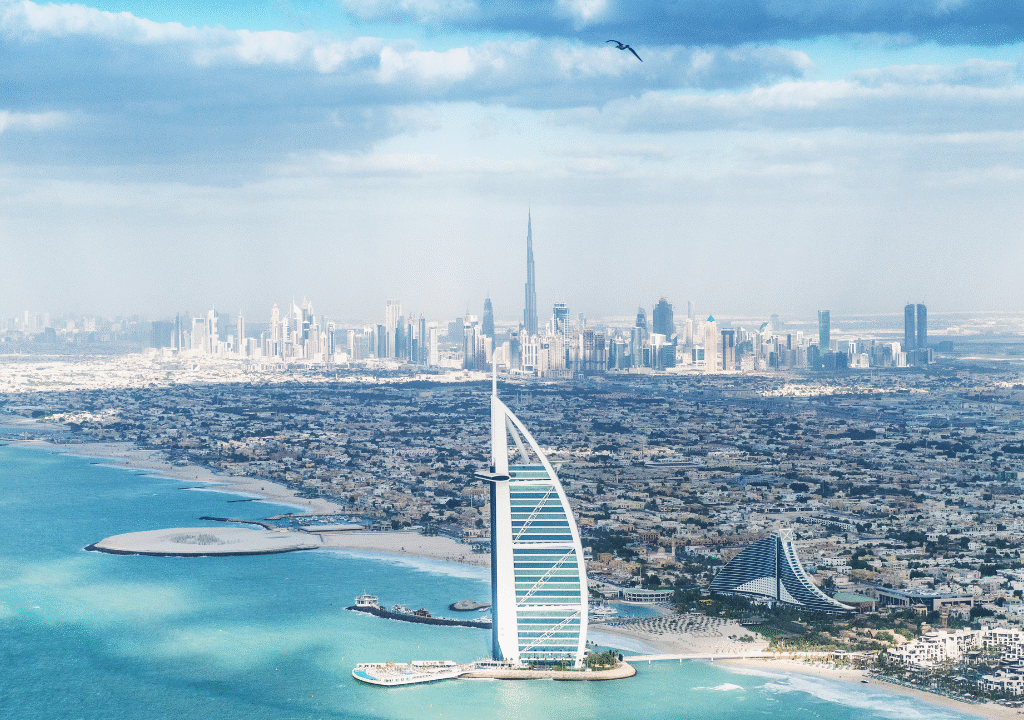

Cluster mapping helps planners read movement patterns in dense urban areas. The method studies how people navigate between towers, podiums, plazas, transit nodes, and shaded walkways. In Dubai mixed-use zones, movement is influenced by heat, shade, wind, and street geometry. Cluster mapping identifies how people choose routes that feel cooler, shorter, or more efficient.
It also helps designers understand how different functions interact. Retail, housing, offices, and leisure spaces sit close to each other, so pedestrian flow becomes a central element of planning. When models display these relationships clearly, planners can focus on real circulation behaviour rather than assumptions. This makes early urban decisions more accurate and more aligned with Dubai’s comfort needs.
How pedestrian shortcuts emerge inside mixed-use clusters
Pedestrian shortcuts form naturally when people try to save time or avoid discomfort. In Dubai, people often choose shaded paths or routes with better airflow. These decisions create organic desire lines. Cluster mapping reveals these lines by analysing how blocks, corridors, setbacks, and open spaces connect.
It highlights gaps between buildings, podium openings, side alleys, and internal courtyards that people might use even if they were not originally designed as primary passages. This insight becomes important when comfort levels shift due to heat or glare. The analysis exposes where users break away from planned routes and create their own movement patterns. This helps designers refine the layout so that shortcuts become safe and efficient pedestrian links rather than uncontrolled pathways.
How spatial geometry influences shortcut formation
Spatial geometry plays a major role in shortcut behaviour. Long edges, diagonal paths, narrow setbacks, and low-rise podium gaps shape how people move. When a route offers a direct line toward a central destination, people adopt it quickly. Cluster mapping studies these geometric relationships in detail. It exposes which angles between buildings encourage diagonal walking.
It also reveals how podium terraces, ramps, and passage voids shift pedestrian direction. By evaluating these geometric cues, designers understand which areas naturally encourage shortcuts. This leads to early refinement of block orientation, podium openings, and walkway widths. Every geometric adjustment supports safer and more intuitive pedestrian flow.
The role of microclimate in shaping shortcut patterns
Dubai’s climate has a major impact on pedestrian decisions. People choose routes with better shade, cooler surfaces, and stronger airflow. Cluster mapping overlays microclimate behaviour onto circulation layers. It highlights how wind flows between towers and how shade moves during the day. This helps planners see where comfort-driven shortcuts will appear.
It also identifies overheated pockets that push pedestrians toward alternative routes. The process ensures that paths used during peak heat hours are recognised early. It supports the placement of awnings, screens, trees, and passive cooling features along these routes. As a result, the final layout becomes more aligned with Dubai’s daily comfort cycle.
How architectural scale models support shortcut detection
Architects often rely on physical representations to study movement relationships. Architectural scale models offer a clear visual way to observe cluster geometry, pathway links, and potential desire lines. These models show tower massing, podium heights, courtyard shapes, and street alignments with precision. When lighting simulations are added, the models highlight shaded zones. When wind studies are applied, they reveal movement patterns that influence route choices.
Architectural scale models Dubai help designers identify diagonal passages or mid-block gaps that may become shortcuts. They also support decisions on whether these shortcuts should be formalised or integrated as planned pedestrian links. By enabling early insight, architectural scale models reduce design errors and help planners shape smoother circulation networks. This visual tool makes shortcut detection more intuitive and more accurate.
Using circulation overlays to reveal hidden pedestrian routes
Cluster mapping often uses circulation overlays to show real movement potential. These overlays highlight the shortest paths between entry points, transit hubs, retail anchors, and residential towers. When the overlays intersect with shaded or well-ventilated zones, they indicate likely shortcuts.
Designers can compare planned pathways with these natural desire lines. If a planned route is longer or less comfortable, the shortcut becomes more dominant. The overlay method helps refine the network before construction begins. It also helps balance pedestrian density across multiple clusters. This reduces congestion and improves overall comfort within mixed-use districts.
How land use combinations guide shortcut behaviour
Mixed-use clusters combine functions that attract people throughout the day. Offices create morning and evening peaks. Retail adds continuous movement. Residential zones bring predictable daily patterns. Cluster mapping connects these functions visually. It shows which blocks generate the strongest pedestrian flows.
When two high-activity functions sit close together, shortcuts often form between them. The analysis also reveals zones where convenience outweighs planned circulation design. Understanding these relationships helps planners create safer crossings, wider walkways, and smoother spatial transitions. It also supports better placement of amenities that serve multiple user groups.
Conclusion
Shortcut detection improves early urban decisions. It identifies where people will walk naturally and where they will avoid. It highlights comfort-driven behaviour in a climate that demands careful planning. Architectural scale models guide much of this early understanding, and they make pedestrian behaviour easier to visualise.
When designers integrate cluster mapping with microclimate data, circulation overlays, and mixed-use function mapping, they gain a complete picture of pedestrian flow. This ensures that Dubai mixed-use zones develop into comfortable, efficient, and well-connected environments. The process reduces design risk, elevates user experience, and supports sustainable long-term movement patterns across urban clusters.