
The automotive landscape in Russia is undergoing a period of significant recalibration. Driven by shifting trade alliances, a surge in domestic production, and the unique demands of a vast, climatically diverse geography, the Russia tyre market is positioned for steady growth.
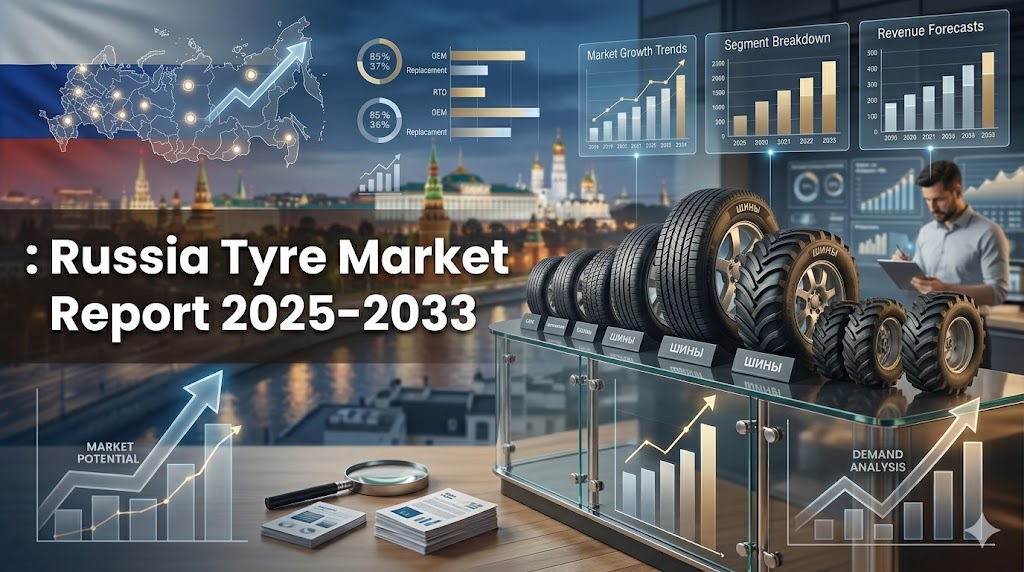
According to the latest data, the Russia tyre market size was valued at USD 3.20 Billion in 2024. Projections from the IMARC Group indicate that this sector will reach USD 5.10 Billion by 2033, exhibiting a Compound Annual Growth Rate (CAGR) of 5.30% during the 2025-2033 period.
Market Dynamics: What is Driving the Russia Tyre Industry?
Several multi-faceted factors are fueling the expansion of the tyre market in Russia, ranging from industrial growth to extreme weather requirements.
1. Resurgence in Automotive Production
The Russian automotive sector is seeing a notable recovery. In 2024, approximately 1.571 million new passenger cars were sold, marking a massive 48.4% year-over-year gain. Leading the charge is the domestic giant Avtovaz, which recorded a 34.4% increase in sales, capturing 28% of the total market share. This spike in vehicle sales directly translates to a higher demand for both Original Equipment Manufacturer (OEM) and replacement tyres.
2. The Necessity of Winter Tyres
Russia’s reputation as one of the world’s coldest nations – with temperatures in regions like Siberia frequently falling below -30°C – makes specialized tyres a survival necessity rather than an optional upgrade.
- Traction and Safety: Winter tyres are essential for handling icy roads and maintaining grip in sub-zero conditions.
- Regulatory Mandates: Stringent government regulations mandate the use of winter tyres during specific months, ensuring a consistent and predictable seasonal demand cycle.
3. Infrastructure and Logistics Expansion
On December 22, 2024, President Vladimir Putin inaugurated several major transportation projects, including bypasses around Nizhnekamsk and a high-speed access road to the Crimean Bridge. These infrastructure developments, combined with the boom in e-commerce and last-mile delivery, have propelled the demand for durable commercial and Light Commercial Vehicle (LCV) tyres.
Sample Request For Your Business
Strategic Market Segmentation
The Russia tyre market is categorized by design, end-use, vehicle type, and seasonal requirements.
By Design: Radial vs. Bias
- Radial Tyres: The dominant segment due to superior durability and fuel efficiency. Their flexible sidewalls offer better road grip, which is vital for Russia’s diverse terrains.
- Bias Tyres: These remain highly relevant for heavy-duty industrial, mining, and agricultural applications. Their high load-carrying capacity makes them indispensable in rugged, remote environments.
By End-Use: OEM and Replacement
- OEM (Original Equipment Manufacturer): Domestic manufacturers like GAZ and Avtovaz are strengthening local supply chains to source tyres for new vehicle assembly, especially as foreign brands exit.
- Replacement Tyres: This segment dominates the market. Russia’s vast road network and harsh weather lead to frequent wear and tear, necessitating regular replacements.
By Vehicle Type
| Vehicle Category | Market Impact |
| Passenger Cars | Driven by high ownership rates and mandatory seasonal changes. |
| LCVs & MHCVs | Essential for the logistics, trade, and construction sectors. |
| Off-The-Road (OTR) | Critical for Russia’s massive mining and industrial operations. |
Emerging Trends and Innovations
The Rise of Domestic Manufacturing
In response to international sanctions and trade shifts, the Russian Ministry of Industry and Trade declared in February 2024 that the tyre industry has successfully adjusted. With 18 manufacturing facilities nationwide and a market volume of roughly 76 million tyres in 2023, the country is moving toward self-sufficiency.
- Tatneft’s Ikon Tyres facility in Vsevolozhsk is now operating at over 50% capacity.
- Cordiant Group resumed activities at the former Bridgestone plant in Ulyanovsk (now Gislaved) in late 2024.
Eco-Friendly and Retreaded Tyres
Sustainability is becoming a cost-saving measure for commercial fleets. The Ecostar Factory in Vladivostok recently opened a second facility with a USD 500,000 investment, aiming to recycle over 10,000 tonnes of end-of-life tyres annually. Retreading allows logistics companies to extend tyre life while reducing environmental impact and operational expenses.
Regional Insights: A Geographic Breakdown
The Russian tyre market performance varies significantly by district:
- Central District: The primary hub, encompassing Moscow, with the highest vehicle density and distribution infrastructure.
- Volga District: A major automotive base with proximity to petrochemical feedstock for local production.
- Siberian District: A critical region for high-performance winter and heavy-duty OTR tyres due to extreme mining activities and cold.
- Northwestern District: Centered around St. Petersburg, acting as a gateway for trade and high-end manufacturing.
Competitive Landscape: Key Players
The exit of several Western brands has paved the way for domestic growth and increased presence from Asian manufacturers. Key entities currently shaping the market include:
- Cordiant Group (including the new Gislaved facility)
- Tatneft (Ikon Tyres)
- Yokohama Rubber (Lipetsk plant resumed profitability in 2023)
- Nokian and Triangle (highly preferred for winter variants)
Conclusion:
Despite inflationary pressures and loan rate fluctuations, the Russia tyre market remains resilient. The combination of mandatory winter safety, massive infrastructure investments, and a transition to robust domestic manufacturing ensures a stable upward trajectory. By 2033, the market is expected to be worth USD 5.10 Billion, reflecting a sophisticated industry that has adapted to geopolitical challenges through innovation and localized production.