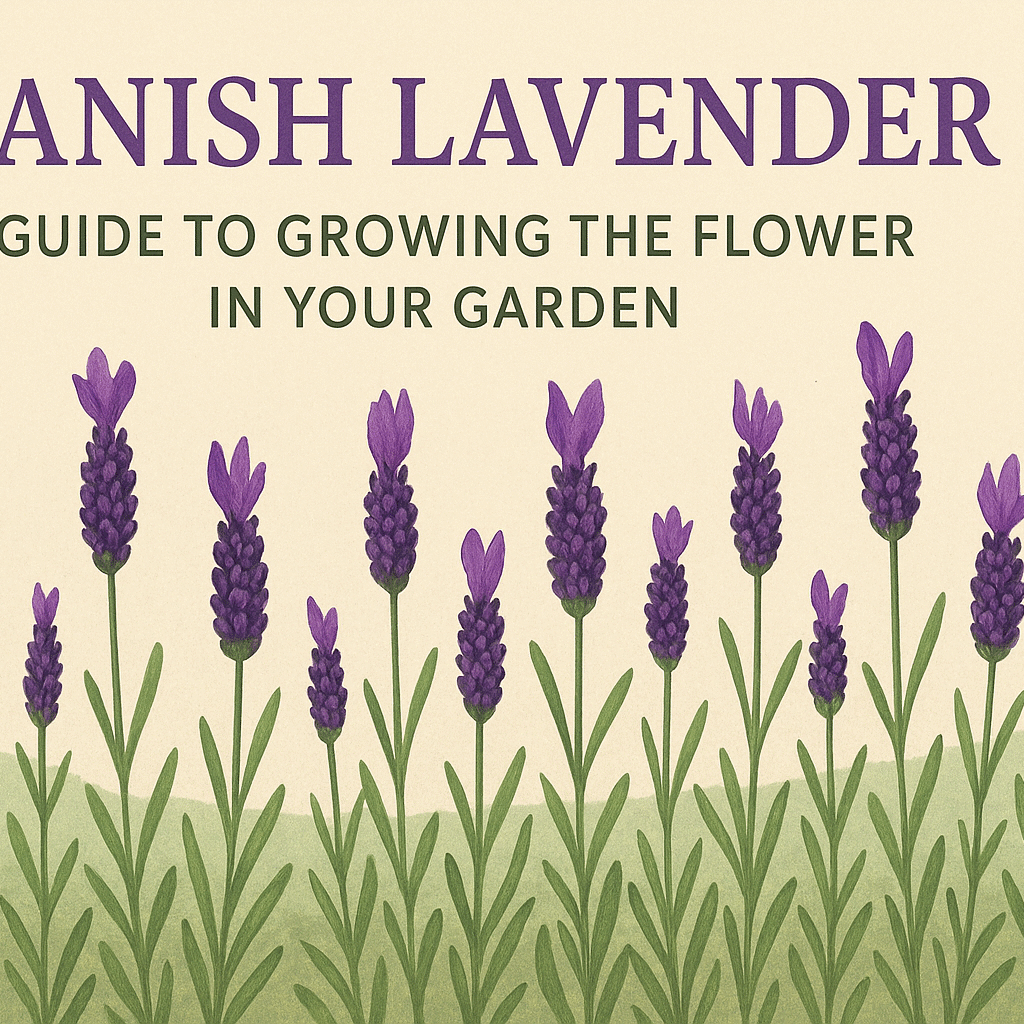

Spanish Lavender is a distinctive shrub that can be easily planted in your garden as a low-growing groundcover. With a distinct flower shape and availability in numerous shades, these flowers can easily add character to your garden. The bright petals of the flowers appear at the top of the flower head and give a rabbit-like appearance in certain cases. Whether you are interested in planting the purple kind or the pink, the presence of a Spanish Lavender in your garden will surely make your garden more appealing to people, as well as pollinators.
Scientifically known as Lavandula stoechas, it is not very difficult for people to grow this flower; however, before planting, you should keep in mind that the plant is considered toxic to animals; hence, you should keep it away from your pets if you have any. This guide is going to tell you all about the plant and its care so that you can also cultivate Spanish Lavender in your garden or backyard.
Overview of Spanish Lavender
Before planting a Spanish Lavender, you need to be familiar with the basic details about this plant.
| Common Name | Spanish lavender, butterfly lavender, bract lavender |
| Botanical Name | Lavendula stoechas |
| Family | Lamiaceae |
| Plant Type | Perennial, shrub, herb |
| Mature Size | 18-36 in. tall, 18-36 in. wide |
| Sun Exposure | Full |
| Soil Type | Sandy, moist but well-drained |
| Soil pH | Acidic, neutral |
| Bloom Time | Spring, summer |
| Flower Color | Pink, purple, white |
| Hardiness Zones | 8-9 (USDA) |
| Native Area | Europe, Africa, Mediterranean |
| Toxicity | Toxic to pets |
Basic Spanish Lavender Care
To ensure that the plant thrives and grows successfully, you should be familiar with the Spanish Lavender care instructions that you need to follow.
Light
Just like other types of lavender, the Spanish lavender has the same need for full sun, and that leads to the production of fragrant and beautiful flowers. A good place in your garden for these purple flowers is one that gets 6–8 hours of direct sunlight daily.
Soil
Spanish lavender not only needs well-draining soil but also soil of high quality to be healthy and lush. The best soil for this plant is the one that is sandy and has gravel, as it facilitates drainage and won’t usually allow water to stand. If your soil is clayey, be sure to mix it with sand, gravel, peat moss, or coconut coir when planting this herb in order to avoid getting the roots waterlogged.
Water
Spanish lavender, like other pipe dreams, does not consume much water, and drought can easily be tolerated. But slightly moist soil conditions are the best for growth; therefore, keep watering before the soil dries out totally. Soil watering is recommended in order to prevent the leaves from getting wet and consequently protect the plant from fungal diseases.
Fertilizer
Spanish lavender is self-sufficient regarding fertilizer, and generally, it is better off without it. In some cases, fertilizing may even lead to the opposite effect, i.e., the plant will not produce flowers. This can be accounted for by the fact that the plant originates from a region having sandy, poor-quality soil and thus prefers low-nutrient soil.You can learn anything other than this on the website Yourhomify.