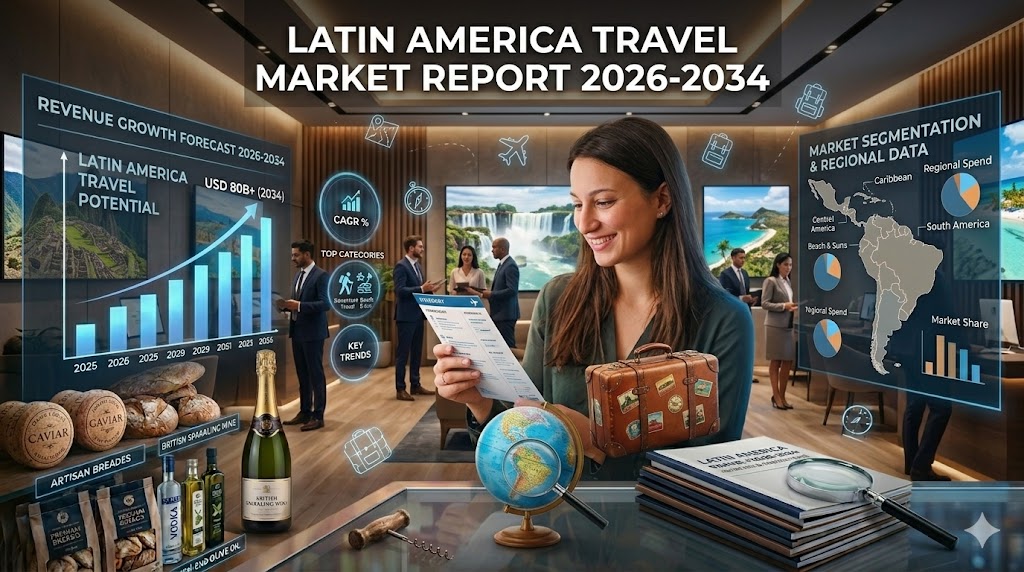

Latin America has long been a crown jewel of global tourism, offering a kaleidoscopic mix of ancient history, breathtaking natural wonders, and vibrant urban cultures. Today, the region is no longer just a destination; it is a burgeoning economic powerhouse in the global tourism sector. According to the latest industry research, the Latin America Travel Market reached a valuation of USD 109.0 Billion in 2025.
The growth trajectory for the coming decade is remarkably strong. Industry experts project the market to soar to USD 196.6 Billion by 2034, expanding at a CAGR of 5.86% during the 2026-2034 forecast period. This expansion is fueled by rising disposable incomes, significant infrastructure improvements, and a global shift toward sustainable and experiential travel.
What is Driving the Travel Boom in Latin America?
The expansion of the Latin America travel industry is driven by a convergence of environmental awareness, adventurous spirits, and technological breakthroughs.
1. Eco-Tourism and Sustainable Travel
With global awareness of environmental conservation at an all-time high, travelers are increasingly seeking responsible ways to explore the world. Latin America’s unparalleled biodiversity – from the Amazon rainforest and the Andes mountains to untouched seashores – provides the perfect backdrop for low-impact travel.
Countries like Costa Rica, Ecuador, and Brazil have lead the charge by investing in:
- Eco-lodges: Sustainable lodgings that minimize the ecological footprint.
- Protected Zones: Expanding conservation areas to preserve natural beauty.
- Community Involvement: Engaging local populations in tourism to ensure ethical and immersive experiences for travelers.
In February 2024, the CAF (Latin American and Caribbean Development Bank) and UN Tourism launched the Green Projects Innovation Challenge, encouraging startups to utilize new technologies to overcome environmental obstacles in the tourism sector.
2. Adventure and Experiential Tourism
Modern travelers are moving away from traditional sightseeing in favor of heart-pounding experiences. Latin America’s geography is an ideal playground for:
- Hiking and Mountain Biking: Across the Atacama Desert in Chile or Argentina’s Patagonia.
- Cultural Immersion: Staying in local homes and taking traditional cooking classes in Peru.
- MICE Tourism: As of February 2025, the Meetings, Incentives, Conferences, and Exhibitions (MICE) sector has developed dramatically, attracting US visitors with technologically advanced venues that still manage to immerse guests in local culture.
3. Advancements in Digital Marketing and Technology
Digital tools have made it easier than ever to discover and plan trips to the region.
- Social Media Influence: Travel bloggers and user-generated content on platforms like Instagram and TikTok showcase vibrant cultures to a global audience.
- Virtual Reality (VR): Technologies like VR and AR now allow potential tourists to “preview” destinations before booking.
- Simplified Booking: In January 2025, Orange 142 launched the Emerging Markets Council to help small and medium businesses in Mexico and Latin America reach international audiences.
Sample Request For Your Business
Market Segmentation:
The Latin America travel market size is highly diversified, categorized by travel type, age demographics, and the nature of the tourist.
By Type: Leisure Leads the Way
- Leisure Travel: The primary driver of the market, focusing on holidays and relaxation.
- Business Travel: Growing alongside the region’s economic development.
- Cruise: A popular way to explore the Caribbean and South American coastlines.
- VFR (Visiting Friends and Relatives): A significant segment due to the large Latin American diaspora.
- Specialty/Activity/Sports: Catering to niche interests like scuba diving or zip-lining.
By Age Group: The Adventurous Youth
- 21-30 Years: A high-growth segment driven by the “backpacker” and adventure traveler.
- 31-40 Years: Often looking for a blend of luxury and experiential travel.
- 41-60 Years: Primarily focused on leisure and family-oriented trips.
- 60 and Above: A growing segment interested in cruises and cultural tours.
By Tourist Type
- Domestic: Intra-regional travel is booming as local infrastructure improves.
- International: Tourists from the US, Europe, and Asia remain vital revenue sources.
Regional Powerhouses:
While the entire region is growing, specific countries serve as the primary engines of the Latin America travel market share:
- Mexico: A dominant player in both leisure and business tourism.
- Brazil: A leader in eco-tourism and vibrant cultural festivals.
- Argentina: Famous for its diverse landscapes, from urban Buenos Aires to rugged Patagonia.
- Colombia: Rapidly emerging as a top destination for specialty and adventure travel.
- Chile and Peru: Hubs for world-class trekking and archaeological wonders like Machu Picchu.
Key Industry Milestones and News
The sector continues to innovate through technology and strategic partnerships:
- Nexus Up (November 2024): GoNexus released this app to improve the B2B visitor experience across 19 countries, allowing real-time itinerary checks and transfer tracking.
- TUI Expansion (September 2024): The Touristik Union International (TUI) collaborated with regional agents to sell Latin American trip packages to a wider audience in North America and Asia, raising the region’s global profile.
Conclusion:
The Latin America Travel Market is at a historic turning point. With a projected value of USD 196.6 Billion by 2034, the region is successfully positioning itself as the world’s premier destination for sustainable, adventurous, and culturally rich travel. For businesses, stakeholders, and travelers alike, the message is clear: the convergence of digital innovation and natural preservation is creating a golden era for tourism in Latin America.