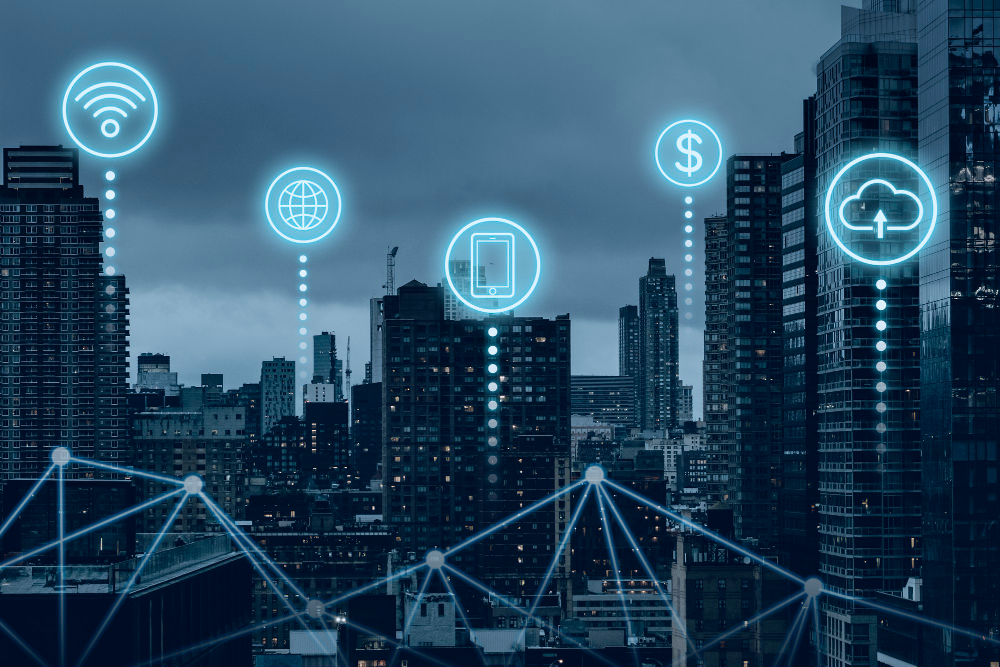

Technology is accelerating toward an era where every physical space becomes an intelligent, reactive environment. These next-generation spaces—known as ultra-connected micro environments—combine miniature sensors, localized AI, automation frameworks, and seamless connectivity to create highly responsive zones capable of making real-time decisions. Unlike traditional smart systems that rely heavily on cloud platforms, microenvironments operate autonomously at a very local level, enabling faster responses and more efficient resource usage.
What Are Ultra-Connected Micro Environments?
Ultra-connected micro environments are digitally enhanced spaces where devices communicate with each other autonomously to monitor, analyze, and react to surrounding conditions. These environments can exist in buildings, vehicles, farms, retail stores, medical facilities, and even personal gadgets. Their defining feature is hyper-local decision making—the ability to process data where it is generated rather than sending everything to a remote server.
This localized intelligence dramatically reduces latency, improves accuracy, and strengthens privacy. For example, an office meeting room can detect occupancy, adjust lighting, regulate temperature, and optimize acoustics—all without external computation.
Core Technologies Behind Micro Environments
These environments are powered by an ecosystem of modern technologies working in harmony:
1. Micro-Sensors
Tiny multi-function sensors are embedded across objects, walls, and systems to capture temperature, motion, energy levels, air quality, and structural conditions.
2. Embedded Edge AI
Instead of relying on cloud servers, edge processors execute machine-learning algorithms directly on-site, ensuring fast and context-aware decisions.
3. Interoperable Communication Protocols
Technologies like LoRaWAN, Bluetooth Mesh, Wi-Fi 6, and UWB enable seamless device-to-device communication even across confined spaces.
4. Automation Frameworks
Custom rule engines and automation scripts allow environments to self-adjust, troubleshoot, and optimize their functions with minimal human intervention.
Together, these components create environments that behave almost like living ecosystems—observing, learning, and evolving.
Micro Environments in Modern Agriculture
Agriculture is undergoing massive transformation due to localized intelligent systems. Farms are no longer dependent on manual observation or fixed irrigation cycles. Instead, smart micro-zones monitor soil moisture, nutrient levels, humidity, and micro-climate conditions in real time. This allows farmers to react instantly to changes and optimize every square meter of land.
Many farms are adopting precise monitoring ecosystems powered by Agriculture IoT, which enables devices and sensors to work together to improve crop health and reduce resource waste. These systems support predictive irrigation, disease detection, yield forecasting, and automatic greenhouse control—all functioning within localized micro environments.
Industrial Applications and Safety
Factories and industrial plants are ideal testbeds for micro-connected environments. Here, environmental monitoring is essential for preventing hazards, ensuring uniform production quality, and managing energy consumption. Micro environments installed across factory floors can detect vibrations, overheating components, gas leaks, and machine inefficiencies before they escalate.
Edge-based systems trigger automated shutdowns or alert technicians instantly. Combining robotics with these intelligent micro zones allows factories to achieve near-zero downtime and create safer conditions for workers.
Smart Homes and Personal Spaces
The concept of micro environments is also entering households. Unlike older smart home systems that required multiple apps and manual adjustments, modern homes can react intuitively. Rooms adapt to a user’s preferences—lighting shifts based on activity, air purifiers adjust to pollutant levels, and appliances work together to optimize power consumption.
Even personal gadgets like headphones, wearables, and fitness devices become part of these micro ecosystems. They exchange contextual data to create a cohesive user experience—one that understands habits, enhances comfort, and supports wellness.
Future Possibilities and Challenges
As ultra-connected micro environments become more widespread, several challenges must be addressed. Standardized communication protocols are crucial for ensuring compatibility among devices from different brands. Cybersecurity becomes even more important as more critical decisions occur at the local device level. Additionally, organizations must consider ethical guidelines for data usage, especially in workplaces and public spaces.
Despite these concerns, the future potential is enormous. Micro environments could revolutionize everything from transportation hubs to school classrooms, giving rise to spaces that adapt to people instead of forcing humans to adapt to technology.
Micro Environments in Retail and Events
Retail spaces are also benefitting from ultra-connected micro environments. Smart shelves detect product shortages, digital price tags update dynamically, and auto-checkout zones track items without requiring human cashiers. These environments help retailers reduce overheads and deliver smoother customer experiences.
Event technology is another fast-growing sector leveraging micro-localized intelligence. Modern event booths use advanced imaging, lighting automation, and instant content processing. Many systems integrate photo booth software, which enables on-site customization, auto-editing, gesture detection, and real-time sharing—all without relying on heavy cloud processing. These smart booths adapt to lighting, crowd movement, and background conditions within seconds.
Conclusion
Ultra-connected micro-environments represent the next evolution in smart technology—one that is hyper-local, highly autonomous, and deeply integrated into daily life. Whether improving agricultural efficiency, enhancing retail experiences, powering industrial safety, or personalizing home spaces, these intelligent zones promise to redefine how humans interact with their surroundings. As technology becomes more embedded and intuitive, the line between physical and digital worlds will continue to blur, creating spaces that are not just smart but genuinely responsive.