
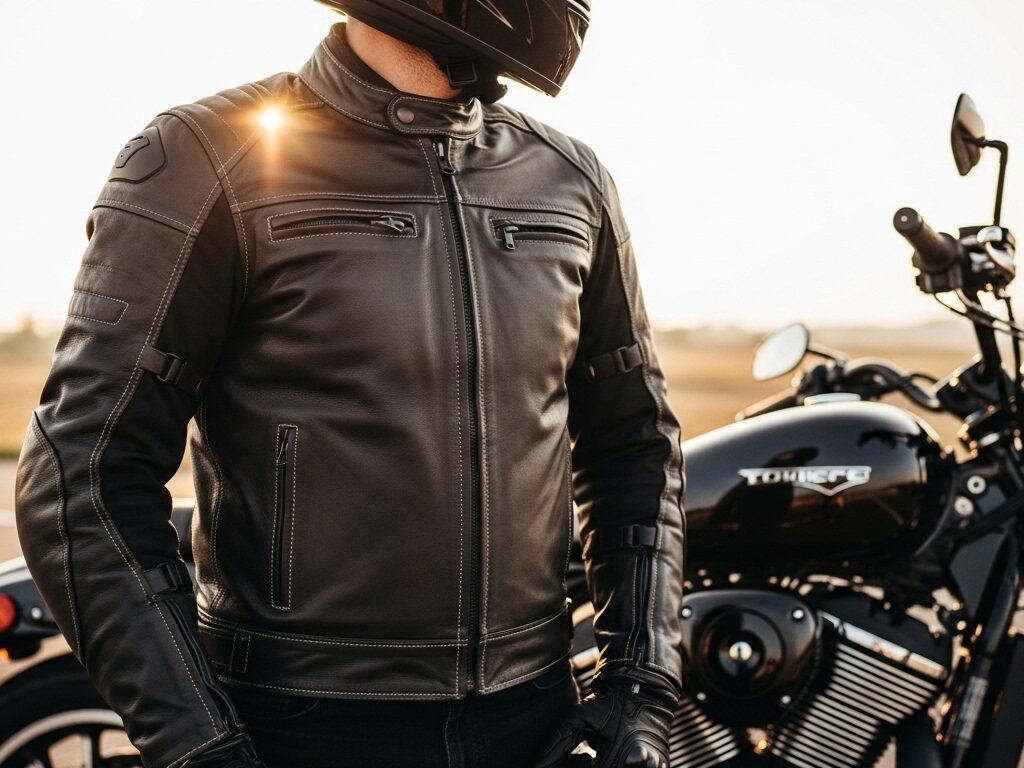

Leather grade selection is a foundational decision in motorcycle apparel manufacturing, directly influencing rider safety, garment longevity, comfort, and performance. Professional manufacturers evaluate cowhide types, thickness ranges, and tanning methods to engineer jackets that meet specific riding disciplines, regulatory expectations, and consumer use cases. Understanding leather grades is, therefore, essential for anyone seeking technically sound, durable, and purpose-built motorcycle gear.
This article provides a comprehensive, fact-driven explanation of how leather grades are defined and applied in professional motorcycle apparel manufacturing. It explains cowhide classifications, thickness measurements, tanning processes, and how these factors determine whether a jacket is optimized for sport, touring, or mixed riding conditions. The discussion also contextualizes leather construction alongside textile alternatives used in modern road riding gear.
Leather as a Protective Material in Motorcycle Apparel
Leather has been used in motorcycle gear for more than a century because of its proven abrasion resistance, tear strength, and natural durability under demanding riding conditions. Unlike casual leather garments, motorcycle-grade leather is engineered to withstand high-friction surface contact, repeated mechanical stress, and exposure to varying weather conditions over extended periods of use.
To ensure this level of performance, professional manufacturers evaluate leather using multiple technical criteria, including hide origin and fiber density, the specific cut location on the hide, overall thickness and material uniformity, and the tanning and finishing processes applied during production. Together, these factors determine the functional “grade” of leather used in motorcycle apparel and its suitability for protective riding applications.
Cowhide Types Used by Professional Manufacturers
Full-Grain Cowhide
Full-grain leather retains the complete outer grain layer of the hide. It has not been sanded or corrected, preserving the natural fiber structure.
Key characteristics:
- Maximum abrasion resistance
- High tensile strength
- Long service life with proper care
Full-grain cowhide is commonly used in premium motorcycle jackets where impact and slide protection are priorities. According to material science overviews published by encyclopedic sources such as Wikipedia’s leather classification documentation, full-grain leather exhibits the highest durability among natural leather types due to intact collagen fiber alignment.
Top-Grain Cowhide
Top-grain leather is lightly sanded to remove surface imperfections while retaining most of the grain layer.
Key characteristics:
- Balanced strength and flexibility
- More uniform appearance
- Slightly reduced abrasion resistance compared to full-grain
Top-grain cowhide is frequently selected for jackets that must balance protection with reduced weight and improved comfort.
Split Leather and Corrected Leather
Split leather is derived from the lower layers of the hide after the grain layer is removed.
Professional limitations:
- Lower abrasion resistance
- Reduced tear strength
- Typically reinforced or coated
In motorcycle apparel, split leather is generally restricted to non-impact zones or used with protective coatings. It is not considered suitable for high-risk riding applications without reinforcement.
Leather Thickness Standards in Motorcycle Jackets
How Thickness Is Measured
Leather thickness is measured in millimeters (mm) or ounces (oz), with 1 oz approximately equal to 0.4 mm. Motorcycle apparel manufacturers follow internal benchmarks aligned with CE safety testing standards used in Europe.
Common Thickness Ranges
- 0.8–1.0 mm: Lightweight applications, improved flexibility
- 1.1–1.3 mm: Balanced protection and comfort
- 1.4 mm and above: Maximum abrasion resistance for high-impact use
A lightweight leather jacket for sport riding is typically constructed using top-grain or select full-grain cowhide in the 0.9–1.1 mm range. This thickness allows aggressive riding posture, improved airflow, and reduced fatigue without eliminating critical abrasion protection. Professional manufacturers reinforce high-risk zones such as shoulders and elbows to compensate for reduced overall thickness.
Tanning Methods and Their Manufacturing Impact
Vegetable Tanning
Vegetable tanning uses natural tannins derived from tree bark and plants.
Manufacturing implications:
- Firm structure
- Minimal stretch
- Longer tanning time
Vegetable-tanned leather is valued for durability but is less common in modern motorcycle jackets due to reduced water resistance and stiffness.
Chrome Tanning
Chrome tanning uses chromium salts and is the dominant method in motorcycle apparel manufacturing.
Advantages:
- Improved flexibility
- Superior water resistance
- Consistent thickness and finish
Chrome-tanned cowhide is preferred for performance riding gear because it maintains strength while allowing ergonomic panel construction.
Combination (Hybrid) Tanning
Some manufacturers apply a combination of vegetable and chrome tanning to balance structure and flexibility. This approach is often used in premium jackets targeting long-distance or mixed-condition riding.
Leather Grades and Performance Use Cases
Sport Riding Applications
Sport riding places significant demands on both the rider and the apparel due to aggressive body positioning, sustained high speeds, and the need for precise control. Jackets designed for this category, therefore, prioritize reduced overall weight, enhanced mobility, and strategically placed impact protection to support dynamic riding movements. To achieve these performance requirements, manufacturers commonly select lighter full-grain or top-grain cowhide and incorporate ergonomic paneling with pre-curved sleeves, allowing the jacket to conform naturally to a forward-leaning riding posture while maintaining essential abrasion resistance and structural integrity..
Road and Touring Applications
Road and touring riding involve longer durations, variable weather, and comfort-oriented design. While leather remains relevant, textile materials are increasingly integrated. A textile jacket for road riding is often manufactured using high-denier nylon or polyester with abrasion-resistant weaves, waterproof membranes, and removable thermal liners. These jackets offer superior adaptability to changing climates and are frequently certified under CE abrasion and impact standards.
Leather vs Textile: Manufacturing Perspective
Professional manufacturers do not treat leather and textile jackets as competing products; instead, they are engineered as complementary solutions tailored to distinct riding requirements. Leather jackets are valued for their excellent abrasion resistance, making them highly effective in high-speed or impact-prone scenarios, though they tend to be heavier and offer only moderate weather protection with limited seasonal adaptability.
Textile jackets, by contrast, are significantly lighter and are designed to deliver high levels of weather protection through advanced membranes and layered constructions. When reinforced with abrasion-resistant panels and certified armor, textiles can achieve moderate to high abrasion performance while offering superior versatility across changing climates. Industry safety documentation and textile material standards, including ISO and EN protective clothing guidelines, summarized by authoritative references such as Wikipedia, reinforce the suitability of textile jackets for long-distance and multi-season road riding where comfort, adaptability, and environmental protection are critical.
Expert Insights & Best Practices in Leather Manufacturing
Hide Selection and Cutting
Experienced manufacturers cut panels from specific hide zones to maximize fiber strength in impact areas. Shoulder and back panels are typically cut from the densest sections of the hide.
Stitching and Seam Engineering
Leather grade alone does not determine protection. Double or triple-stitched seams using bonded nylon thread are standard in high-quality jackets. Seam failure is a known weak point in substandard apparel.
Quality Control Testing
Professional manufacturers implement a range of material and quality control tests to validate the performance of motorcycle apparel before it reaches the market. These evaluations typically include tear resistance testing to measure structural strength, abrasion simulations to assess surface durability under sliding conditions, and colorfastness and shrinkage testing to confirm material stability after exposure to environmental factors and repeated use. Together, these processes help ensure consistent quality across production batches and support compliance with recognized international safety and performance expectations.
Common Mistakes and Misconceptions
Thicker Leather Always Means Better Protection
Excessive thickness can restrict movement and reduce rider control. Properly engineered thinner leather with reinforced zones often performs better in real-world riding.
All Leather Jackets Offer Equal Safety
Fashion leather jackets lack the structural integrity, stitching standards, and material thickness required for motorcycle use.
Textile Jackets Are Inferior to Leather
Modern textile jackets can meet or exceed safety standards when engineered with certified armor and abrasion-resistant fabrics.
Conclusion
Leather grading in motorcycle apparel manufacturing is a technical discipline grounded in material science, safety engineering, and real-world riding demands. Cowhide type, thickness, and tanning method collectively determine how a jacket performs under stress, weather exposure, and prolonged use. Professional manufacturers apply these principles to engineer garments suited for specific riding environments, whether through precision-cut leather jackets or advanced textile alternatives. A clear understanding of leather grades enables informed decisions, improves rider safety, and supports long-term value in motorcycle apparel investment.
FAQs
1. What leather grade is considered best for motorcycle jackets?
Full-grain cowhide is considered the highest grade due to its intact fiber structure and abrasion resistance.
2. Is top-grain leather suitable for sport riding?
Yes. Top-grain leather is widely used in sport riding jackets where reduced weight and flexibility are required.
3. How does leather thickness affect rider comfort?
Thinner leather improves mobility and ventilation, while thicker leather increases abrasion resistance. Manufacturers balance both factors.
4. Why is chrome tanning preferred in motorcycle apparel?
Chrome tanning provides flexibility, water resistance, and consistency, making it ideal for performance riding gear.
5. Are vegetable-tanned leathers used in motorcycle jackets?
They are used selectively but are less common due to stiffness and lower water resistance.
6. Can textile jackets provide sufficient protection?
Yes, when constructed with high-denier fabrics, certified armor, and reinforced impact zones.
7. How long does high-quality motorcycle leather last?
With proper care, full-grain leather jackets can last over a decade of regular use.
8. What standards govern motorcycle apparel safety?
Many manufacturers align with CE certification standards under EN 17092 for protective clothing.
9. Does leather stretch over time?
High-quality cowhide stretches minimally when properly tanned and maintained.
10. Is leather still relevant with modern textile technology?
Yes. Leather remains unmatched for abrasion resistance in high-speed riding scenarios.


