
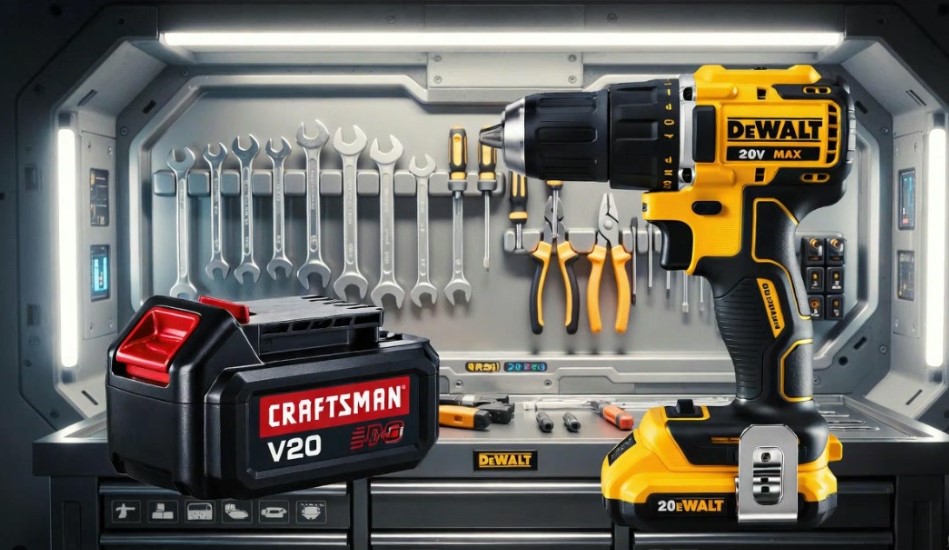

If you’ve ever stood in your garage staring at a pile of batteries from different brands, wondering why none of them play nicely together, you’re not alone. One of the most common questions DIYers and homeowners ask is: “Will a Craftsman battery work in a DeWalt tool?”
At first glance, it seems logical — both are 20V, both are big-name brands, and both use lithium-ion systems. Shouldn’t they be interchangeable? Unfortunately, the answer is no… at least not directly. But there is a workaround, and there are some important safety considerations you should know before mixing platforms.
This guide breaks down everything you need to know in plain language so you can make the best decision for your tools, your wallet, and your projects.
Why Craftsman and DeWalt Batteries Aren’t Naturally Compatible
Even though both companies market their systems as 20V lithium-ion, the platforms are built differently. Voltage alone doesn’t determine compatibility — it’s the physical interface, contact arrangement, and the communication chip inside the battery that matter most.
Here are the real reasons they don’t swap:
1. Different battery rails and locking tabs
Craftsman V20 batteries and DeWalt 20V Max batteries have different plastic rails that guide the battery into the tool. Because these rails don’t match, the batteries simply won’t slide into each other’s slots.
2. Different electrical contacts
Each brand arranges its positive, negative, and communication terminals differently. This mismatch prevents the battery from powering the tool safely.
3. Brand-specific battery management systems (BMS)
Modern batteries include circuitry that monitors heat, charge levels, and amp draw. Craftsman batteries are designed to “talk” to Craftsman tools. Same with DeWalt. Without the correct handshake between battery and tool, the tool won’t run — and if it did, it could overheat.
The bottom line?
Craftsman batteries do NOT fit or function in DeWalt tools on their own.
But that doesn’t mean you’re out of luck.
Using an Adapter: The Only Way to Use Craftsman Batteries in DeWalt Tools
If you really want your Craftsman V20 battery to work in a DeWalt 20V Max tool, the only safe and practical option is a battery adapter. These are small plastic adapters that attach to your Craftsman battery on one side and slide into your DeWalt tool on the other.
They essentially act as an interpreter between the two brands.
How battery adapters work:
- They reshape the plastic housing to fit the tool.
- They reroute or extend the electrical contacts to match the DeWalt layout.
- Some include built-in fuses or over-current protection.
They do NOT modify the battery permanently — you can take it off anytime.
Pros of Using a Craftsman-to-DeWalt Battery Adapter
For many homeowners and weekend DIYers, adapters are extremely helpful. Here’s why:
1. Save money by avoiding duplicate batteries
Maybe you already have several Craftsman V20 batteries and don’t want to invest in another platform’s battery ecosystem. An adapter lets you keep using what you already own.
2. Reduce clutter
One battery type + adapters = fewer chargers, fewer cords, and less workshop chaos.
3. Great for light-to-medium tasks
Adapters work well with tools like:
- drills
- impact drivers
- LED lights
- sanders
- inflators
These tools don’t draw heavy sustained current, so battery stress is minimal.
4. Ideal for occasional users
If you’re not a daily tradesperson burning through batteries, an adapter can be an excellent convenience upgrade.
Cons and Risks of Using an Adapter
While adapters are useful, they aren’t perfect. Before you rely on one, understand its limitations.
1. Voids warranties
DeWalt and Craftsman both specify that using non-OEM batteries or adapters may void warranty coverage. If anything gets damaged, you’re on your own.
2. Not recommended for high-draw tools
Tools that demand a lot of current should not be used with adapted batteries. This includes:
- circular saws
- reciprocating saws
- angle grinders
- table saws
- miter saws
- planers
- chainsaws
- any brushless high-torque tool
These tools can pull sustained high amps, creating heat that adapters aren’t equipped to handle.
3. Possible performance drop
Craftsman batteries may not deliver the same power output or sustained amperage that a DeWalt tool expects. With an adapter, you may notice:
- slower RPMs
- shorter runtime
- overheating
- tool shutdowns under load
4. Safety concerns with cheap adapters
The battery is the most volatile part of any cordless tool system. Cheap adapters may skip protective features like:
- thermal protection
- over-current protection
- short-circuit prevention
Always choose an adapter with solid reviews, quality wiring, and built-in protection.
Should You Use an Adapter, or Buy the Right Battery?
It depends on the kind of user you are.
If you’re a casual DIYer:
An adapter is perfectly fine for occasional use. You’ll save money, reduce clutter, and avoid buying duplicates.
If you’re a heavy or professional user:
Stick to original DeWalt batteries. They’re designed to deliver high current, stay cool under pressure, and run tough tools. It’s not worth risking tool performance or battery life with an adapter.
If you own mostly Craftsman tools but want one DeWalt tool:
An adapter can help you integrate that one extra tool without switching platforms.
If you own mostly DeWalt tools:
Skip the adapter — it’s better to invest in DeWalt batteries for reliability and long-term value.
Important Safety Tips When Using Battery Adapters
If you decide to use an adapter, follow these guidelines to protect your tools and batteries.
1. Avoid high-amp tools
As mentioned earlier, don’t push the adapter beyond its limits.
2. Stop use immediately if anything overheats
Warm is normal. Hot is dangerous.
3. Charge Craftsman batteries using Craftsman chargers only
Never attempt to charge through the adapter or with a different brand’s charger.
4. Inspect the adapter regularly
Look for cracks, loose wiring, and melted plastic. Replace at the first sign of trouble.
5. Buy from reputable brands
Look for adapters with:
- UL/ETL certification
- built-in fuse
- good consumer reviews
- thick wiring
- solid construction
Cheaper isn’t always better when electricity is involved.
Why Tool Brands Don’t Make Batteries Cross-Compatible
Many people assume battery incompatibility is a technical limitation, but it actually comes down to branding, safety, and profit.
1. Branding & product ecosystem
Companies want you to buy into their battery platform so you continue purchasing their tools. If batteries were universal, brand loyalty would be much weaker.
2. Liability & safety
If a Craftsman battery caused a DeWalt tool to overheat, who’s at fault?
Tool companies avoid cross-compatibility to avoid legal issues.
3. Technical differences
While all lithium-ion systems look similar, each brand’s internal electronics vary. Matching them safely takes more than just matching voltage.
So, Will a Craftsman Battery Work in a DeWalt Tool? Final Answer
Not directly.
Craftsman V20 batteries will NOT fit or function in DeWalt 20V Max tools without an adapter.
But with the correct adapter, yes — you can use a Craftsman battery on many DeWalt tools, especially low-to-medium demand tools.
Just make sure you:
- avoid high-draw tools
- use a high-quality adapter
- watch for overheating
- understand it voids the warranty
For casual users, it can be a great way to save money.
For professionals, sticking to OEM batteries is the smarter long-term choice.


