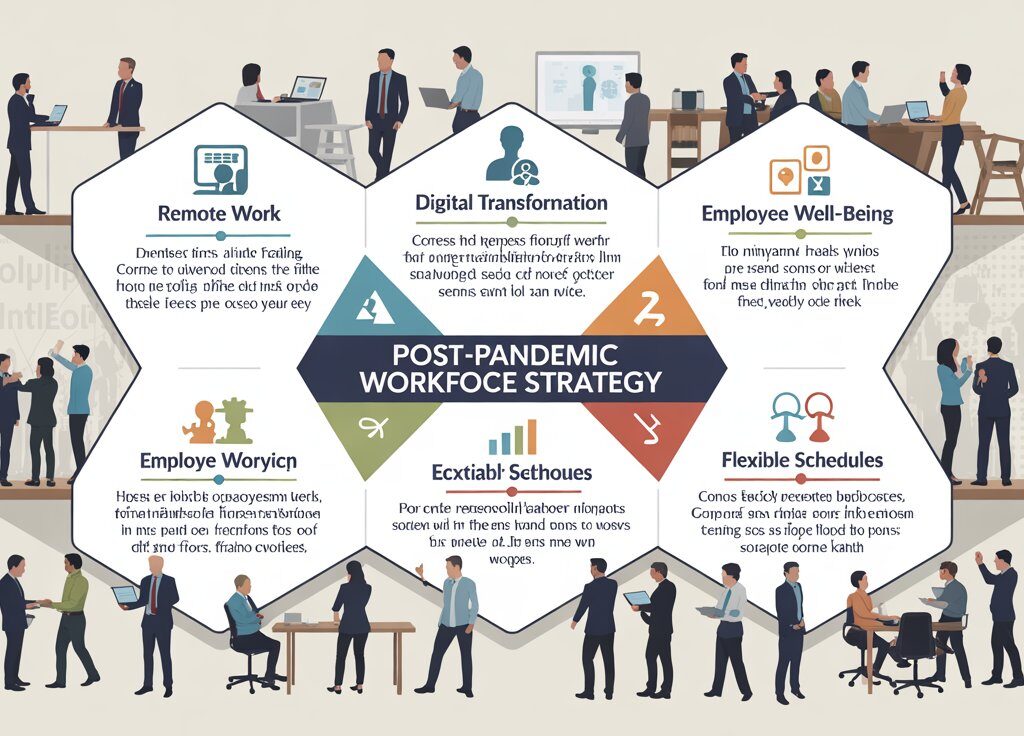

The pandemic did more than disrupt global health systems. It reshaped how businesses think about people, productivity, and performance. Overnight, organizations were forced to rethink traditional workforce structures, digital readiness, and employee well-being.
What began as a crisis response quickly evolved into a long-term transformation. Companies that once resisted remote work adopted it within weeks. Leadership models shifted. Employee priorities changed. And now, as businesses move forward, the focus is no longer on recovery alone—it is on reinvention.
Post-pandemic workforce strategy is not about returning to old systems. It is about designing smarter, more adaptive frameworks built for resilience.
The Rise of Hybrid Work as a Standard Model
One of the most significant trends emerging after the pandemic is the normalization of hybrid work. Remote work proved not only possible but often productive. As a result, organizations are now blending in-office collaboration with remote flexibility.
This hybrid approach allows companies to maintain culture while offering employees autonomy. Offices are being redesigned as collaboration hubs rather than daily attendance spaces. Work is shifting from location-based to outcome-based.
Businesses that embrace Flexible Workforce Solutions early in their post-pandemic strategy are building models that prioritize agility over rigidity. This shift allows them to respond quickly to future disruptions while maintaining operational continuity.
In simple terms, hybrid work is no longer a temporary fix. It is a permanent pillar of workforce strategy.
Employee Well-Being as a Core Business Priority
Before the pandemic, employee wellness programs were often secondary initiatives. Today, mental health, burnout prevention, and work-life integration are strategic priorities.
The crisis highlighted the human side of work. Employees faced stress, isolation, and uncertainty. Organizations realized that productivity cannot be sustained without emotional and psychological support.
Post-pandemic workforce strategies now include flexible schedules, mental health resources, transparent communication, and supportive leadership practices. Companies are learning that caring for employees directly impacts engagement and retention.
Well-being is no longer an HR function alone. It is a business strategy.
Digital Transformation Accelerated
Digital transformation was already underway before the pandemic. However, the crisis accelerated adoption at unprecedented speed. Cloud systems, collaboration platforms, and automation tools became essential rather than optional.
Post-pandemic workforce strategies now revolve around digital fluency. Employees are expected to navigate digital platforms confidently. Organizations are investing in training programs to ensure teams remain technologically adaptable.
Automation is also reshaping job roles. Repetitive tasks are increasingly managed by AI-driven systems, allowing employees to focus on creative, strategic, and high-value work.
This digital-first mindset is shaping the workforce of the future.
Skills Over Roles: A Shift in Talent Management
Another major trend is the shift from role-based hiring to skill-based workforce planning.
Traditional job descriptions often limit potential. Post-pandemic organizations are identifying core skills required for business growth and aligning talent accordingly. Instead of hiring for static roles, companies are building dynamic skill inventories.
This approach improves internal mobility and reduces hiring costs. Employees can transition across departments based on capabilities rather than titles. It also encourages continuous learning and professional growth.
The result is a more resilient workforce capable of adapting to market changes quickly.
Data-Driven Workforce Planning
Post-pandemic strategies rely heavily on data analytics. Workforce planning is no longer based solely on intuition. Organizations are using predictive analytics to anticipate staffing needs, measure performance trends, and identify potential skill gaps.
Data enables leaders to make informed decisions about resource allocation, hiring timelines, and productivity metrics. It also enhances transparency, as performance evaluations become more objective and outcome-based.
By integrating data into workforce strategy, companies minimize uncertainty and maximize efficiency.
Leadership Transformation in a Distributed World
Leadership expectations have evolved dramatically. Managing distributed teams requires new skills—empathy, communication clarity, and adaptability.
Command-and-control management styles are being replaced by collaborative leadership approaches. Managers now focus on setting clear goals, fostering trust, and empowering employees to deliver results independently.
Virtual leadership also demands stronger communication systems. Regular check-ins, digital feedback loops, and transparent decision-making are essential to maintain alignment.
Post-pandemic leaders are no longer defined by authority alone but by their ability to inspire and guide in uncertain environments.
Diversity, Equity, and Inclusion as Strategic Imperatives
The pandemic highlighted inequalities within workplaces and societies. As a result, diversity, equity, and inclusion (DEI) initiatives have become central to workforce strategy.
Remote work has expanded access to global talent pools, creating opportunities for more inclusive hiring practices. Organizations are reevaluating policies to ensure fairness in promotions, compensation, and representation.
Inclusive workplaces foster innovation by encouraging diverse perspectives. Post-pandemic strategies increasingly integrate DEI goals into leadership metrics and performance reviews.
This trend reflects a broader shift toward socially responsible business practices.
Agility and Contingency Planning
If the pandemic taught organizations one lesson, it is the importance of preparedness.
Workforce strategies now include contingency planning for unexpected disruptions. Companies are diversifying talent pipelines, investing in digital infrastructure, and building cross-functional teams capable of handling sudden changes.
Agility is becoming embedded within corporate culture. Businesses are designing systems that can pivot quickly without sacrificing productivity.
This proactive mindset ensures long-term stability in unpredictable markets.
Redefining Workplace Culture
Workplace culture has undergone a subtle but profound transformation.
Previously, culture was often associated with physical office environments. Today, culture is defined by shared values, communication quality, and leadership transparency—regardless of location.
Organizations are strengthening virtual community-building efforts, celebrating achievements digitally, and fostering inclusive communication practices.
Culture is no longer tied to space. It is tied to experience.
The Future of Workforce Strategy
Looking ahead, workforce strategies will continue to evolve. AI-driven talent analytics, personalized employee development plans, and global collaboration networks will shape the next phase of transformation.
Companies that remain rigid risk falling behind. Those that prioritize adaptability, employee experience, and technological innovation will lead.
Post-pandemic workforce strategy is not about survival. It is about creating systems designed to thrive in complexity.
The future belongs to organizations that understand that people are not just resources—they are strategic partners in growth. By aligning flexibility, digital advancement, and human-centered leadership, businesses can build resilient, forward-thinking teams prepared for whatever lies ahead.
The pandemic may have been the catalyst, but the transformation it sparked is permanent.